Fauna Details
| Common Name | Cape Rockjumper, berglyster |
| Family | Chaetopidae |
| Date Observed | 23-09-2022 |
| Category | Birds |
|---|---|
| Catalogue No. | Z2012RG |
| Breeding/ Spawning Time | Summer |
| When Observed | DAYTIME |
| Locations Observed | |
| Estuary | |
| Koppie | |
| Nature Reserve | |
| Small Holding | Few |
| Village | |
| Greater Rooiels | |
Chaetops frenatus
Information
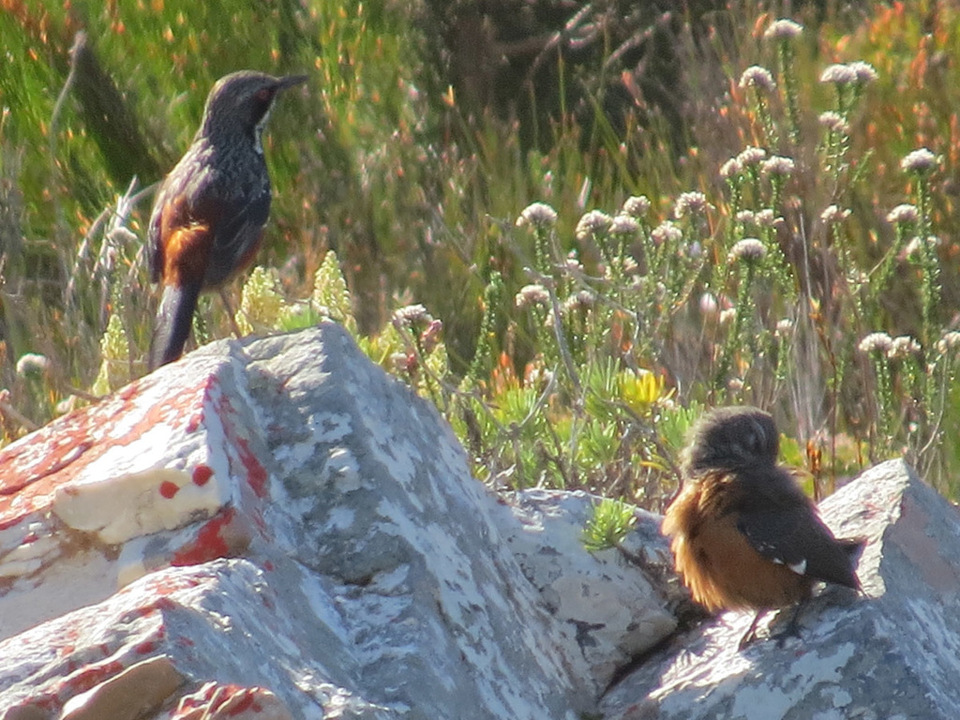
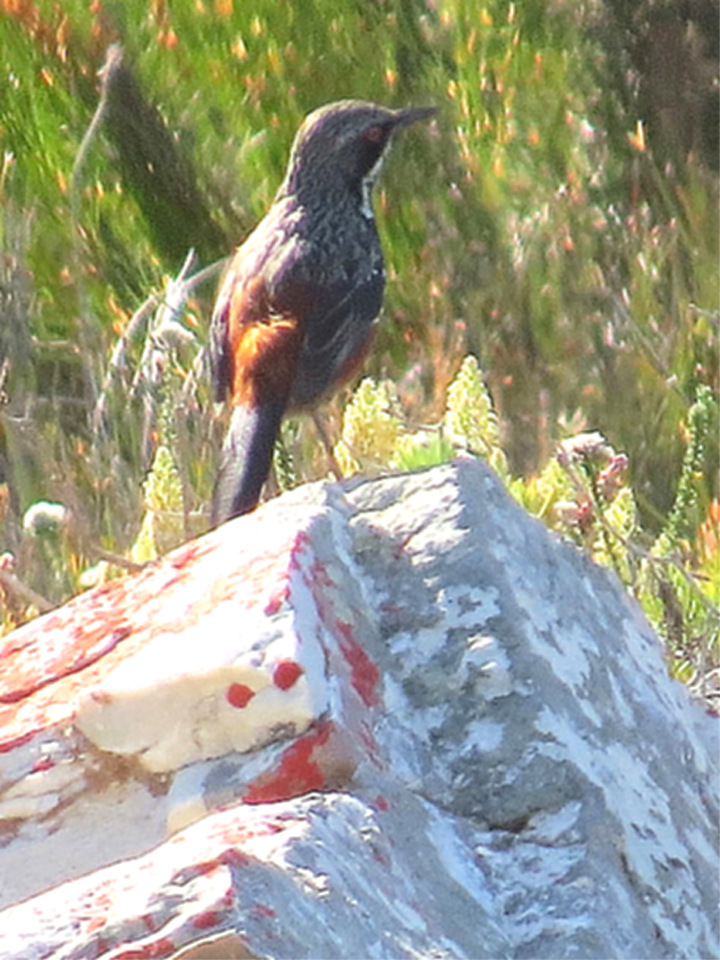
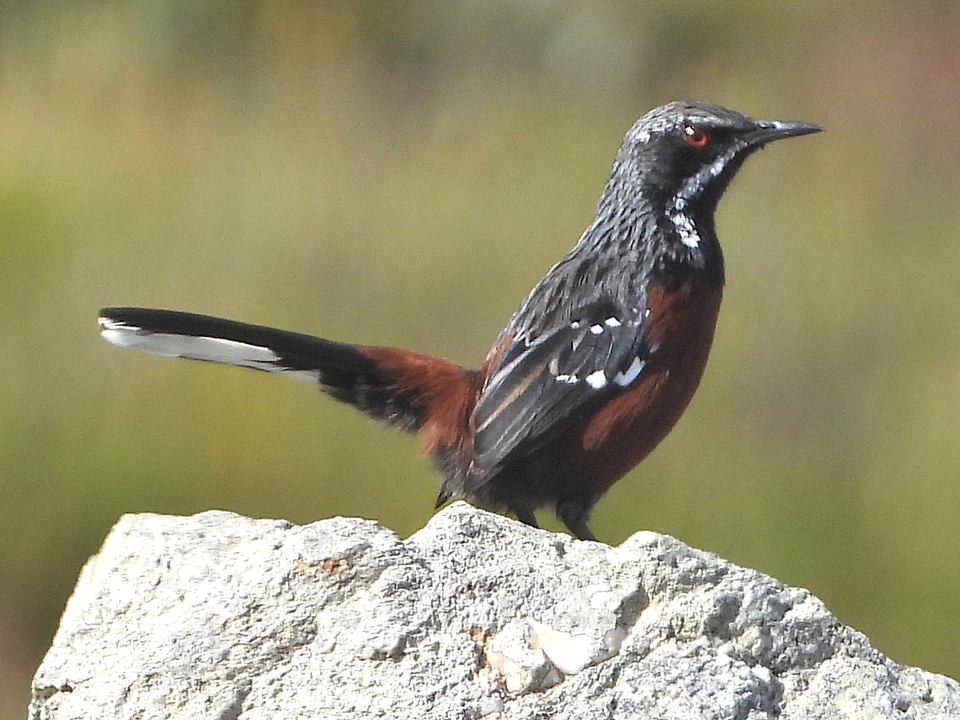
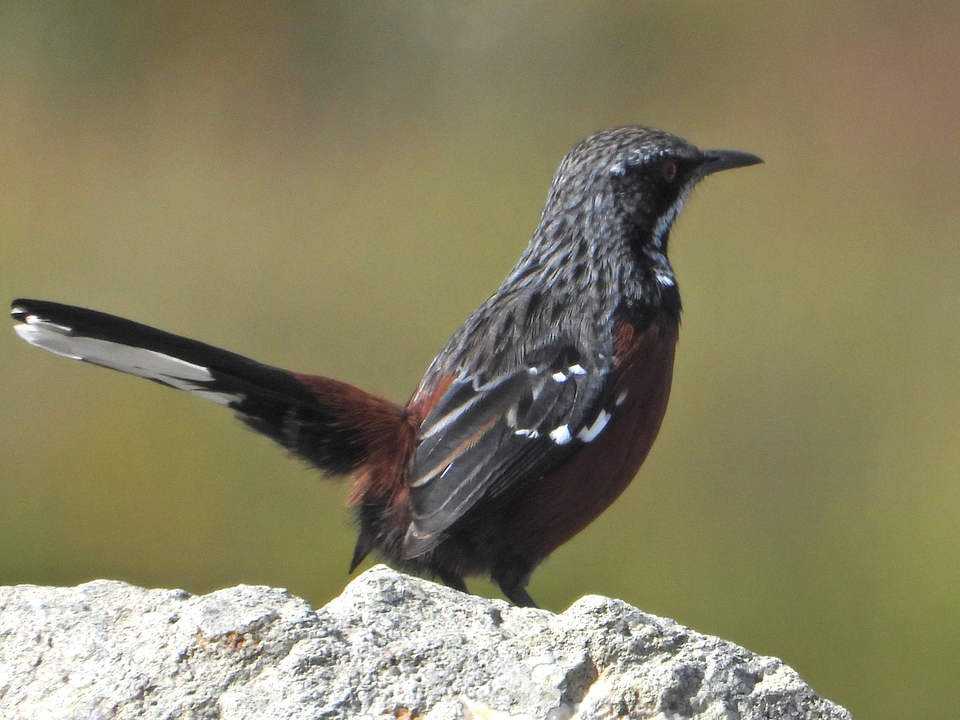
Cape Rockjumper
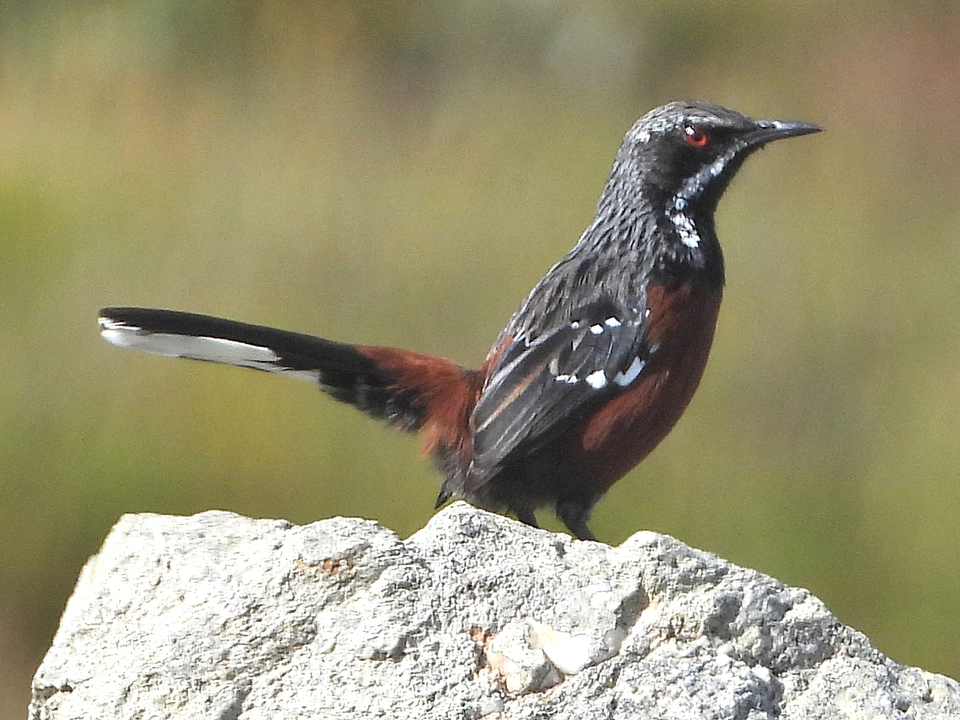
Chaetops frenatus (Eng. Cape Rockjumpers, Afr. Berglyster)
People come
from all over the world to see our Cape Rockjumpers. They are endemic to
mountainous fynbos and Rooiels is the most accessible place to see them.
You might hear
the Rockjumpers when you walk the dirt road from Rooiels to Pringle Bay. When
you scan the mountain slopes, you will see them scurrying over the rocks.
They do undertake
short flights, but mostly they run or hop over the rocks, where they forage for
insects or small lizards. They are inquisitive and sometimes come closer to
inspect the awestruck birdwatcher. Especially the young ones have no fear of
humans and come right down to the road.
Every few years
we have our famous fynbos fires, a natural occurrence in our area. That is when
the Rockjumpers disappear, to our great concern, but they do return once the
vegetation regenerates.
Cape
Rockjumpers nest on the ground, lining their nests with fluffy protea seed pods
or fur from our red rock hare.
As ground
nesters, rockjumpers can expect visits from the Cape grey mongoose, honey
badger, common egg-eater and other snakes.
Our Chacma
baboons love eggs. Open a car boot and they steal the eggs. Leave the kitchen
door open, and they raid the fridge – including the eggs. They also pinch eggs
from birds' nests.
Earth warming
might influence the survival of the Cape Rockjumper. Research has shown that
their numbers are declining in warmer parts of their habitat. The birds have
lower heat tolerance compared to other birds of the fynbos.
Here in
Rooiels, we are so lucky to see our Rockjumpers jumping. Start looking out for
them on your left as you past the smallholdings gate. Look around the area
where the milkwood trees grow, just below the leopard cave. Walk as far as the
Distillery, where they can sometimes be seen frolicking amongst the rocks. Then
slowly walk back, enjoying the scenery. A Rockjumper might just cross the road in
front of you.