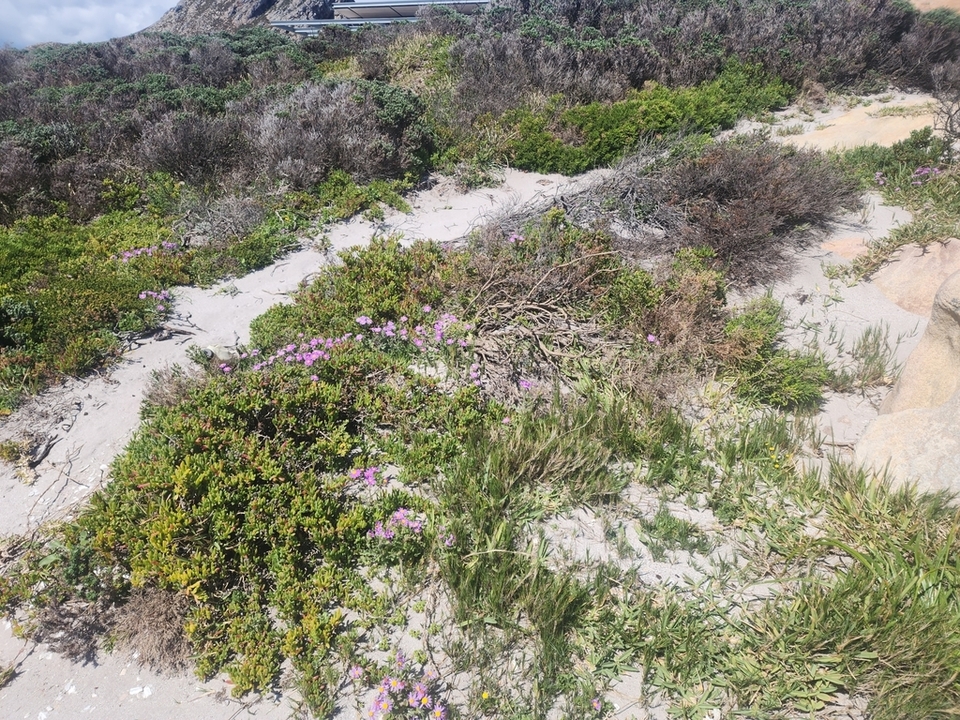
Flora Detail
| Common Name | Sandveld Ragwort |
| Family | Asteraceae (Sunflowers, Daisies, Asters, and Allies) |
| Date Observed | 20-09-2021 |
| Category | Shrubs |
|---|---|
| Catalogue No. | 3336RG |
| Flowering Time | Spring,Summer |
| Colour | Pink to Mauve |
| Locations Observed | |
| Estuary | |
| Koppie | |
| Nature Reserve | Few |
| Small Holding | |
| Village | Few |
| Greater Rooiels | |
Senecio arenarius
Information
Sandveld Ragwort
Description
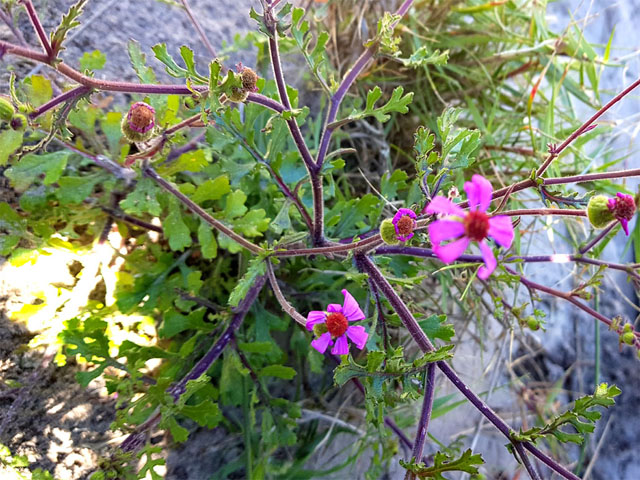
This is an annual herb up to 150–400 mm high. The glandular-hairy leaves are more or less clasping at the base, approximately 70 mm long and lobed into broad segments.
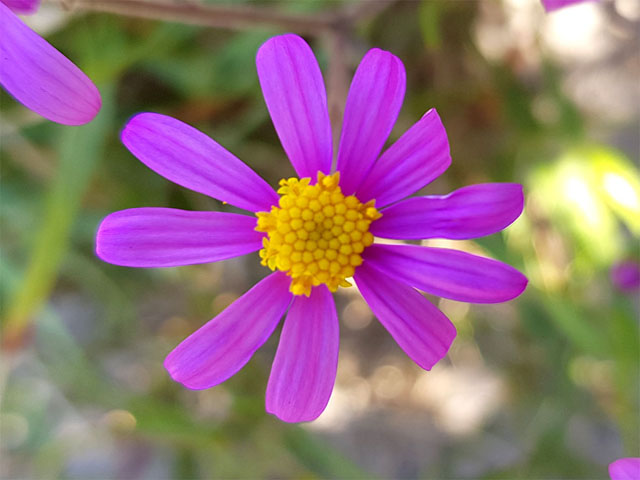
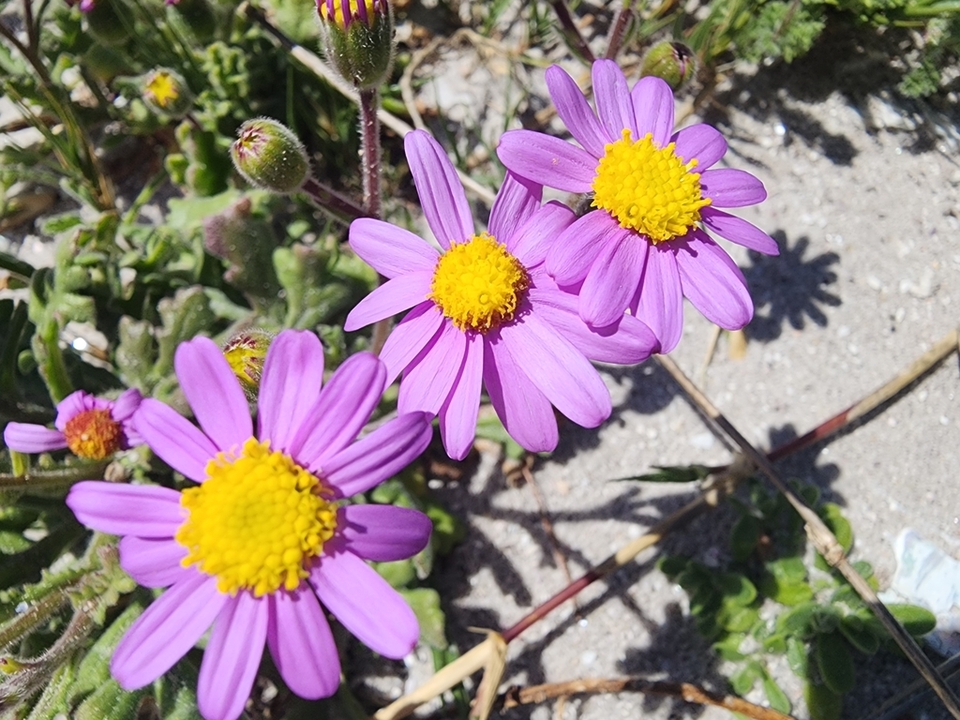
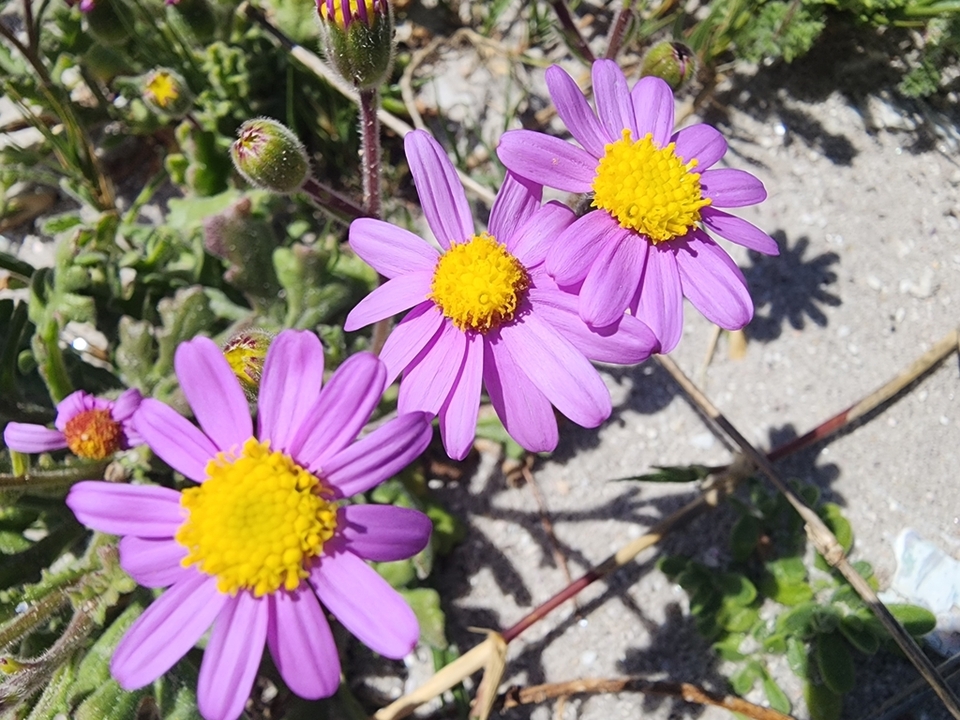
The flower heads measure 2, 5 –30 mm in diameter, resemble branched clusters or corymbs and consist of magenta ray and yellow disc florets. The cylindrical involucral bracts are free, in a single row with one to three minute bracts at the base.
Flowering period is from July–September.
Conservation Status
According to the website http://redlist.sanbi.org, accessed on 31 August 2015, the conservation status of this plant is LC (Least Concern). It is relatively widespread and common.
Distribution and habitat
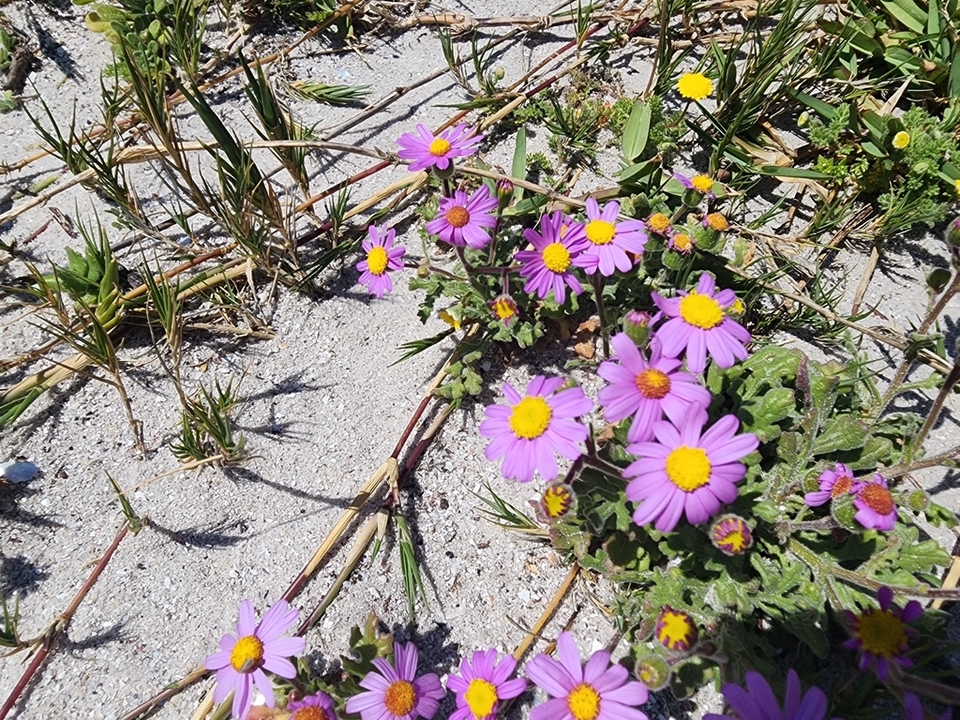
This species is found on sandy flats from the southern parts of Namibia and the Northern and Western Cape Provinces of South Africa, towards the Agulhas Plain. In both these provinces it grows both along the coast and further inland amongst, or as part of, seashore vegetation, fynbos (renosterveld and strandveld) and succulent karoo.
This species, given its vast geographical distribution, is subjected to various different climatic conditions. In some places the rainfall is about three times as much as others, and in the interior it experiences frost as opposed to none along the coast.
Derivation of name and historical aspects
The genus name Senecio is derived from the Latin senex meaning ‘old man’, alluding to the whitish grey-hairy pappus, which is often typical to this genus.
The specific epithet arenarius, is derived from the Latin word arena which means ‘sand’. Arenarius is, therefore. descriptive of the sandy habitats or places in which the species occurs.
Senecio is a cosmopolitan genus consisting of approximately 1 200 spp. In southern Africa the genus is represented by more than 200 species.
Ecology
It is likely that bees or beetles play a role in pollinating this species.
Uses
No medicinal or cultural aspects have been recorded.
Despite being an excellent annual with amazing horticultural potential, it is hardly found in cultivation.
SANBI