Flora Detail
| Common Name | Drunken Berry, Dune Nightshade, Dronkbessie (Afr.) |
| Family | Solanaceae (Nightshade Family) |
| Date Observed | 14-07-2021 |
| Category | Bushes |
|---|---|
| Catalogue No. | 4418RGu |
| Flowering Time | Spring,Autumn,Winter |
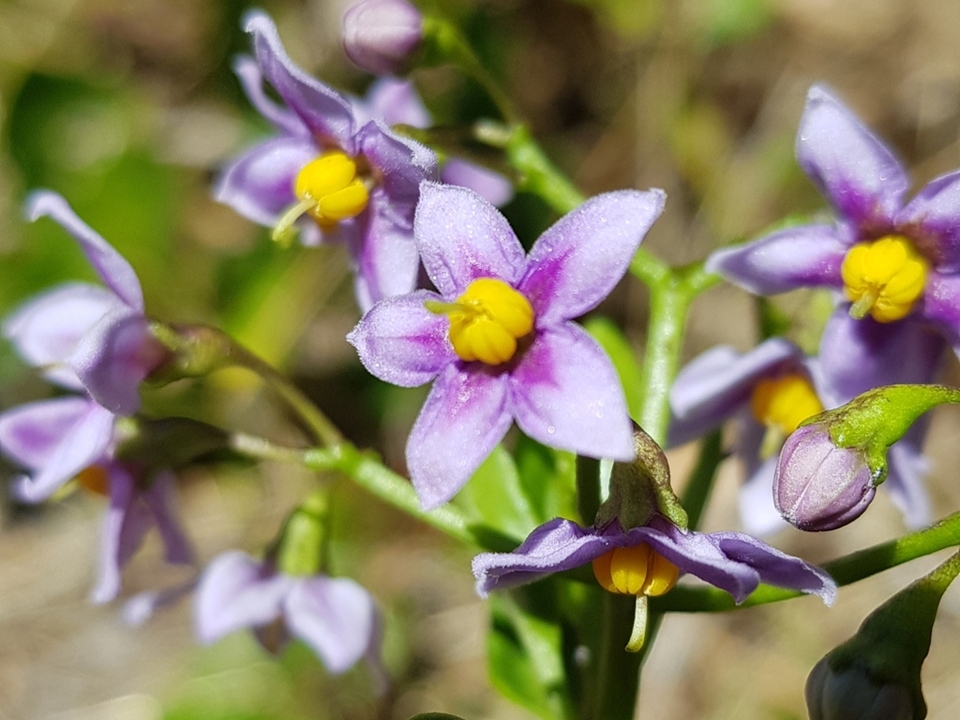
| Colour | Blue to Purple |
| Locations Observed | |
| Estuary | Few |
| Koppie | |
| Nature Reserve | Few |
| Small Holding | |
| Village | Few |
| Greater Rooiels | |
Solanum africanum
Information
Drunken Berry, Dune Nightshade, Dronkbessie (Afr.)
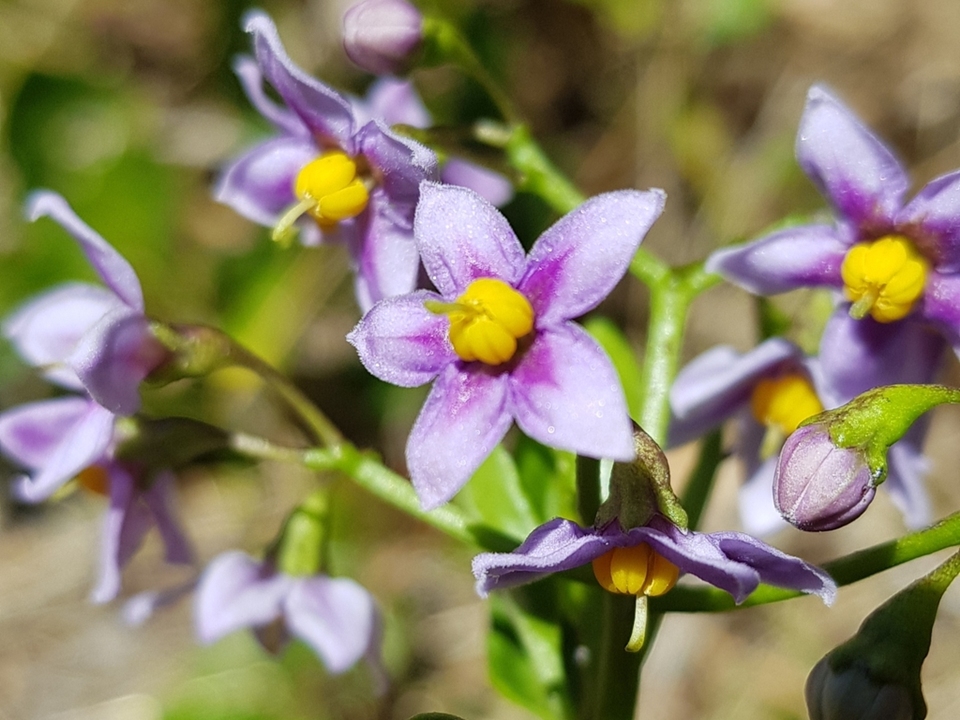
Solanum africanum (Dune Nightshade or Dronkbessie) is a hardy, perennial shrub endemic to South African coastal dunes, growing up to 3m with scrambling, angled stems. It features purple/white flowers, purplish-black fruit, and is used for stabilization. It is generally considered non-edible.
Key Details:
Common Names: Dune Nightshade, Dronkbessie, DronktouDune Nightshade (Solanum Africanum)
Habitat: Coastal dunes, thickets, and bushveld in the Western Cape, Eastern Cape, and KwaZulu-Natal
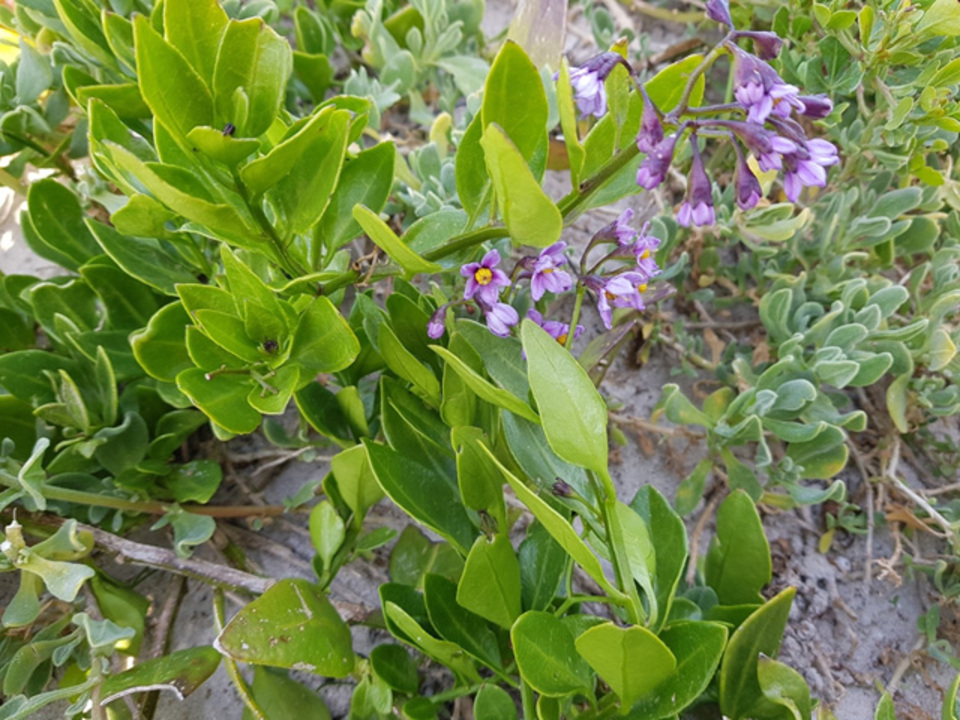
Growth Form: A scrambling, semi-succulent, or woody shrub/creeper, reaching up to 3-6m in length
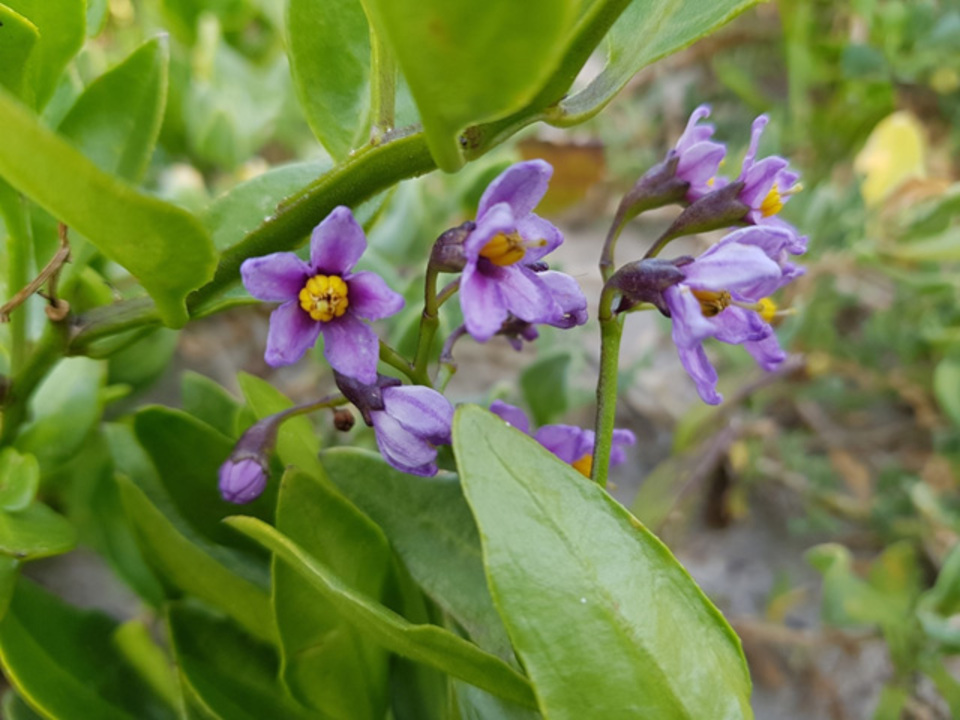
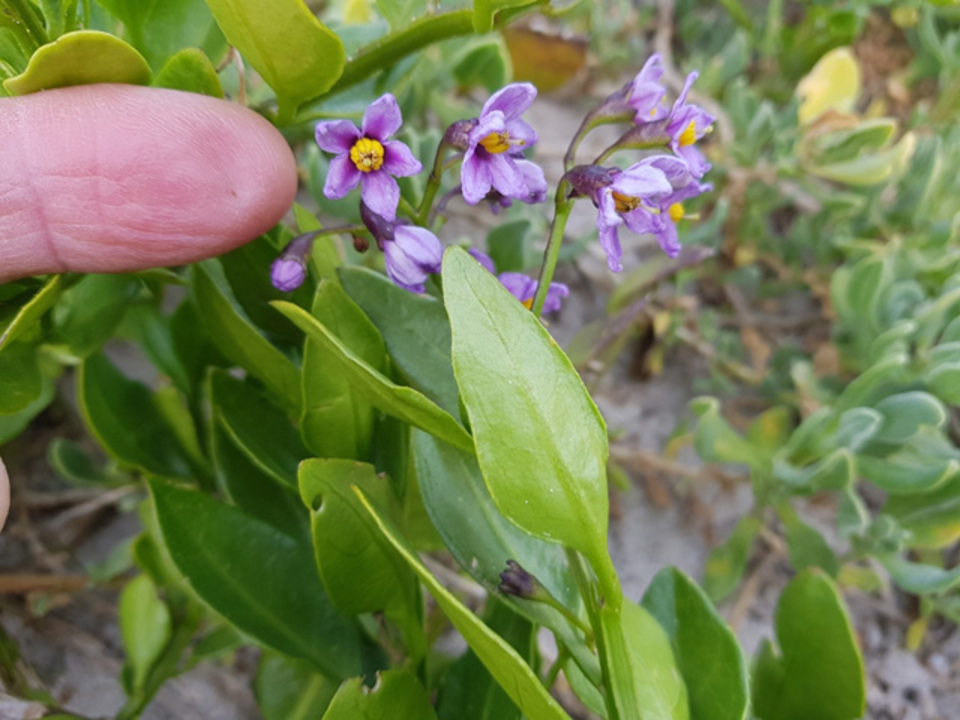
Appearance: Leaves are somewhat fleshy, lanceolate to ovate, and sometimes lobed. Young stems are characteristically square (quadrangular)
Flowers: Small (10mm) flowers, typically purple, mauve, or white with a yellow center, appearing in clusters from January to October
Fruit: Small (15mm) dark purple to black, poisonous/non-edible berries
Cultivation: Thrives in full sun, well-drained, sandy soil
Uses: Ideal for stabilizing soil, covering fences, or as an ornamental plant
(AI Overview)