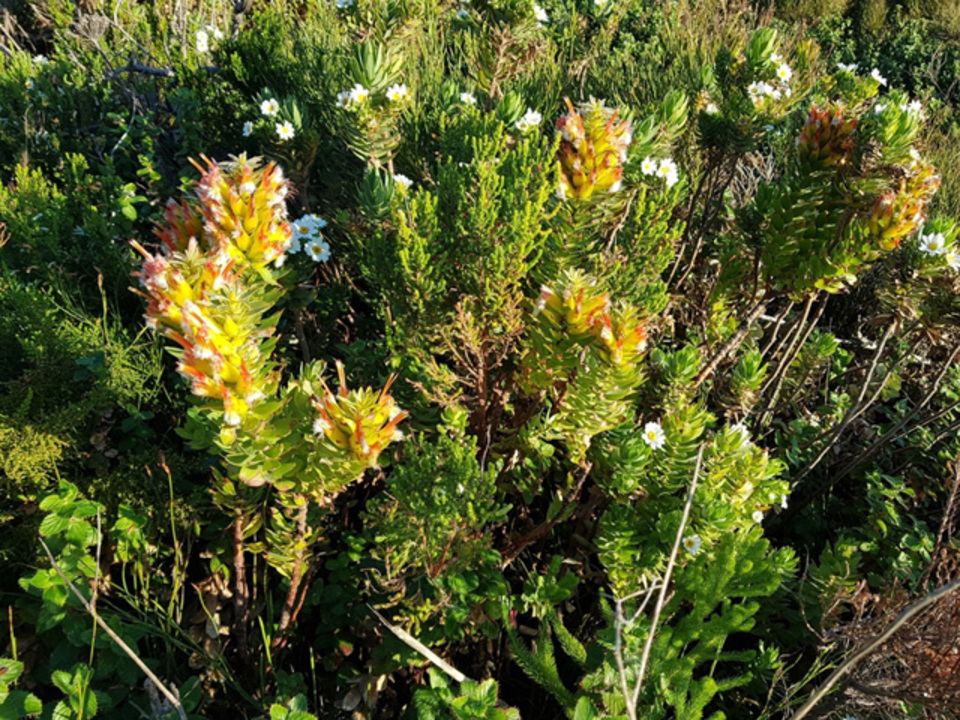
Flora Detail
| Common Name | Marsh Pagoda Eng.); Vleistompie (Afr.) |
| Family | Proteaceae |
| Date Observed | 18-08-2021 |
| Category | Bushes |
|---|---|
| Catalogue No. | 4421RG |
| Flowering Time | Spring,Winter |
| Colour | Orange |
| Locations Observed | |
| Estuary | Not Observed |
| Koppie | Not Observed |
| Nature Reserve | Not Observed |
| Small Holding | Introduced |
| Village | Introduced |
| Greater Rooiels | Not Observed |
Mimetes hirtus
Information
Marsh Pagoda-Bush
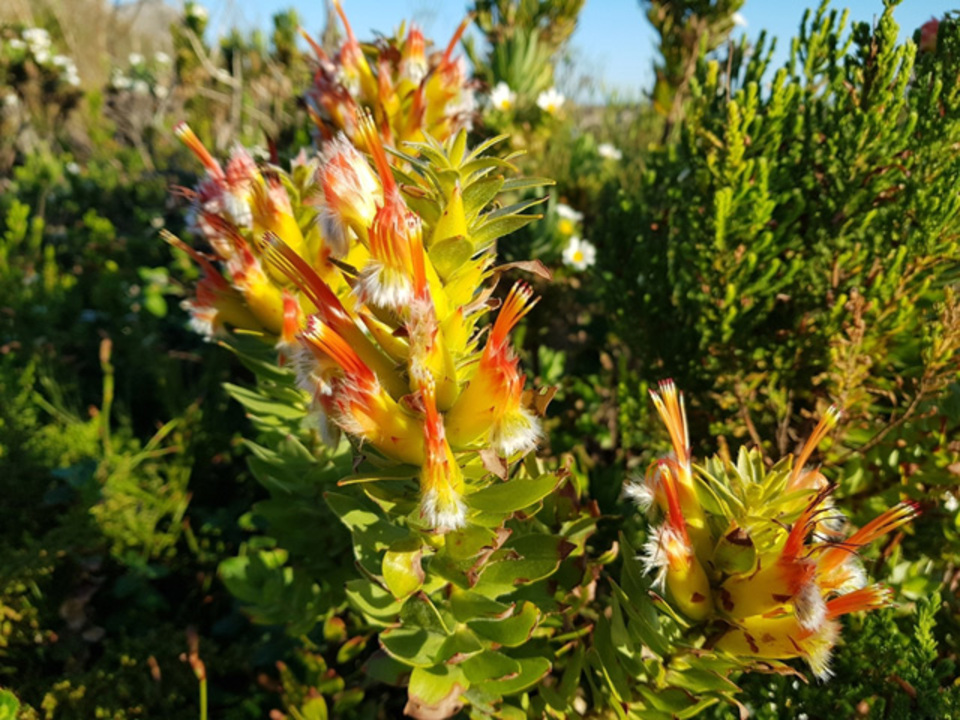
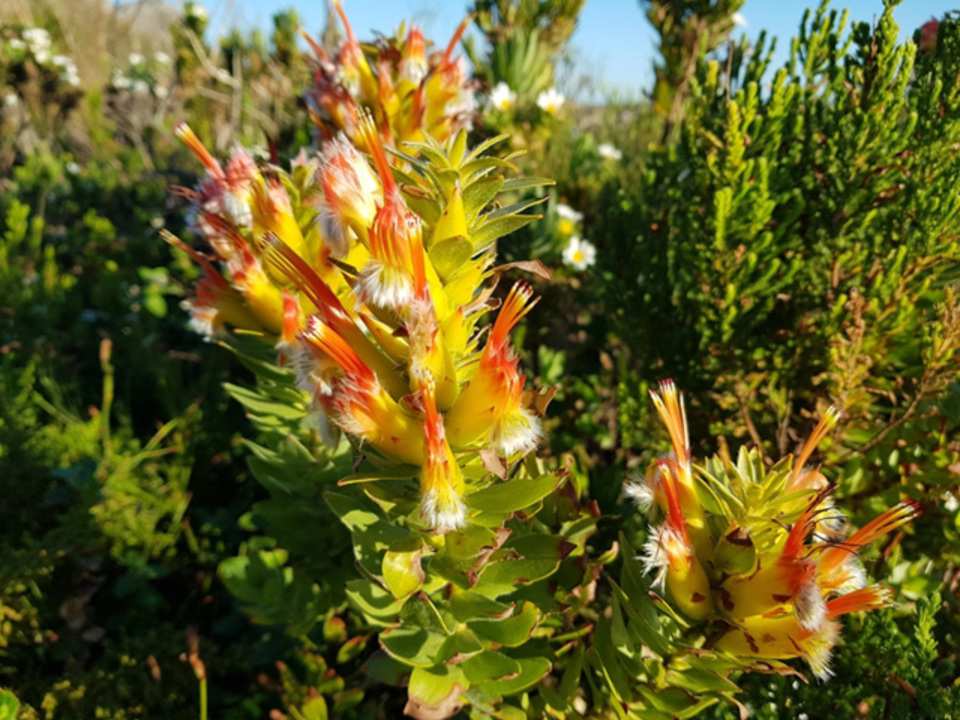
A STRIKING FIND ON THE SMALLHOLDING ROAD
Walking along the smallholding road, it is such a joy to
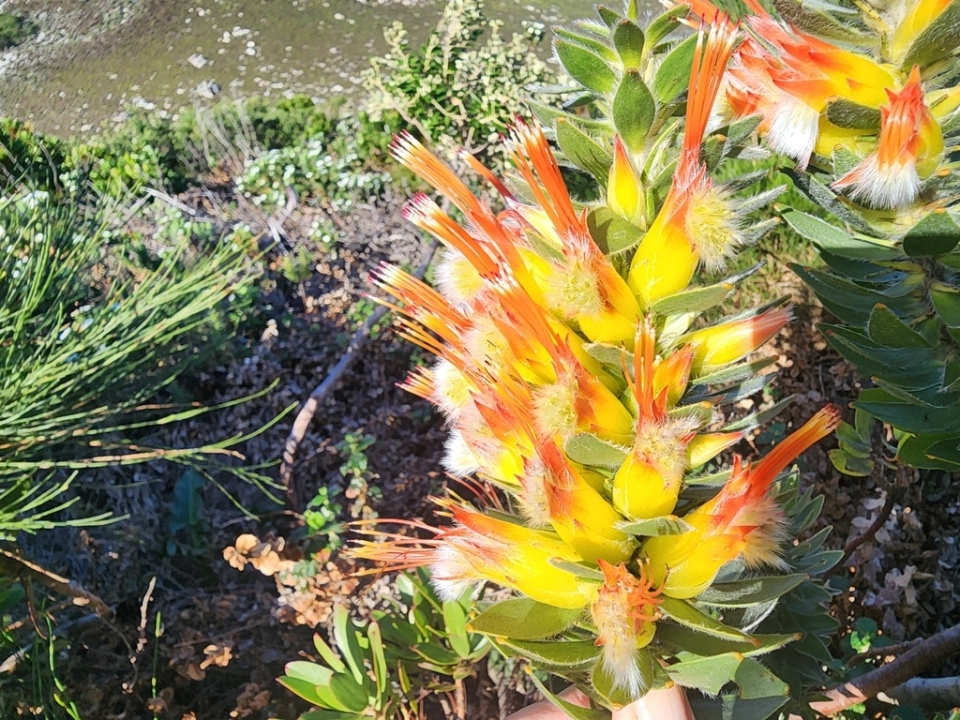
come across a MIMETES HIRTUS, or Marsh Pagoda. And this one was particularly
striking.
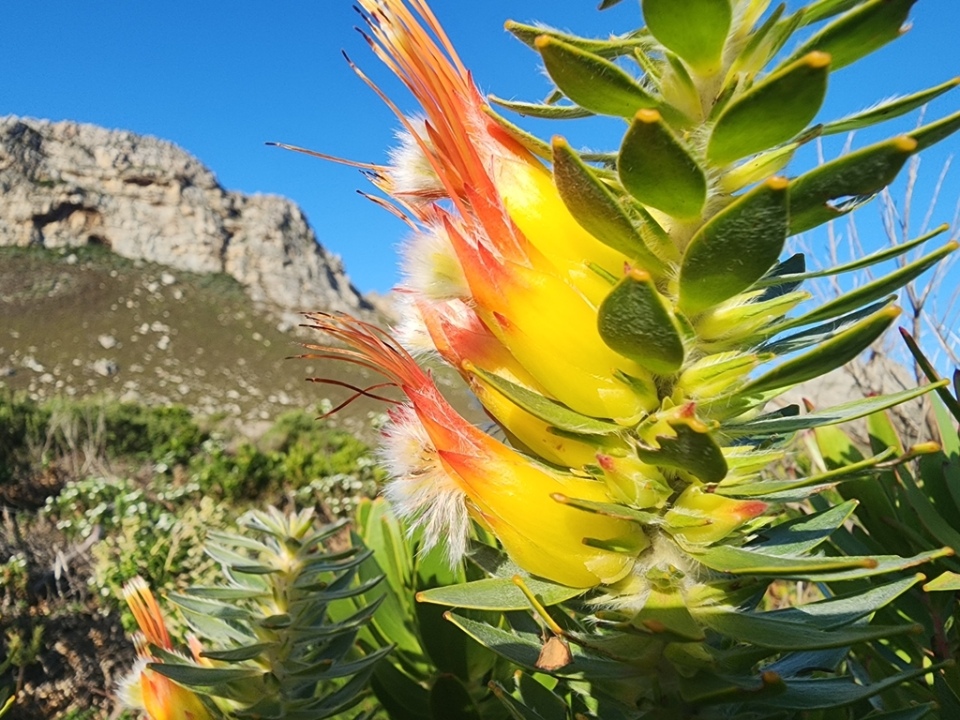
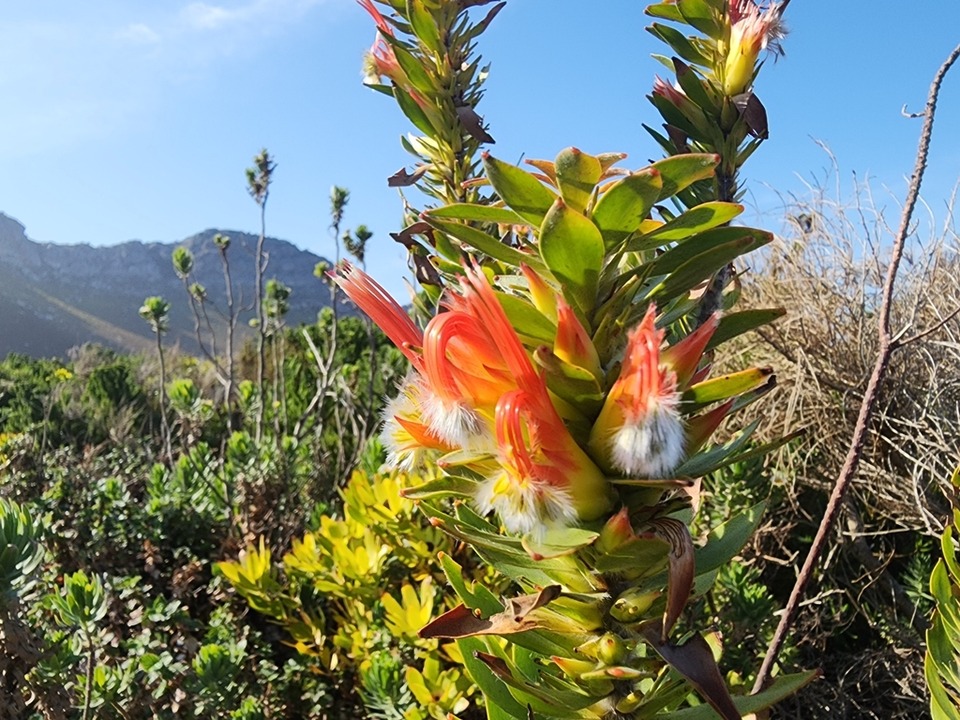
You cannot really miss it. The bright red and yellow colours
immediately catch your eye, while the flowers themselves look wonderfully
strange—almost as though someone has decorated a bottlebrush with fluffy little
tails.
DESCRIPTION
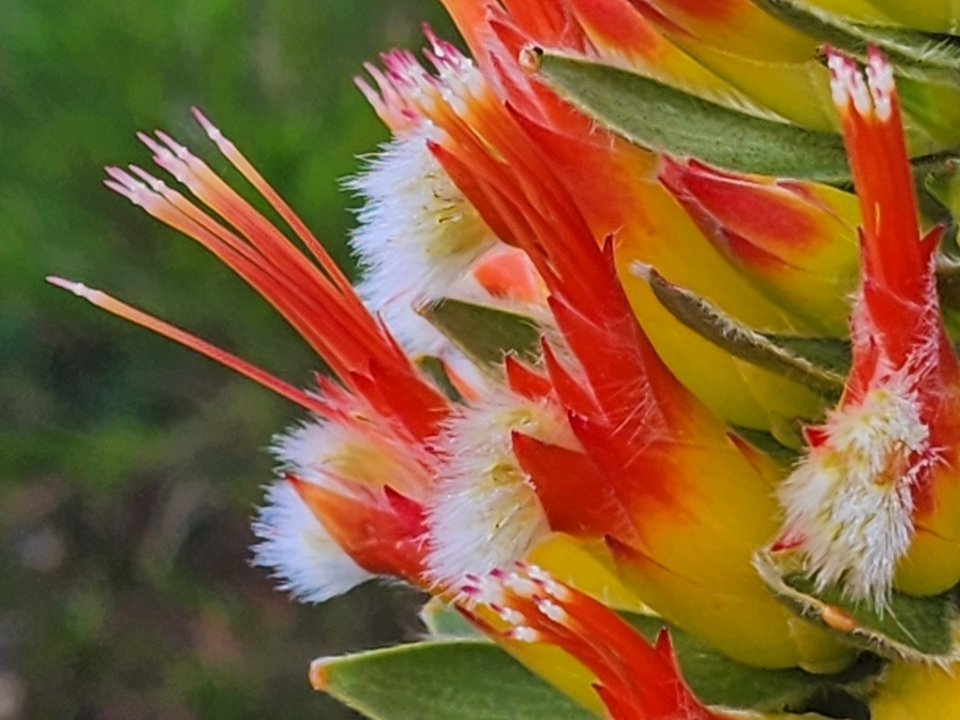
The flowerheads contain between nine and fourteen flowers,
each surrounded by yellow, tube-shaped bracts tipped with red. From these
emerge the striking red styles, about 50–55 mm long, together with the
needle-shaped pollen presenters and fluffy white perianths.
The result is an extraordinary combination of red, yellow
and white. Like so many fynbos plants, it is both beautiful and wonderfully
weird.
DISTRIBUTION & HABITAT
Mimetes hirtus grows in boggy, wet habitats at low
altitudes. These specialised habitats are under increasing pressure from
urbanisation, agricultural development and invasive alien plants. Some alien
species, including invasive bottlebrushes, thrive in the same wet conditions
and can compete with native vegetation.
POLLINATION & SEEDING
All members of the genus Mimetes have evolved
flowerheads adapted for pollination by birds. The brilliant red and yellow
bracts and styles are highly attractive to them, with the Cape Sugarbird
being an important pollinator of Mimetes hirtus.
Like so many fynbos species, Marsh Pagoda is adapted to
fire—but it cannot simply grow back from its roots after a burn. Adult plants
are reseeders and are killed by fire, making the survival of their seeds
essential.
And here the ants become the unlikely heroes.
Some indigenous fynbos ants collect the seeds and carry them
down into their underground nests. There the seeds are protected from the heat
of fire and from predators, waiting for the right conditions to germinate.
All the Mimetes hirtus on the smallholdings were
killed in the devastating 2017 fire. The plants we see today are therefore part
of the remarkable regeneration from the underground seed bank protected by the
ants.
Status: Endangered