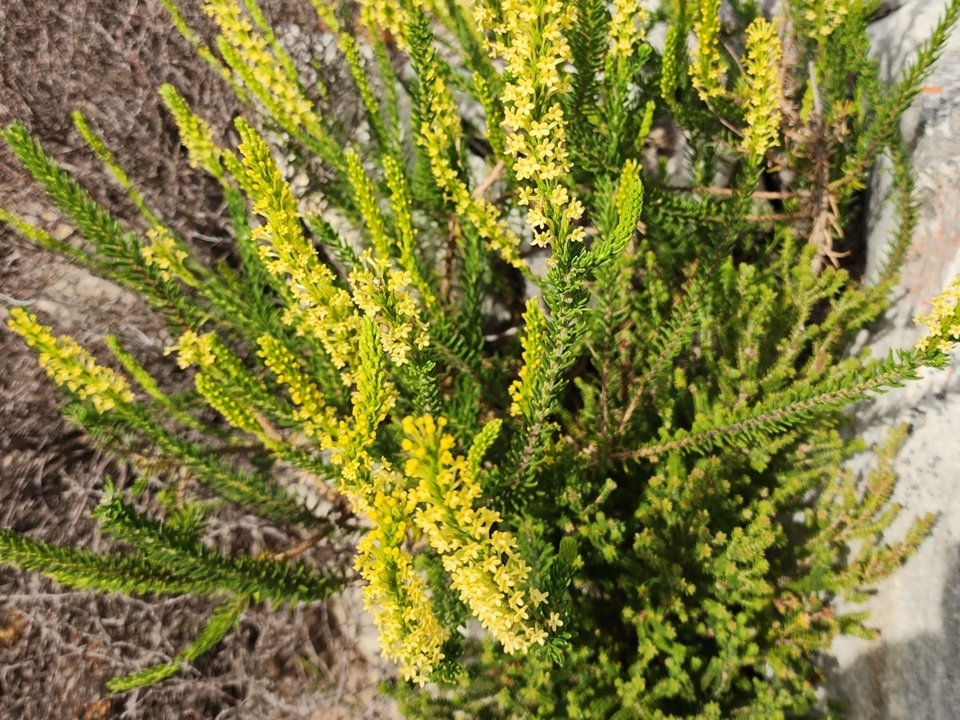
Flora Detail
| Common Name | Snake Cats tail bush, Katstert (Afr.) |
| Family | Scrophulariaceae (Figwort Family) |
| Date Observed | 17-11-2021 |
| Category | Shrubs |
|---|---|
| Catalogue No. | 3358RGu |
| Flowering Time | Spring,Summer |
| Colour | Yellow |
| Locations Observed | |
| Estuary | |
| Koppie | |
| Nature Reserve | Few |
| Small Holding | |
| Village | |
| Greater Rooiels | Few |
Microdon dubius
Information
Snake Cats tail bush, Katstert (Afr.)
Microdon dubius, known as the "cat's tail" or
katstert, is a South African endemic, night-scented, moth-pollinated shrublet
in the Scrophulariaceae family. It grows up to 60 cm tall on rocky sandstone
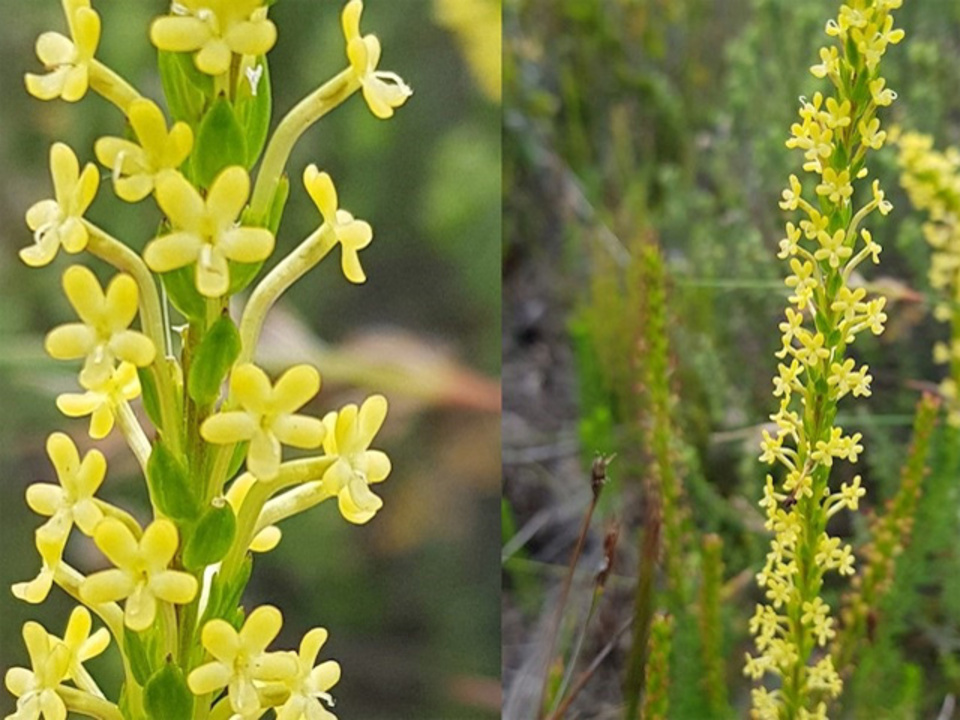
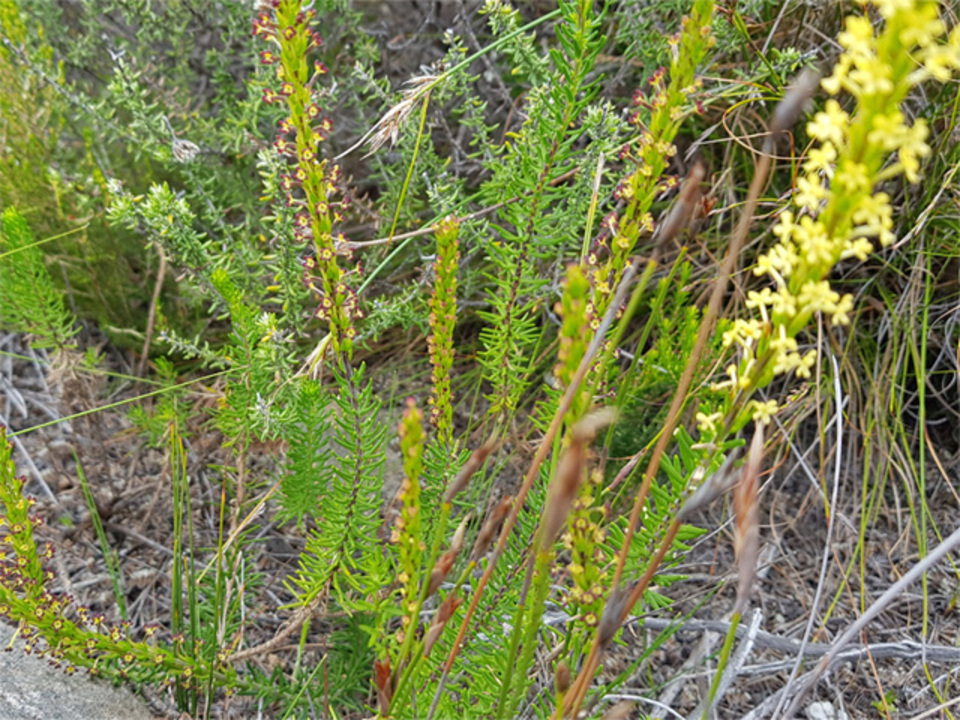
slopes, producing long, dense spikes of yellowish to maroon-petaled flowers
from August to January.
Key Details for Microdon dubius:
Common Names: Cat's tail, katstert.
Habit: A densely leafy, woody-based shrublet reaching up to
60 cm in height with wand-like, hairy stems.
Leaves: Oblong-linear in shape.
Flowers: Long, narrow, spike-like inflorescences (similar to
a cat's tail) featuring yellow flowers often with maroon to brown, short-tubed
petals.
Bloom Period: Long flowering season from June to December,
with a peak in spring.
Habitat & Distribution: Found in the Western Cape of
South Africa, specifically on rocky, sandstone slopes.
Ecology: It is, a nocturnal-scented plant, which is strongly
associated with moth pollination.
Taxonomy: Formerly known as Agathelpis dubia. The name
Microdon refers to the small teeth on the calyx, and dubius indicates it was
historically difficult to place.
Distinctive Features: The bracts are ovate, keeled, and
often deflexed in fruit.
Microdon dubius is considered a relatively common yet easily
overlooked shrublet during the day due to its subtle coloring and
night-blooming characteristics.
(AI Overview)
Click to find out more on Inaturalist