Flora Detail
| Common Name | Common Storksbill, Rose-scented pelargonium, coast pelargonium, kusmalva(Afr.), roosmalva(Afr.) |
| Family | Geraniaceae (Geranium Family) |
| Date Observed | 10-02-2021 |
| Category | Shrubs |
|---|---|
| Catalogue No. | 3388RGud |
| Flowering Time | Spring,Summer |
| Colour | Pink to Mauve |
| Locations Observed | |
| Estuary | |
| Koppie | |
| Nature Reserve | Few,Many |
| Small Holding | |
| Village | |
| Greater Rooiels | Many |
Pelargonium capitatum
Information
Common Storksbill, Rose-scented pelargonium, coast pelargonium, kusmalva(Afr.), roosmalva(Afr.)
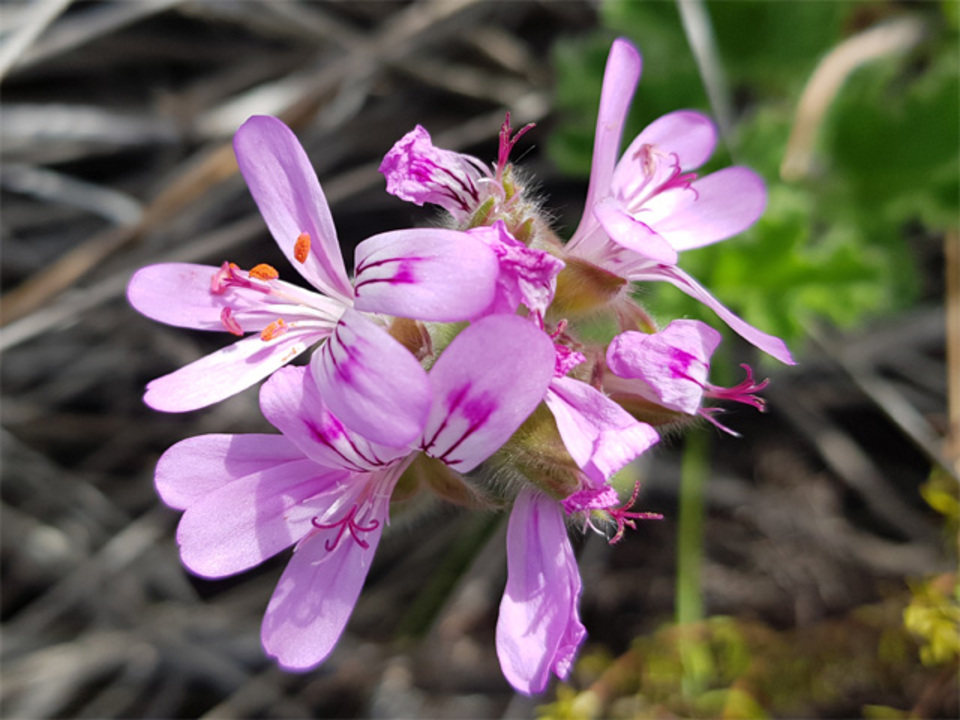
A ROSE-SCENTED COASTAL FAVOURITE
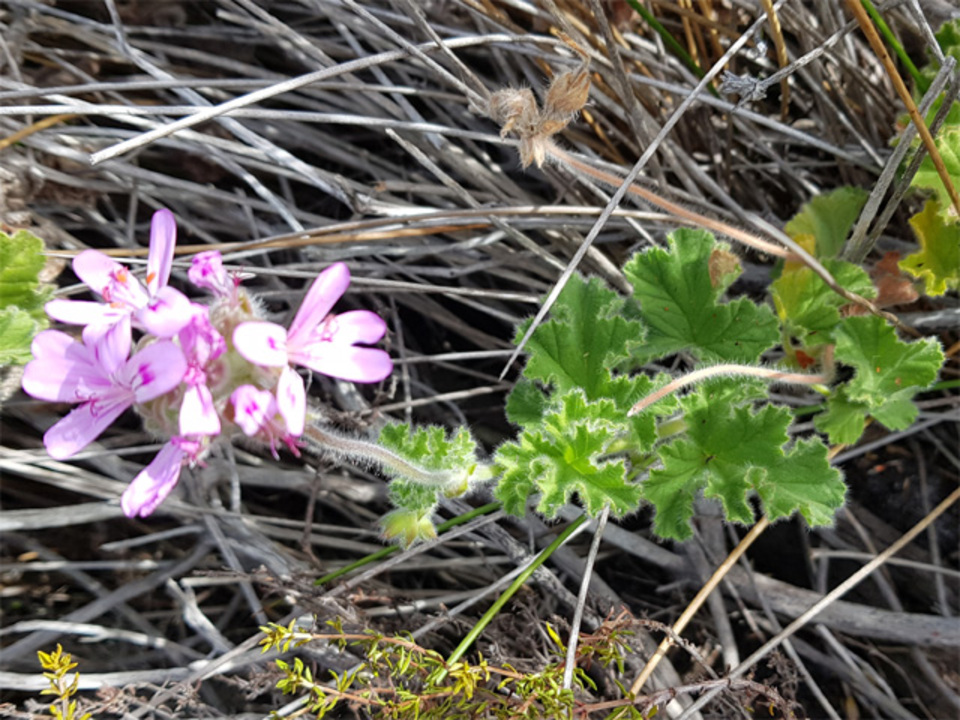
Pelargonium capitatum grows along our coast, among
the sand dunes, in fynbos gardens and on the lower mountain slopes. Its
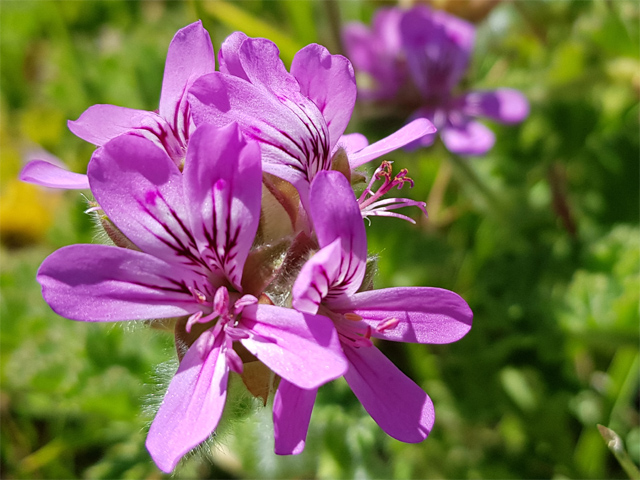
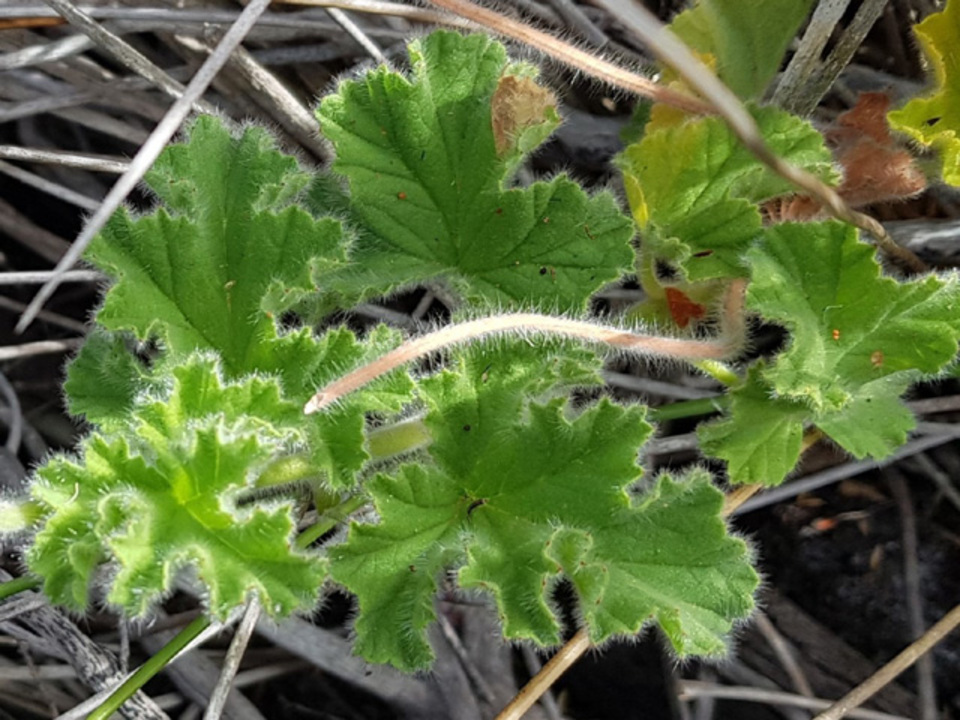
crinkled leaves are velvety soft and strongly rose-scented, while the bright
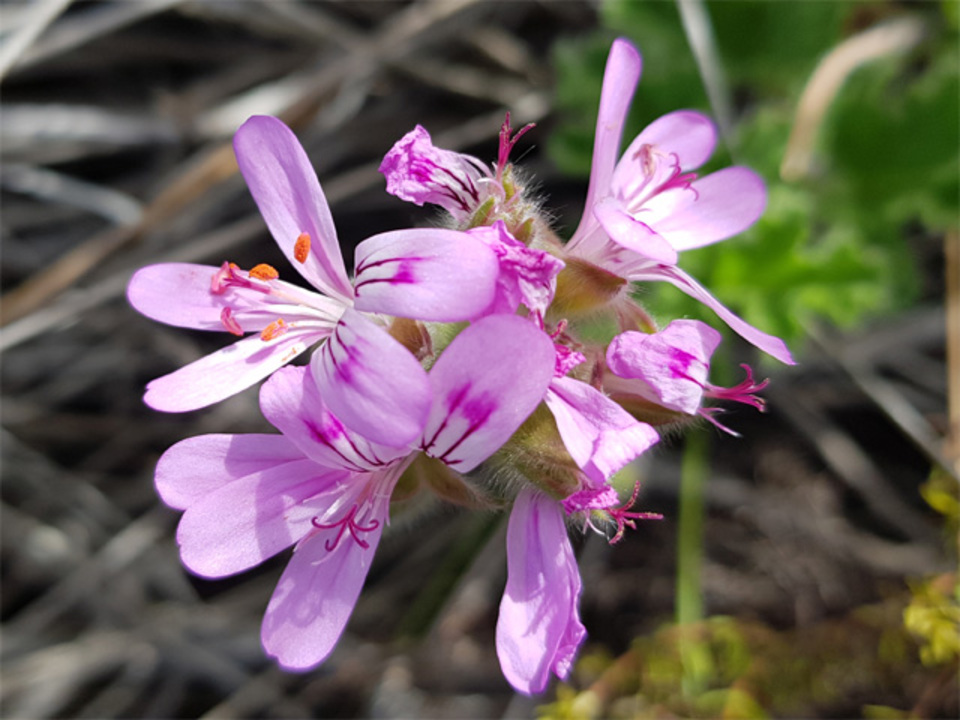
pink flowers have distinctive beetroot-coloured stripes on their two slightly
larger upper petals.
This coastal malva is cultivated for its rose-scented oil,
which is used in cosmetics, perfumes, essential oils and ointments.
Since early colonial times, preparations made from its
leaves have been used in traditional remedies for everything from soothing
cracked skin to treating an astonishing variety of ailments — both imaginable
and unimaginable!
Pelargonium capitatum occurs from Lambert's Bay along
the coast to KwaZulu-Natal. It is also enjoyed by various animals, including
tortoises, small antelope, baboons and spurfowl.
A CUP OF ROOSMALVA TEA?
Pick a few leaves of Pelargonium capitatum from your
garden and rinse them under running water.
Dry them in the sun for a day or two. Pour a cup of boiling
water over two dried leaves and allow to steep. Enjoy without milk.
You’re going to have to compete with the baboons though, for
they also like the leaves.
Conservation status: Least Concern
Click here to find out more from Inaturalist