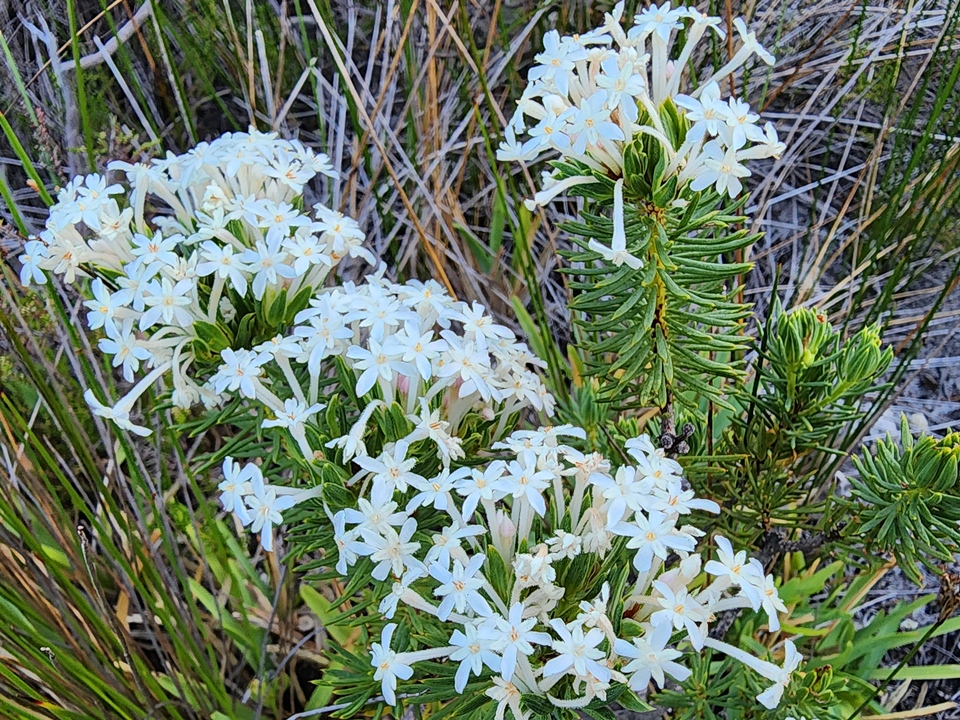
Flora Detail
| Common Name | Needle Cape saffron, aandbossie, juffertjie-roer-by-die-nag(Afr.) |
| Family | Thymelaeaceae (Stringbarks) |
| Date Observed | 18-08-2021 |
| Category | Shrubs |
|---|---|
| Catalogue No. | 3424RGu |
| Flowering Time | Spring |
| Colour | White to Grey |
| Locations Observed | |
| Estuary | |
| Koppie | |
| Nature Reserve | |
| Small Holding | Few |
| Village | |
| Greater Rooiels | |
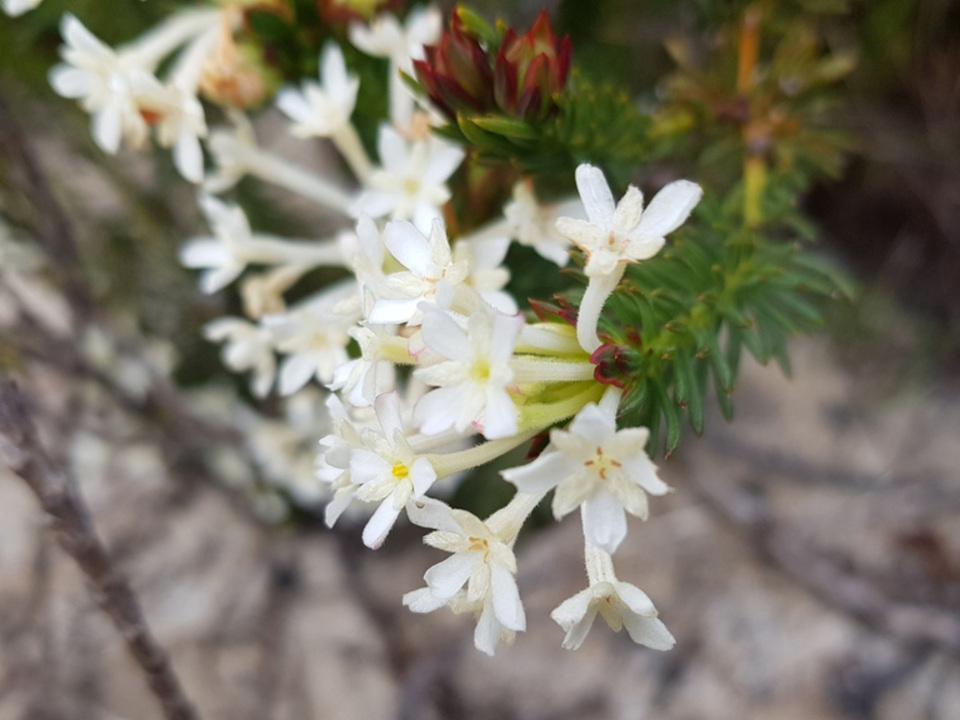
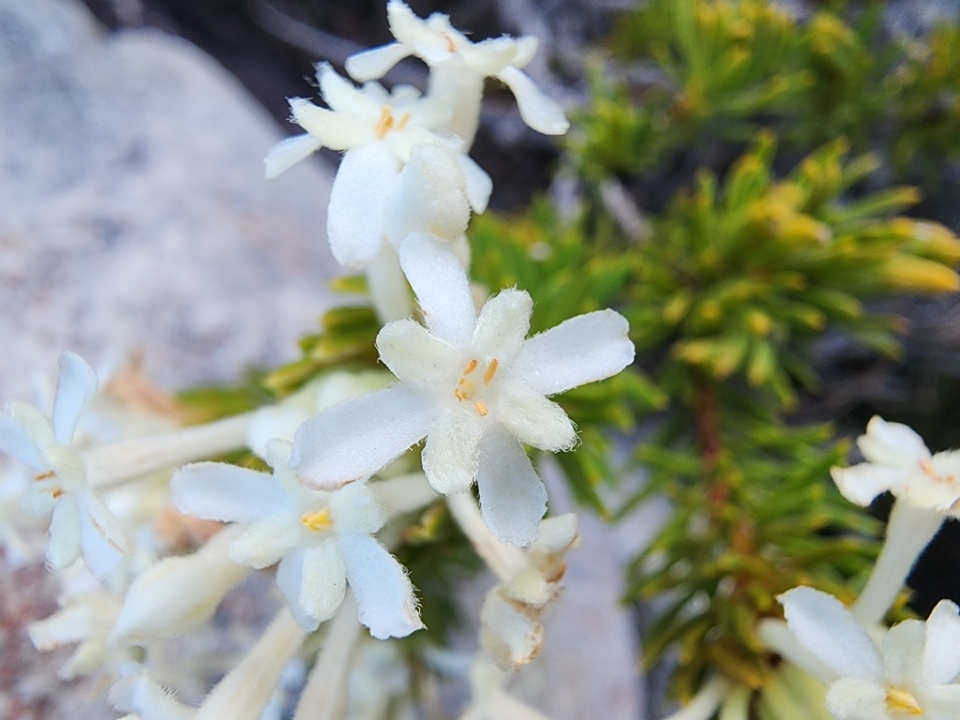
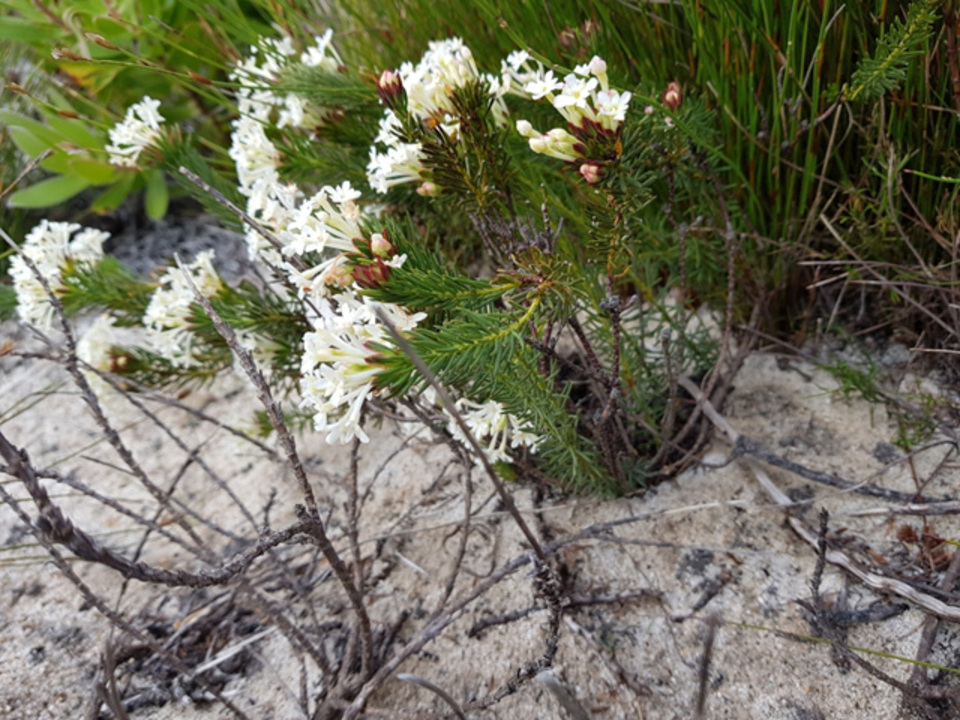
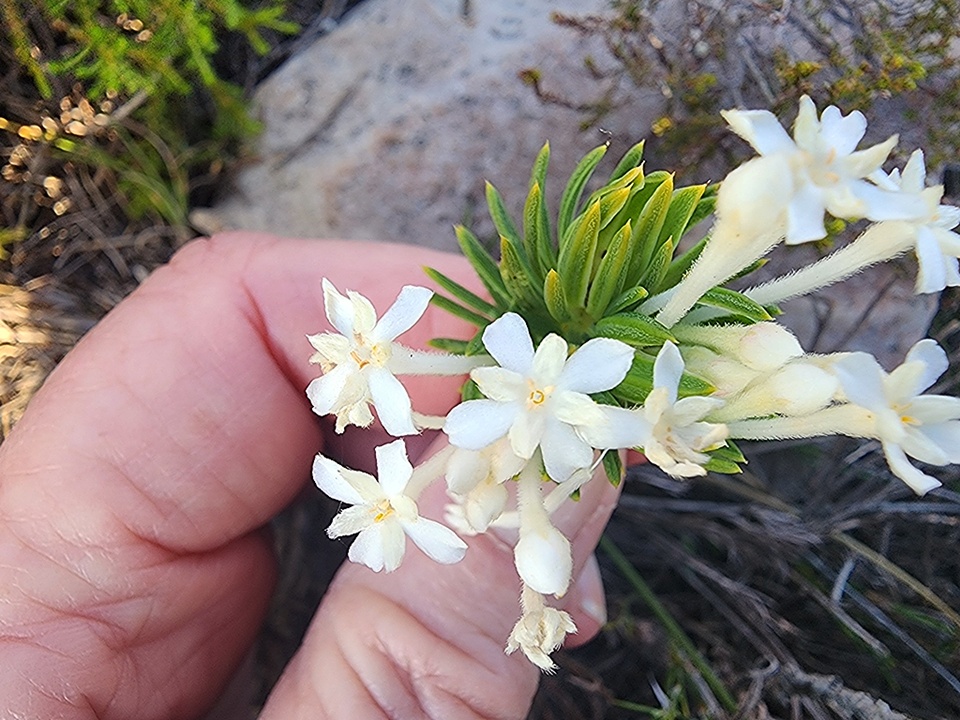
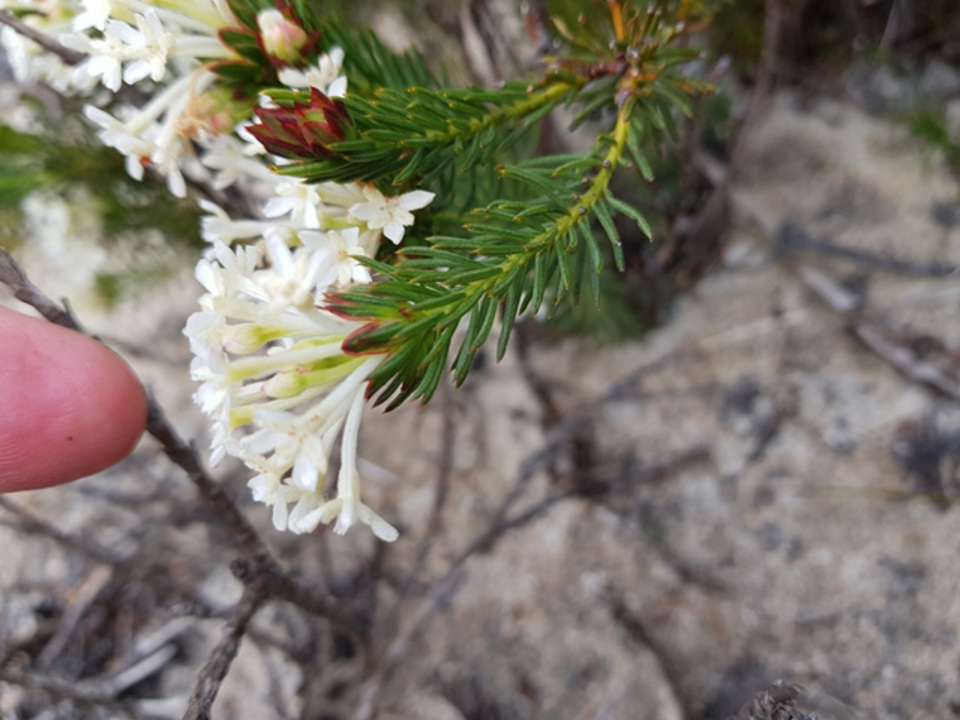
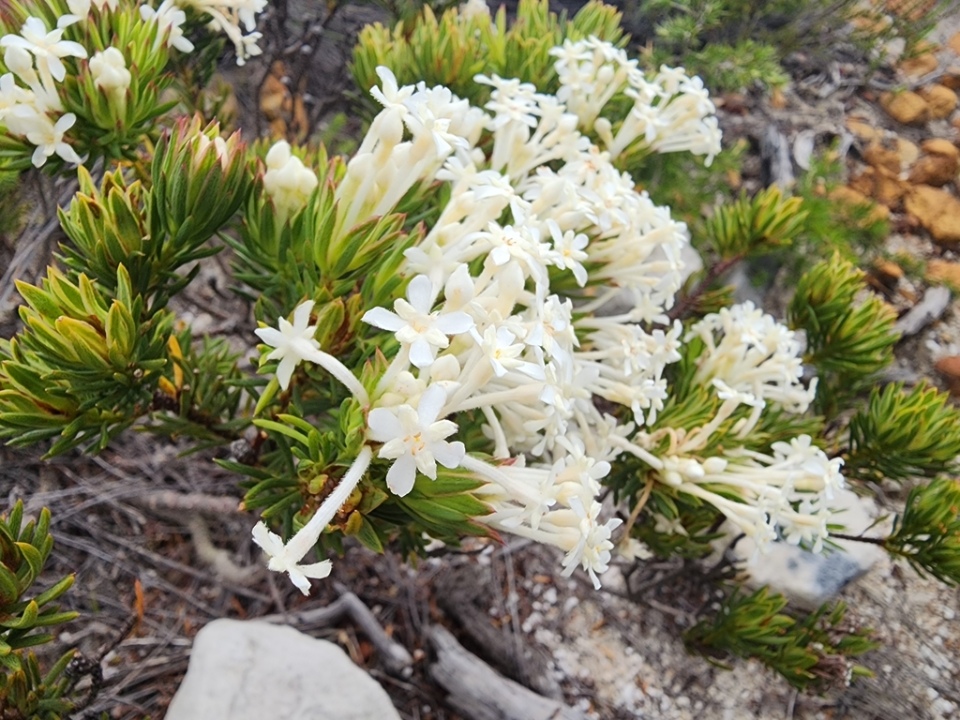
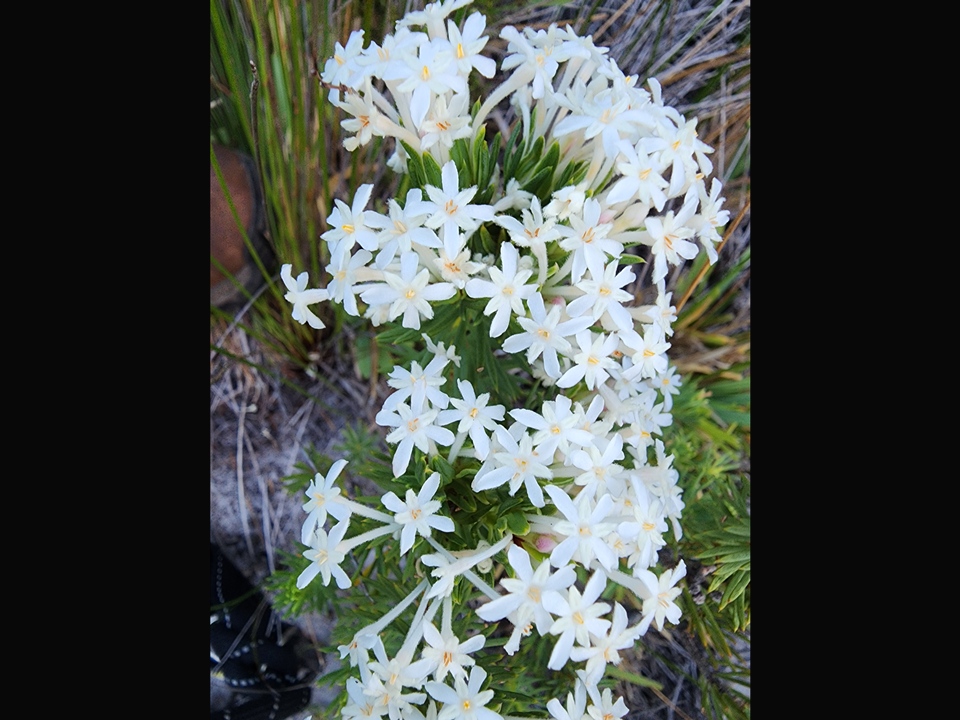
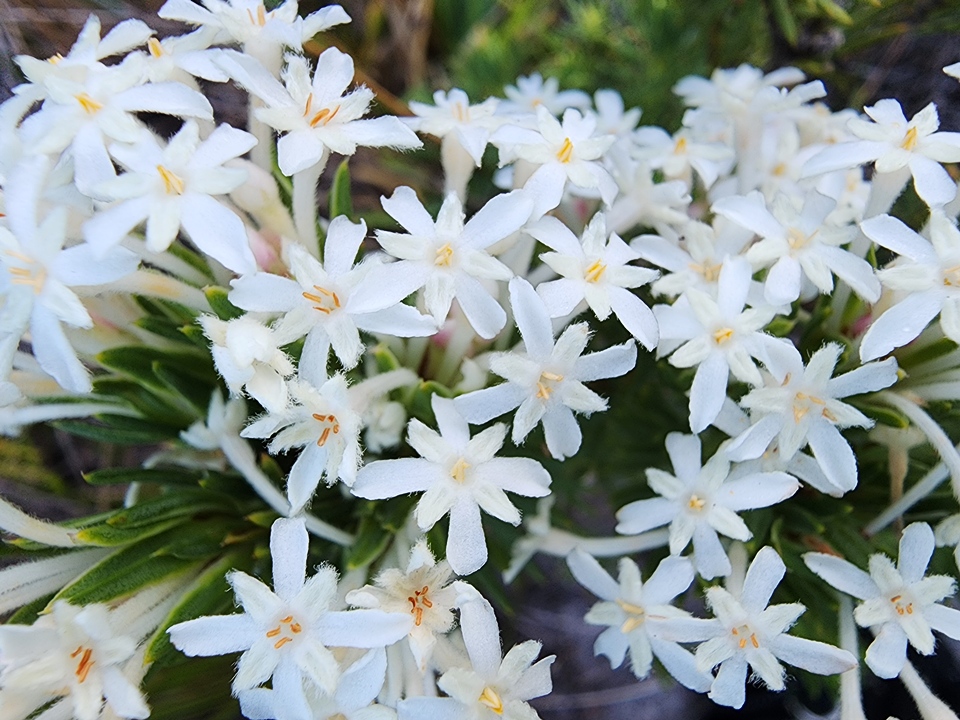
Gnidia pinifolia
Information
Needle Cape saffron, aandbossie, juffertjie-roer-by-die-nag(Afr.)
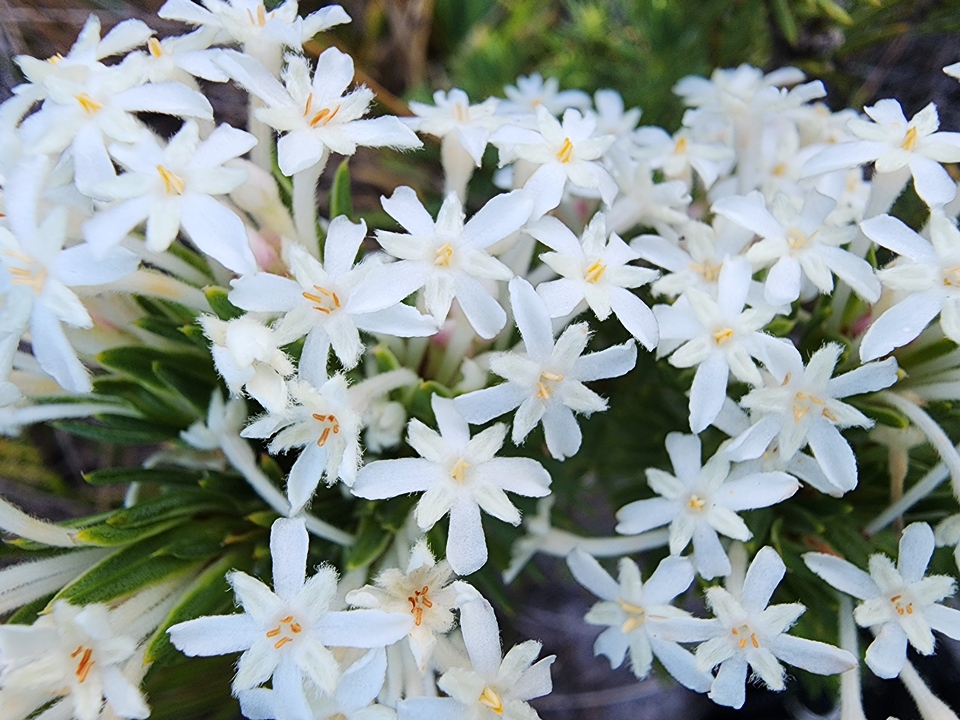
Gnidia pinifolia (Pine-leaved Saffron Bush) is a hardy, erect South African fynbos shrub, growing up to 1m tall with needle-like leaves and fragrant, white-to-pink flowers present year-round, peaking in summer. It thrives in full sun, well-drained soil, and is ideal for gardens, preferring coastal, sandy areas.
Key Details
Common Names: Pine-leaved Saffron Bush, Juffertjie-roer-by-die-nag (Afrikaans).
Appearance: Erect, slender-branched, single-stemmed shrublet, reaching 0.8–1m, with acerose (needle-like) leaves.
Flowers: Clusters of 10+ flowers at branch tips; petals are creamy-white, often with pink/reddish bases, and emit a strong scent at night.
Habitat & Ecology: Found on coastal flats and slopes in fynbos; endemic to South Africa (Western and Eastern Cape).
Cultivation: Propagated by cuttings; requires full sun and well-drained soil.
Uses: Popular for fynbos gardens;, can be pruned into a low hedge.
Characteristics
Fragrance: Night-scented, attracting moths.
Blooming Season: Year-round, primarily January to December.
Growth Rate: Perennial, hardy shrub.
Common Name Meaning: "Juffertjie-roer-by-die-nag" means "young-lady-gad-about-at-night," referring to the strong evening perfume. (AI Overview)
Click to find out more on iNaturalist