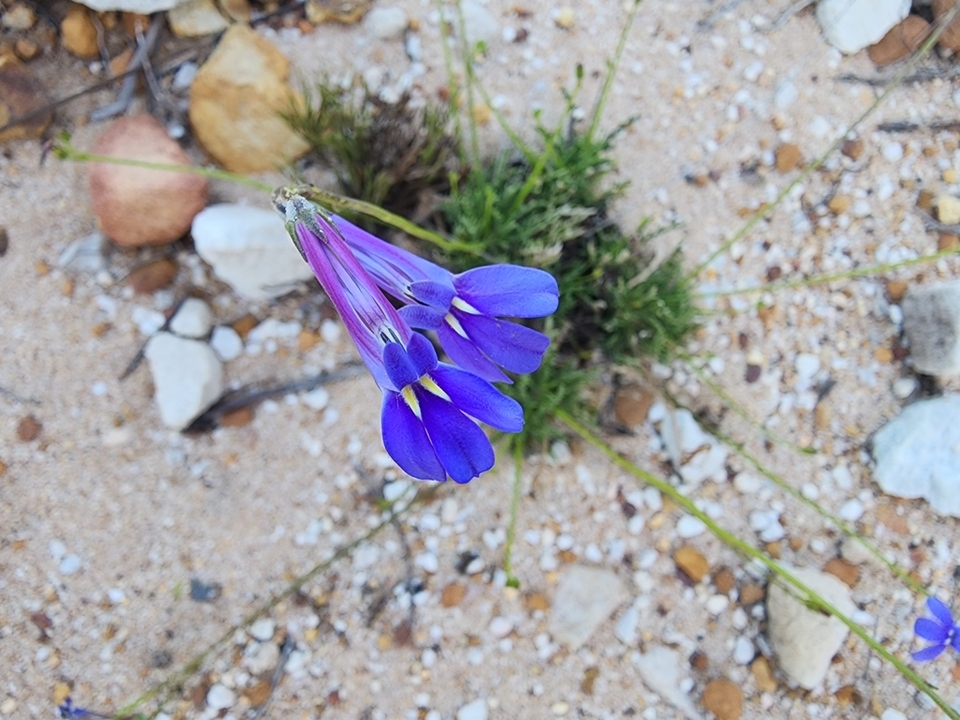
Flora Detail
| Common Name | Crownleaf Lobelia |
| Family | Campanulaceae |
| Date Observed | 17-11-2021 |
| Category | Shrubs |
|---|---|
| Catalogue No. | 3426RGd |
| Flowering Time | Spring,Summer |
| Colour | Blue to Purple |
| Locations Observed | |
| Estuary | Not Observed |
| Koppie | Not Observed |
| Nature Reserve | Few |
| Small Holding | Few |
| Village | Few |
| Greater Rooiels | Few |
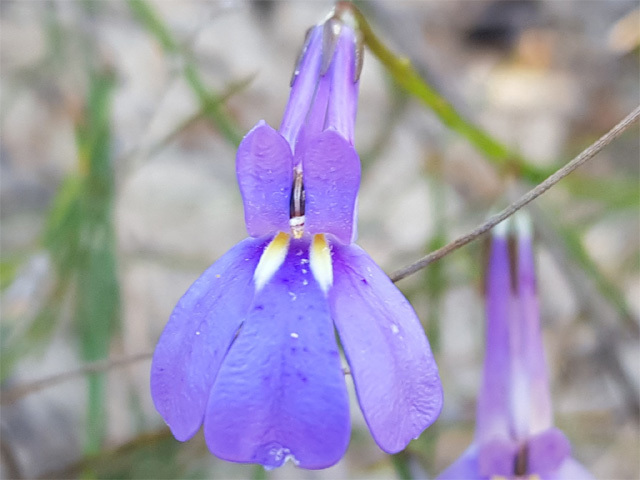
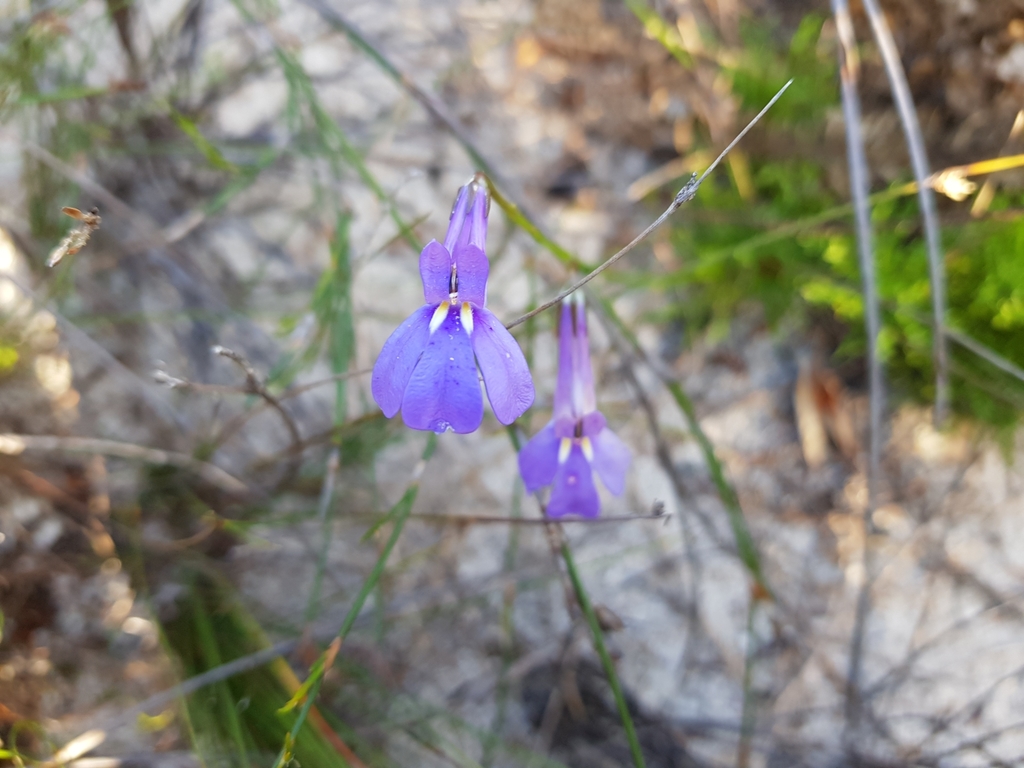
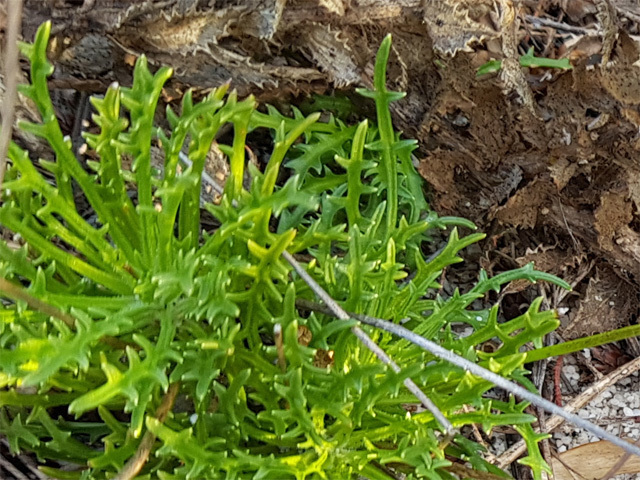
Lobelia coronopifolia
Information
Crownleaf Lobelia
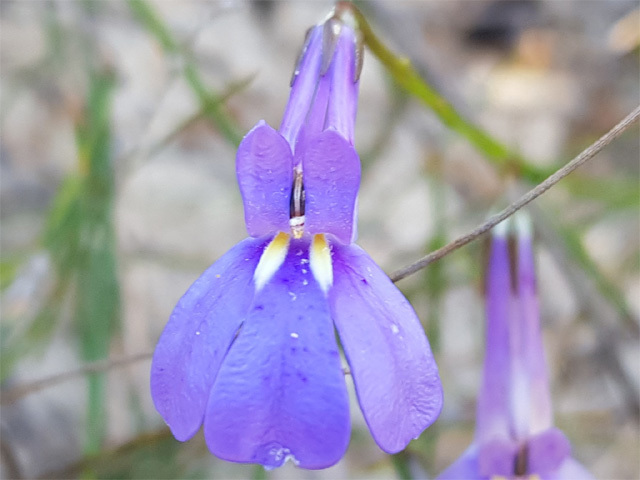
LOBELIA CORONOPIFOLIA
INTRODUCTION
There’s a lobelia in your garden—or perhaps along your road verge.
Simply step outside and have a look.
Lobelias grow in a remarkable variety of habitats, from rocky slopes and
sand dunes to sandy flats, shady damp places, coastal mountain slopes, and even
forest floors.
They also appear in a wide range of colours—from white and pink to
cerise and many shades of blue. Crown-leaf Lobelia is surely one of the most
striking.
They look a little like ballerinas, don’t you think?
There are around 360 species of Lobelia worldwide, along with many
hybrids. Gardeners favour them as edging plants in flower beds, containers, and
hanging baskets.
South Africa has 69 species, and in the Rooiels corridor we have already
identified quite a few—though there are certainly more waiting to be
discovered.
HABITAT
Lobelias thrive in diverse habitats, including rocky slopes, sand dunes,
sandy flats, shady damp areas, coastal mountain slopes, and forest floors.
In Rooiels, we often encounter them while hiking.
POLLINATION
Lobelia flowers promote cross-pollination by allowing the male
reproductive organs to mature first.
They are pollinated by a variety of insects—for no self-respecting
insect can pass a beautiful lobelia.
USES
Lobelias are easy to cultivate and have a long flowering period, making
them popular garden plants.
Some South African lobelia species are also used in traditional
medicine.