Flora Detail
| Common Name | Narrow-leaf Sugarbush; Baardprotea (Afr.) |
| Family | Proteaceae (Protea Family) |
| Date Observed | 18-09-2022 |
| Category | Bushes |
|---|---|
| Catalogue No. | 4429RGud |
| Flowering Time | Spring,Summer |
| Colour | Pink to Mauve |
| Locations Observed | |
| Estuary | Not Observed |
| Koppie | Not Observed |
| Nature Reserve | Not Observed |
| Small Holding | Not Observed |
| Village | Few |
| Greater Rooiels | Few |
Protea neriifolia
Information
Narrow-leaf Sugarbush; Baardprotea (Afr.)

PROTEA NERIIFOLIA
Family: Proteaceae
Baardprotea; baardsuikerbos; baardsuikerkan;
blousuikerkan (Afr.)
Oleander-leaf protea; narrow-leaf protea (Eng.)
INTRO
Protea neriifolia grows abundantly around Rooiels, both in the village and on the surrounding mountain slopes. From Gordon’s Bay to Kleinmond and beyond, it forms striking stands in the landscape. It is a hardy and rewarding garden plant, producing masses of flowers. Even the baboons visiting the village struggle to keep up.
DESCRIPTION
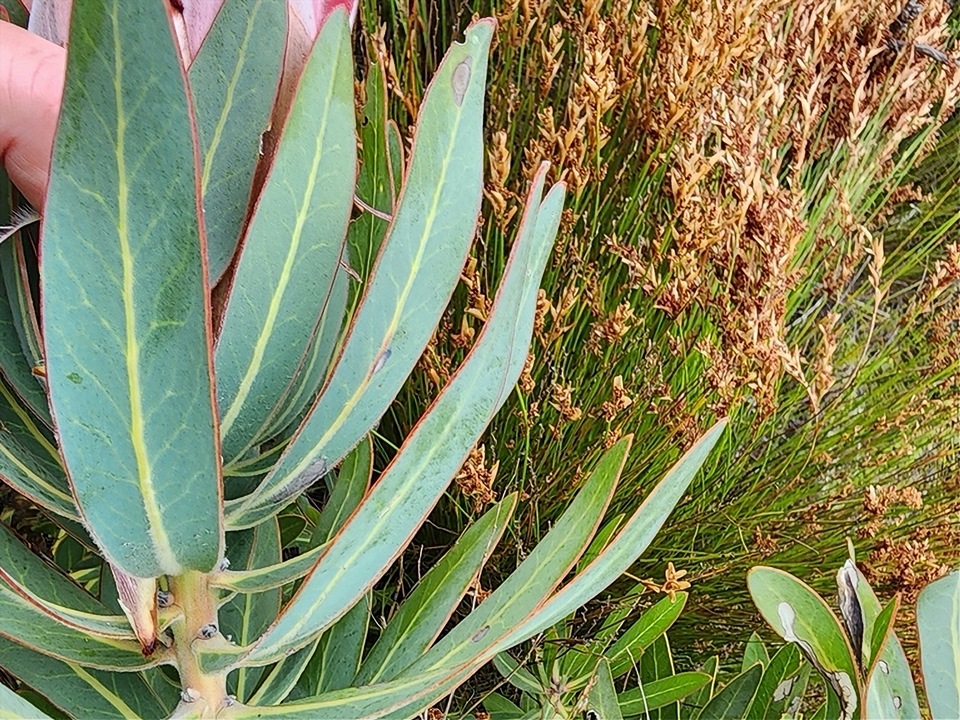
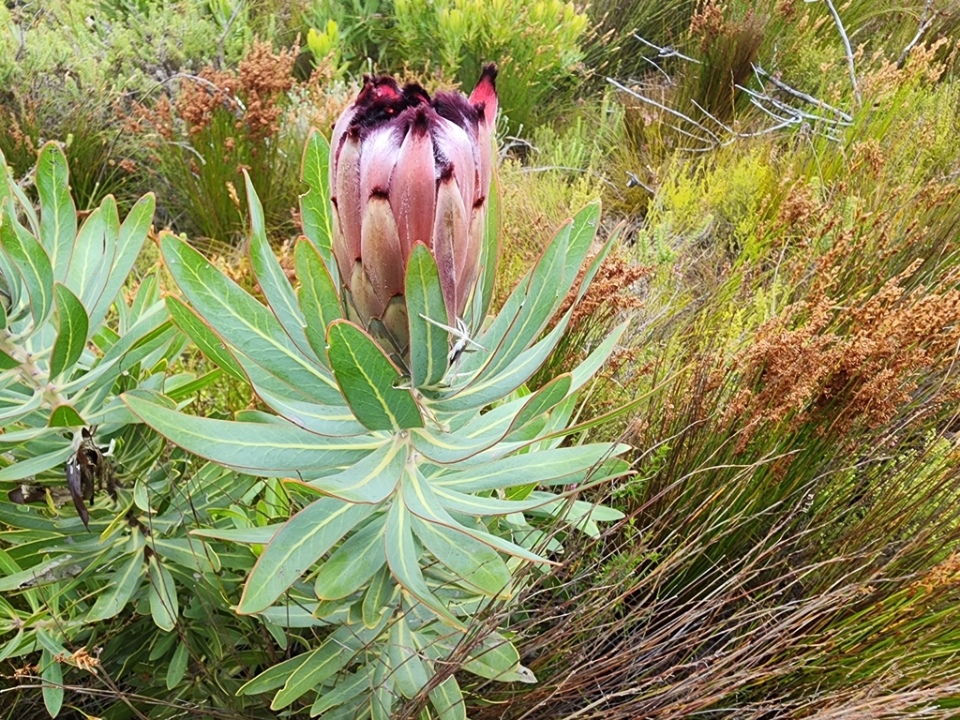
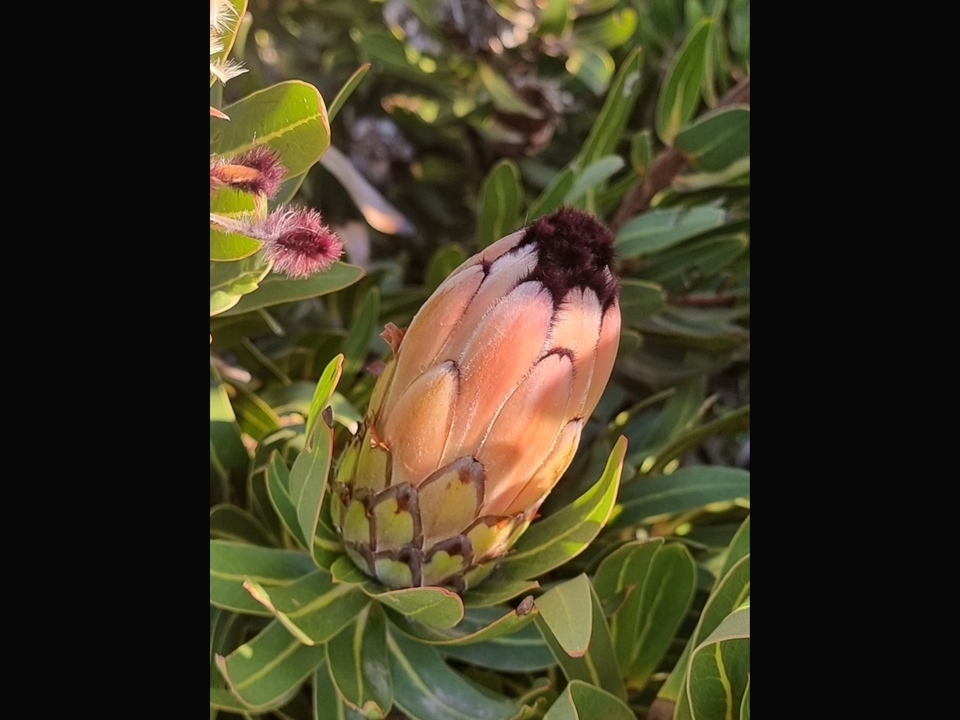
Protea neriifolia is a large, ornamental shrub with a relatively long flowering season. The impressive flower heads vary in colour from creamy green through silvery pink to deep carmine.
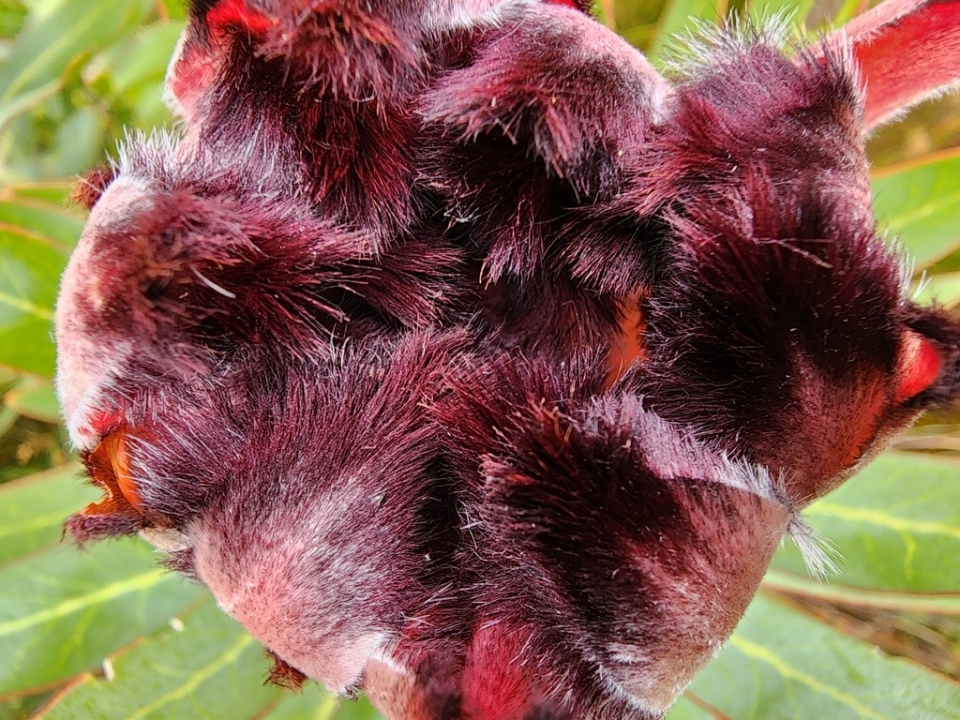
Each “flower” is in fact a cluster of many small flowers, surrounded by colourful bracts and edged with a distinctive fringe—its characteristic “beard”, ranging from purple-black to pure white.
DISTRIBUTION & HABITAT
This is a widespread species, occurring from near sea level up to about 1 300 metres, from just east of Cape Town to Gqeberha. In the Rooiels area, it grows in Kogelberg Sandstone.
HISTORY
Protea neriifolia was first recorded in 1597 and holds the distinction of being the earliest protea mentioned in botanical literature.
As it does not occur naturally on the Cape Peninsula, it has been suggested that early specimens may have been collected at Kogel Bay, where passing ships stopped to take on fresh water.
ECOLOGY & POLLINATION
The flower heads attract a variety of insects and birds. Among the most delightful visitors are the Long-tailed Sugarbird, often seen balancing on the blooms as they feed.
Drawn by both nectar and the insects visiting the flowers, they find everything they need here—dinner and dessert in one.
FIRE & REGENERATION
Protea neriifolia is well adapted to the fire-prone fynbos environment. It stores its seeds safely within old flower heads, releasing them only when the plant dies or is destroyed by fire.
Fires typically occur in late summer or autumn and are followed by winter rains, providing ideal conditions for germination. The young seedlings then have time to establish before the next dry season.