Flora Detail
| Common Name | Cape Sumach |
| Family | Santalaceae (Sandalwood Family) |
| Date Observed | 18-09-2022 |
| Category | Bushes |
|---|---|
| Catalogue No. | 4433RGu |
| Flowering Time | Summer |
| Colour | Yellow |
| Locations Observed | |
| Estuary | Few |
| Koppie | |
| Nature Reserve | Few |
| Small Holding | |
| Village | Few |
| Greater Rooiels | |
Colpoon compressum
Information
Cape Sumach
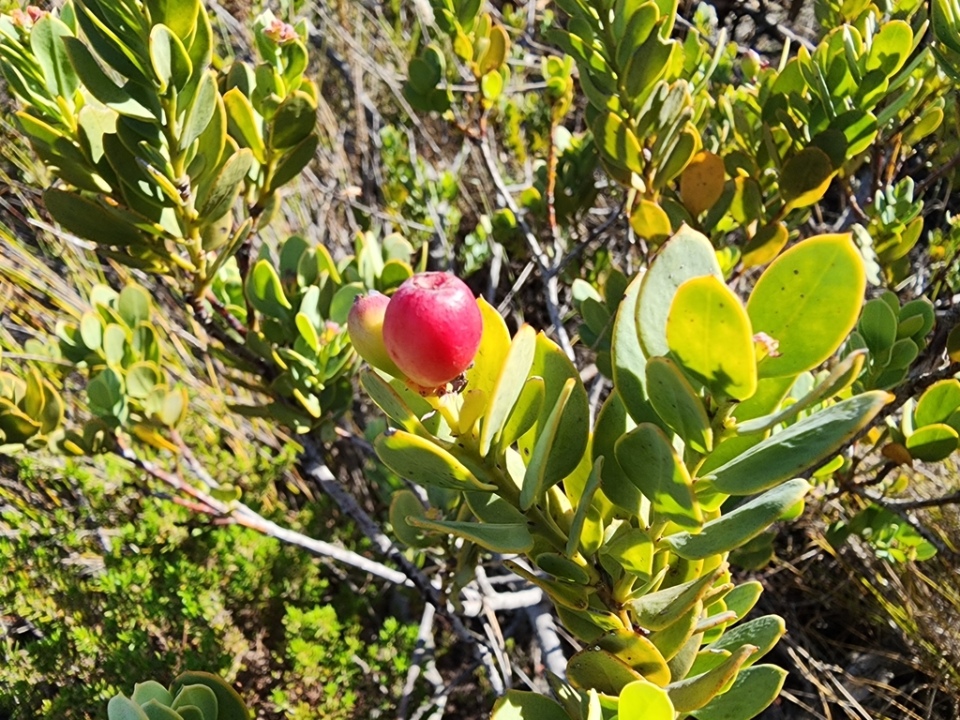
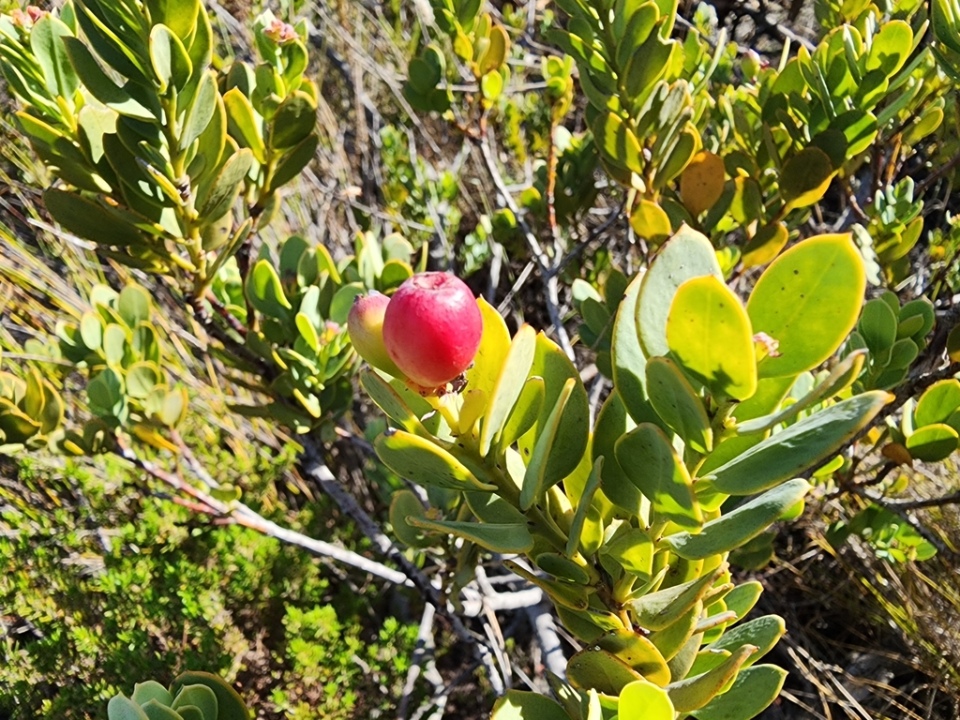
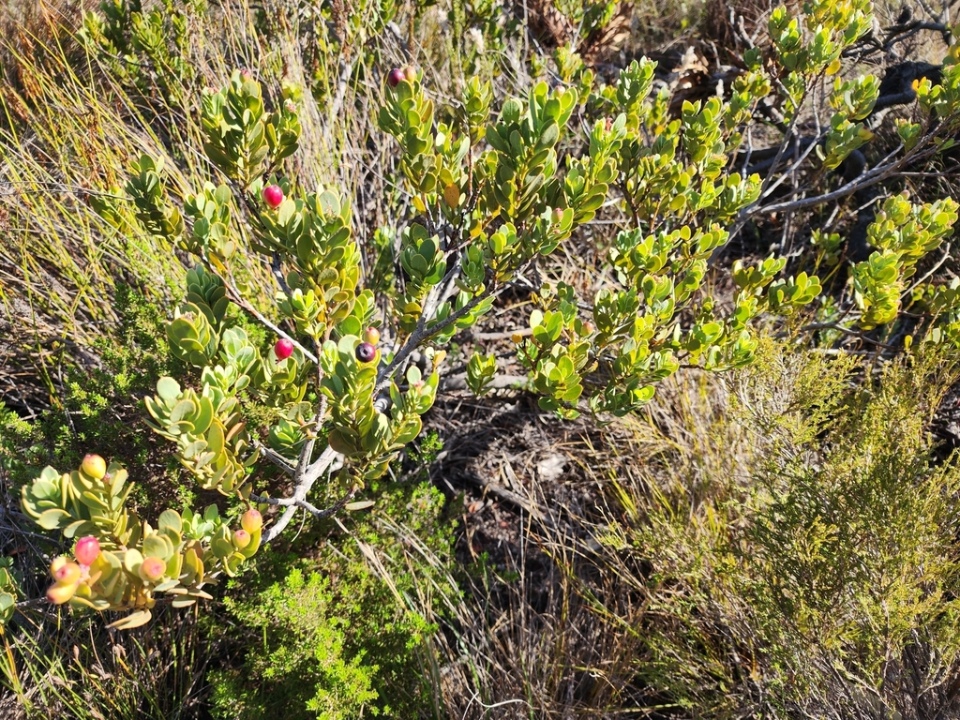
Colpoon compressum (Cape sumach) is a hardy, 1–5 meter tall shrub or small tree, endemic to the Cape Floristic Region of South Africa. It is a hemiparasite that photosynthesizes but also taps into host roots for nutrients. Known for its leathery, bluish-green leaves and edible red-to-black berries, it is ideal for coastal, wind-resistant hedging and attracts birds and butterflies.
Key Details:
Habit: Evergreen shrub or small tree (up to 5m).
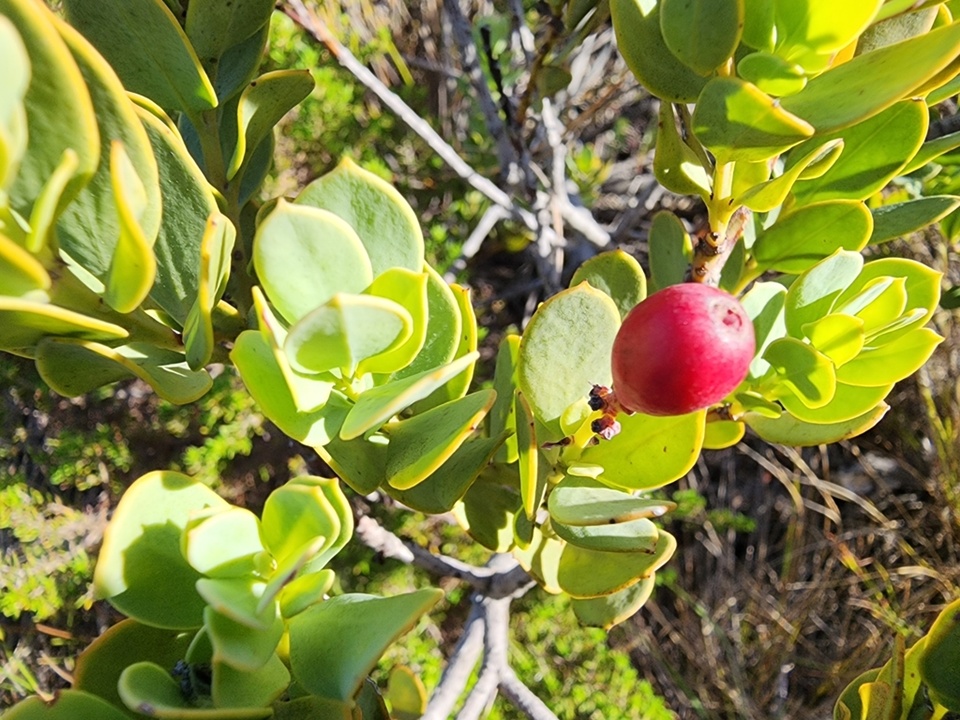
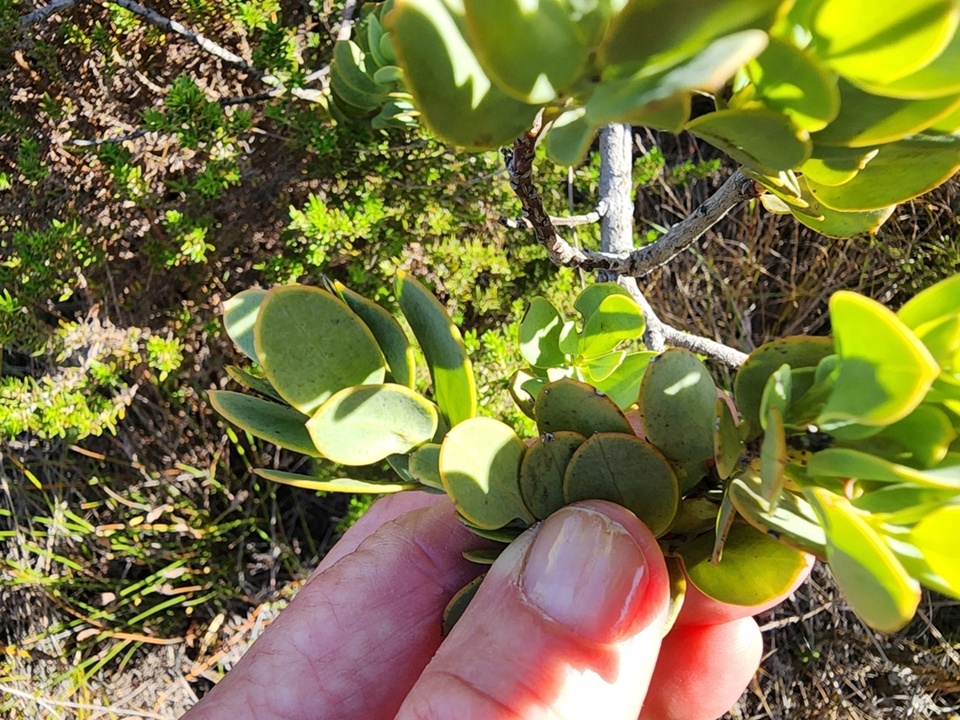
Leaves: Stiff, leathery, opposite, elliptic, 10–50 mm long.
Flowers: Small, fragrant, yellow-green terminal panicles.
Fruit: Fleshy, ellipsoid berries (15x10mm), turning from bright red to purplish black.
Habitat: Coastal dunes, mountain fynbos, and inland slopes in South Africa (Western Cape to KwaZulu-Natal).
Ecology: Facultative hemiparasite, meaning it can survive alone but grows faster with a host.
Usage: Used as a hedge or privacy screen; berries are edible.
Synonyms: Osyris compressa.
Growth Requirements:
Light: Full sun.
Water: Drought-resistant.
Soil: Well-drained, sandy, or loamy; tolerates, acid, alkaline, and saline soils.
Hardiness: Withstands wind and coastal conditions; hardy down to roughly -6°C
AI Overview