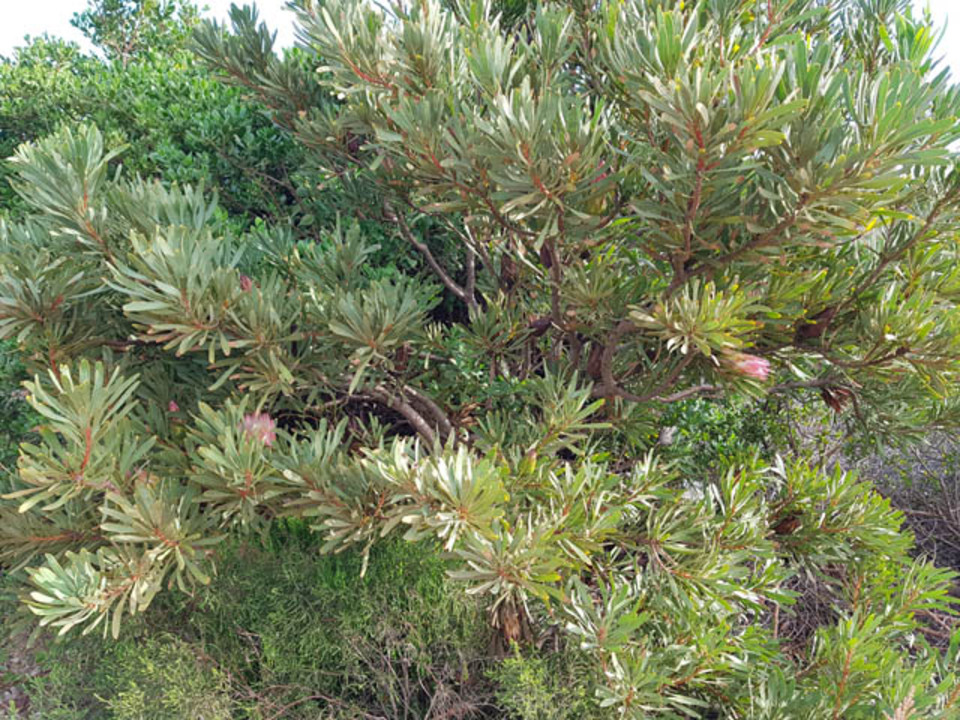
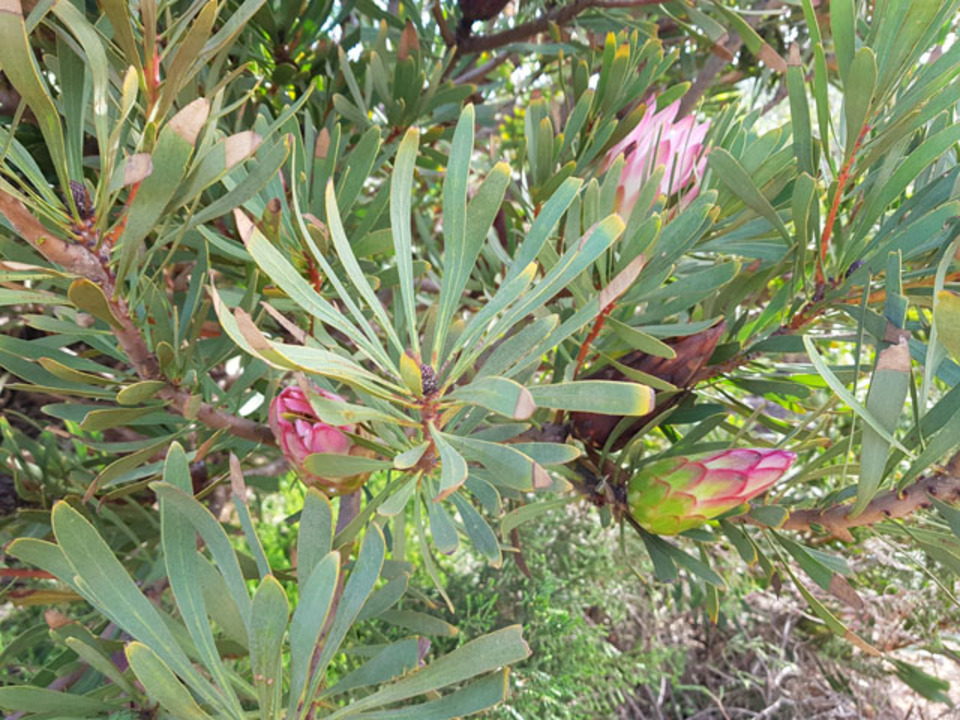
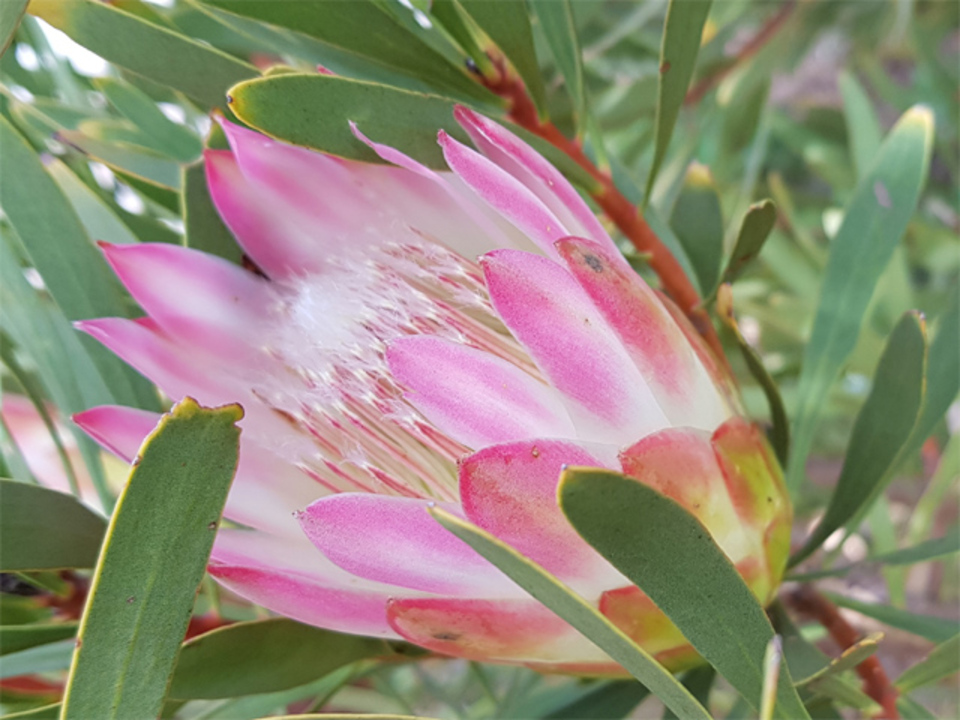
Flora Detail
| Common Name | Suikerbos, stroopbos,(Afr.), sugarbush (Eng.) |
| Family | Proteaceae (Protea Family) |
| Date Observed | 12-06-2021 |
| Category | Bushes |
|---|---|
| Catalogue No. | 4401RGud |
| Flowering Time | Autumn,Winter |
| Colour | White to Grey |
| Locations Observed | |
| Estuary | Few |
| Koppie | Few |
| Nature Reserve | Few |
| Small Holding | Many |
| Village | Many |
| Greater Rooiels | Many |
Protea repens
Information
Afr. suikerbos, stroopbos (Afr); sugarbush (Eng.)
PROTEA REPENS
Suikerbos; stroopbos (Afr.)
Sugarbush; real sugarbush; honey protea (Eng.)
Family: Proteaceae
INTRODUCTION
We all know the lovely suikerbos. It grows all over Rooiels and is loved
by gardeners, sugarbirds, and baboons alike.
DESCRIPTION
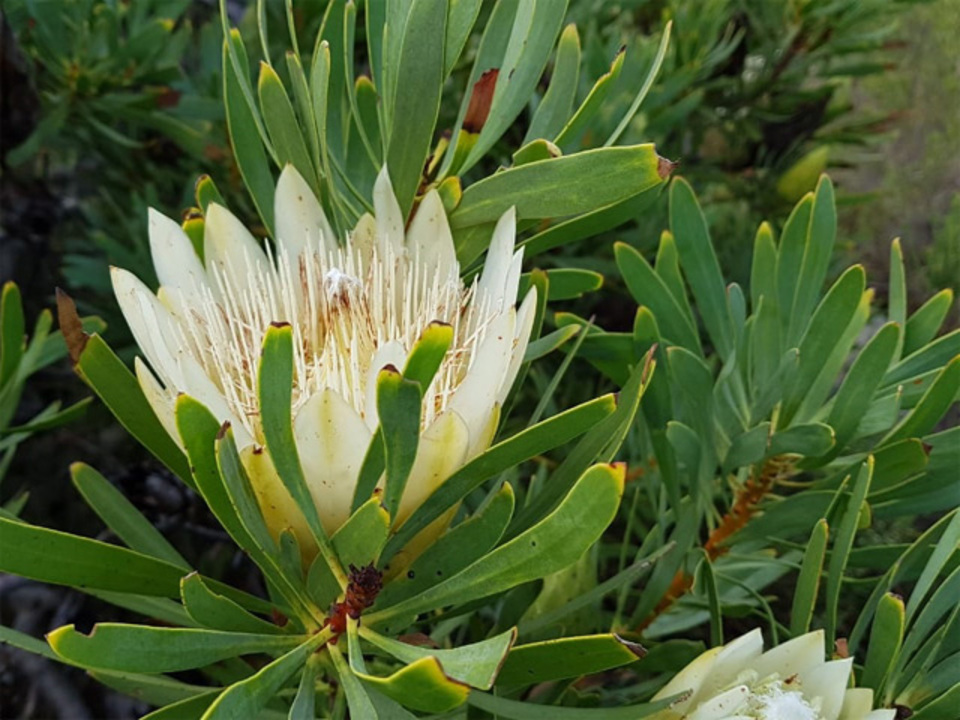
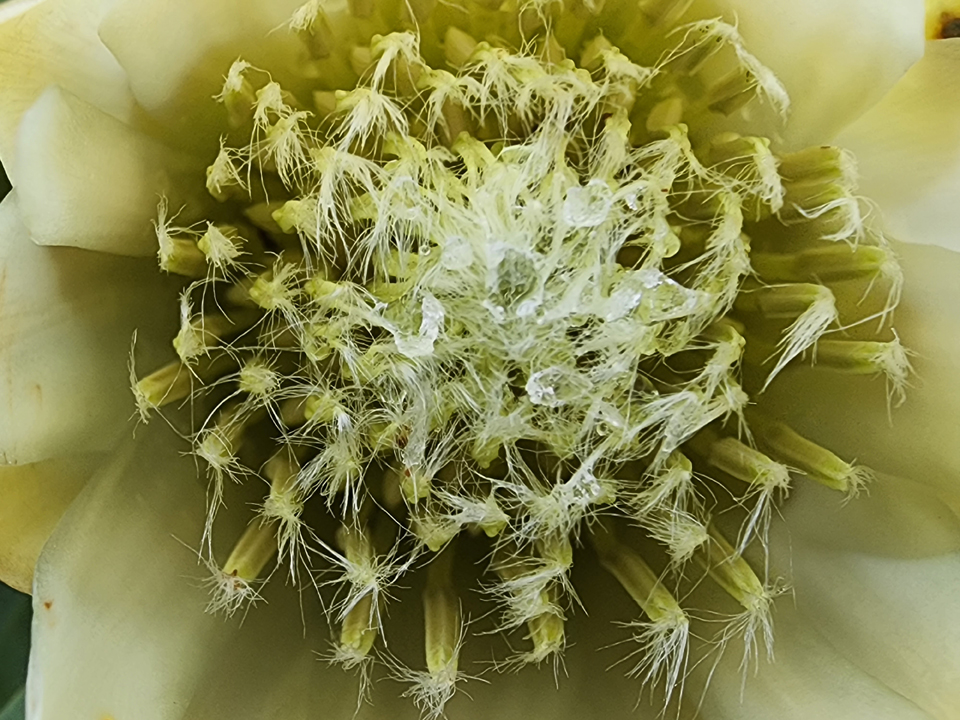
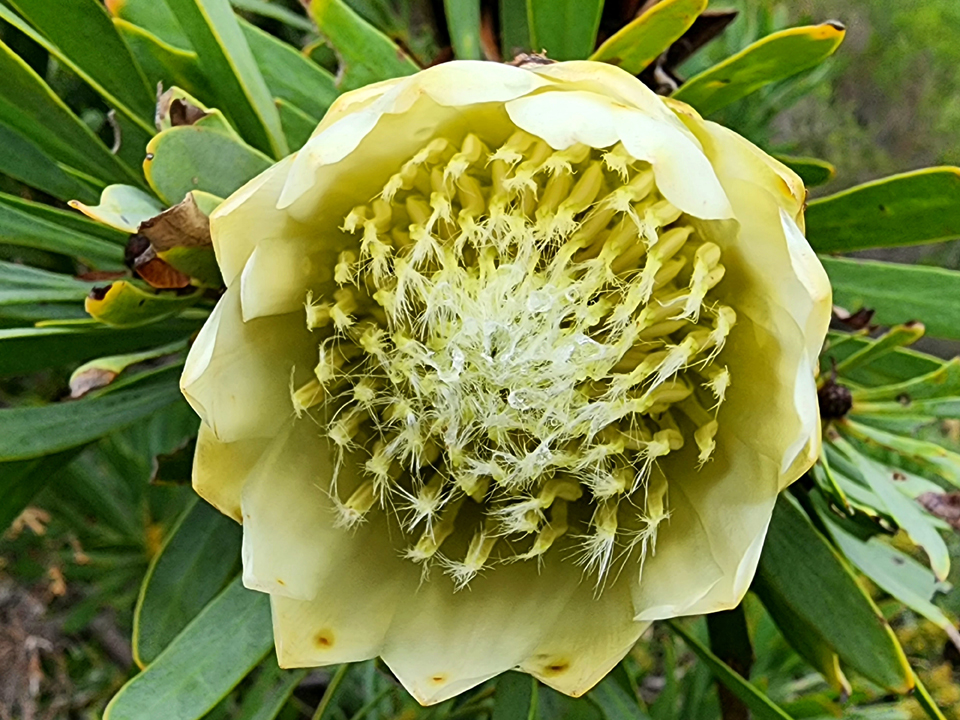
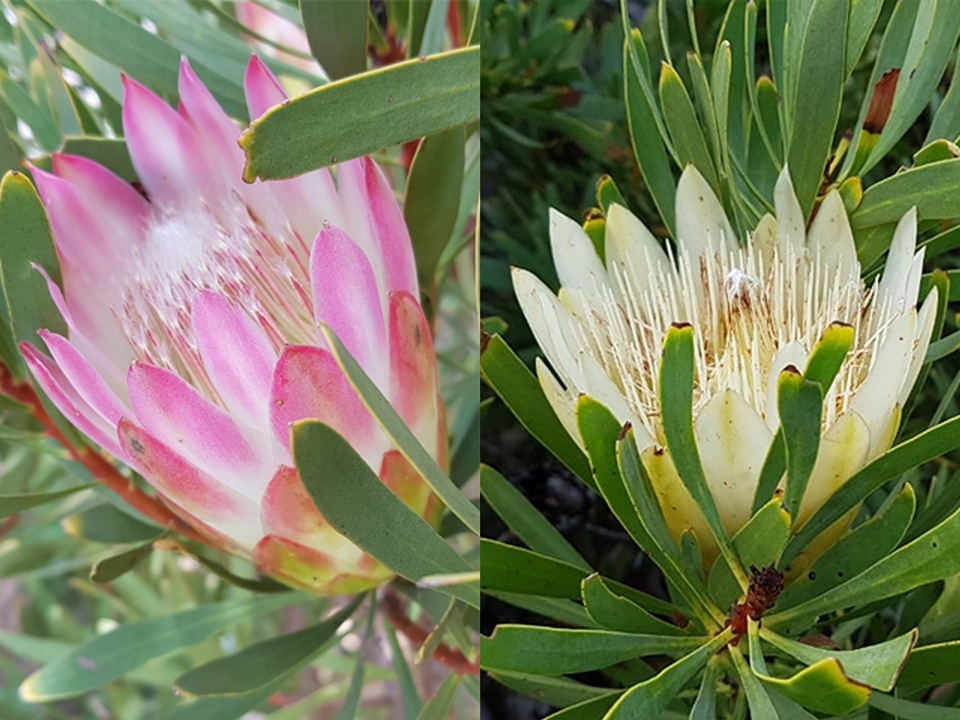
The “flowers” of Protea repens are actually flower heads, made up of
many small flowers clustered in the centre and surrounded by large, colourful
bracts.
These bracts are typically creamy white, sometimes edged with pink—and
in Rooiels, we are fortunate to see both forms.
Protea repens has been part of the Royal Collections at Kew since 1780
and holds the distinction of being the first protea to flower in cultivation
outside the Cape.
LOCATION
Protea repens grows from the Bokkeveld Escarpment along the
south-western Cape to east of Grahamstown. Its conservation status is best
described as widespread.
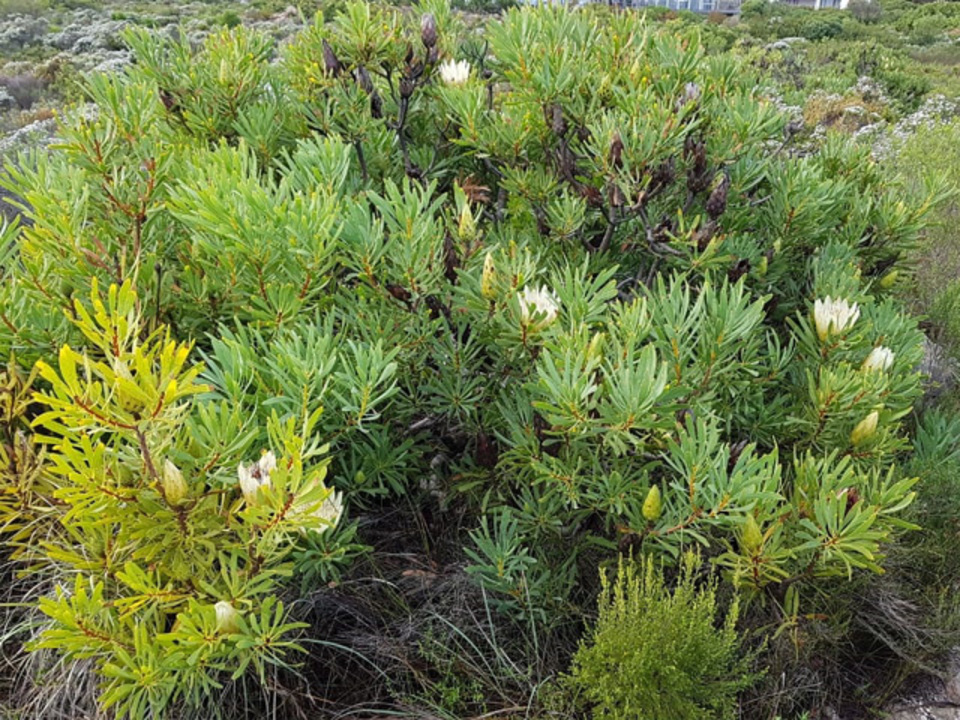
In our area, you will find the suikerbos from Gordon’s Bay to Kleinmond.
In Rooiels, it grows almost everywhere. Follow the cheerful chirping of
sunbirds, and you will soon spot flowering suikerbos from April into winter.
ECOLOGY
Sugarbush flowers are pollinated by nectar-feeding birds such as the
Cape Sugarbird and various sunbirds. The birds are drawn by the nectar, while
the insects visiting the flowers provide an added bonus.
When the suikerbos start flowering, the orange-breasted sunbirds begin
breeding, knowing the “canteen” supplying food for their chicks will be open
once the young hatch.
MEDICINAL & CULTURAL USES
In the early days at the Cape, the nectar was boiled into a syrup
(bossiestroop), which was used as a cough remedy. It could also be reduced
further into crystals and used as a sweetener. Lady Anne Barnard wrote in the
late 1700s that boerenvrouwen would keep a crystal between the teeth while
sipping their tea.
But they are not the only ones—baboons absolutely relish the sweet crown
of the flower head.
The wood of the bush was commonly used as firewood.
SUGARBUSH, I LOVE YOU SO
The song “Suikerbos, ek wil jou hê” was composed by Fred Michel, a
hairdresser from Observatory. It was later translated into English and
performed by artists including Eve Boswell, Doris Day, and Frankie Laine.
Michel never received any compensation for his composition.
Click to find out more from iNaturalist