Flora Detail
| Common Name | Hairy Tinderleaf |
| Family | Apiaceae (Carrot Family) |
| Date Observed | 19-09-2022 |
| Category | Shrubs |
|---|---|
| Catalogue No. | 3464RG |
| Flowering Time | Summer |
| Colour | Yellow |
| Locations Observed | |
| Estuary | Not Observed |
| Koppie | Not Observed |
| Nature Reserve | Not Observed |
| Small Holding | Few |
| Village | Few |
| Greater Rooiels | Few |
Hermas villosa
Information
Hairy Tinderleaf
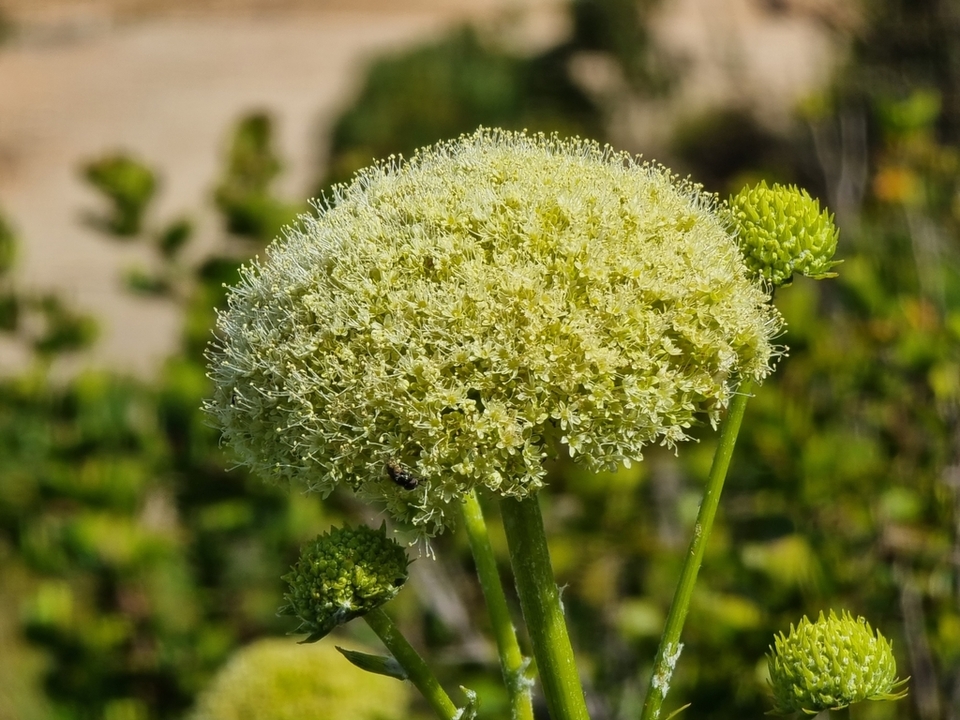
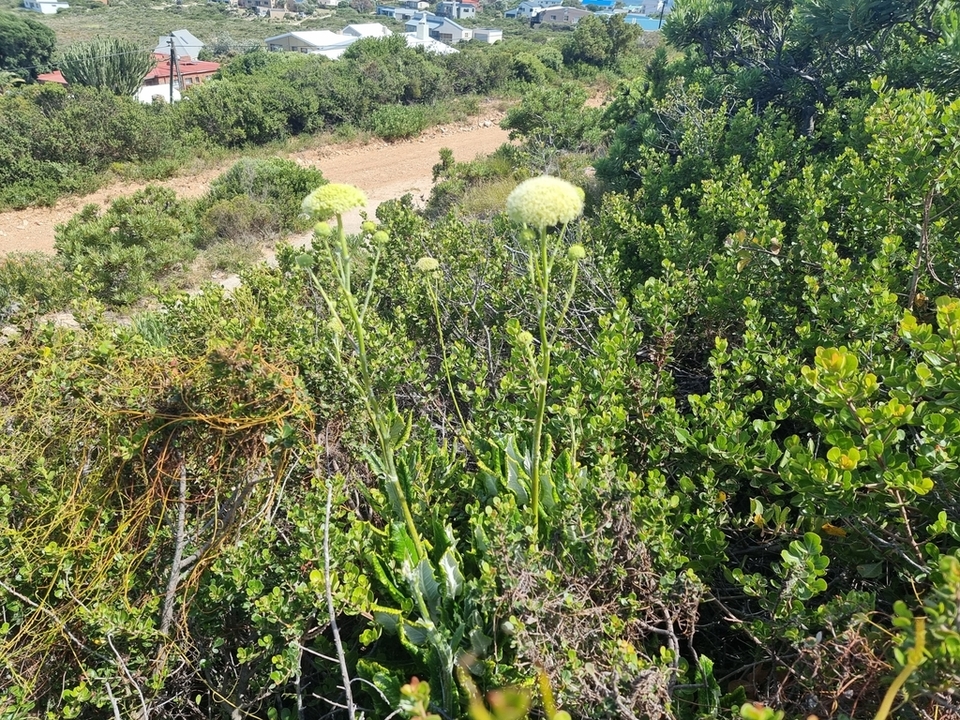
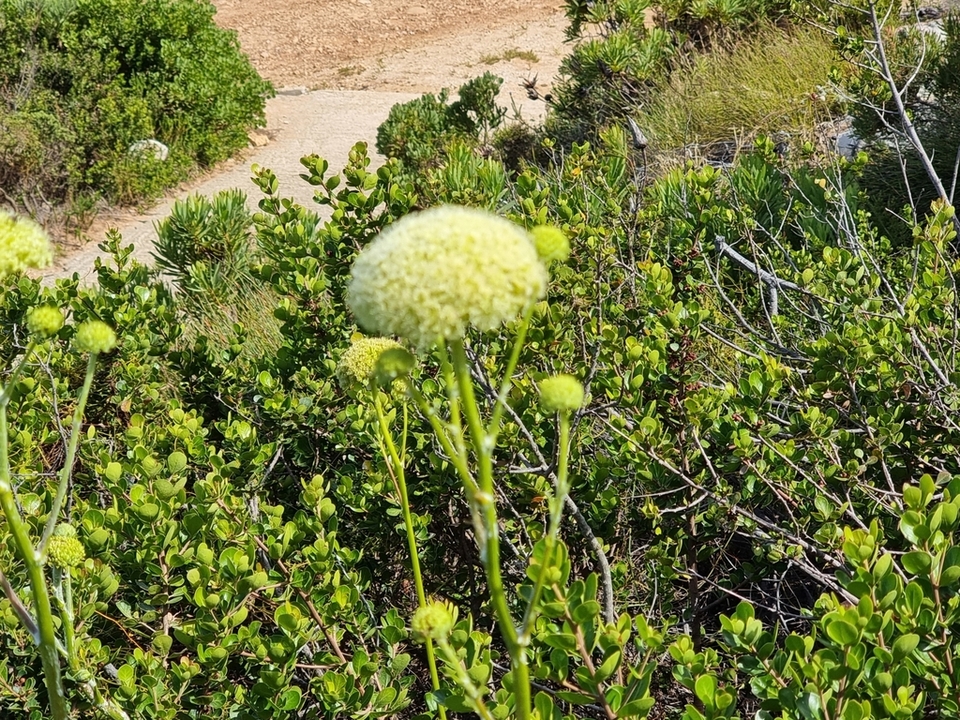
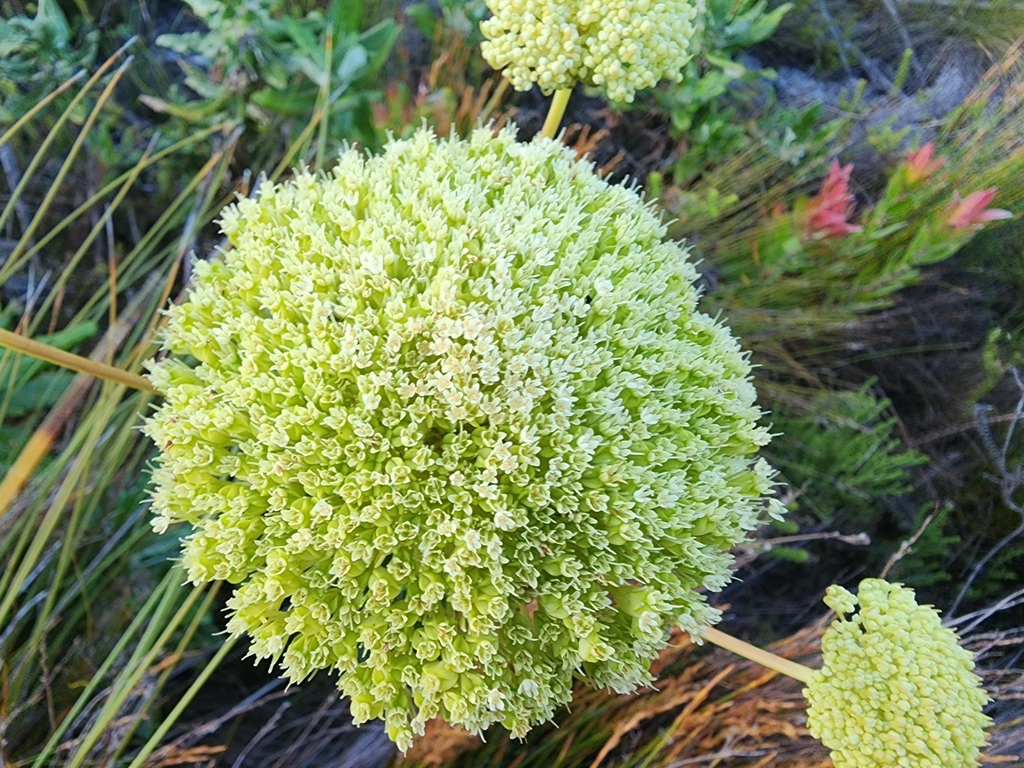
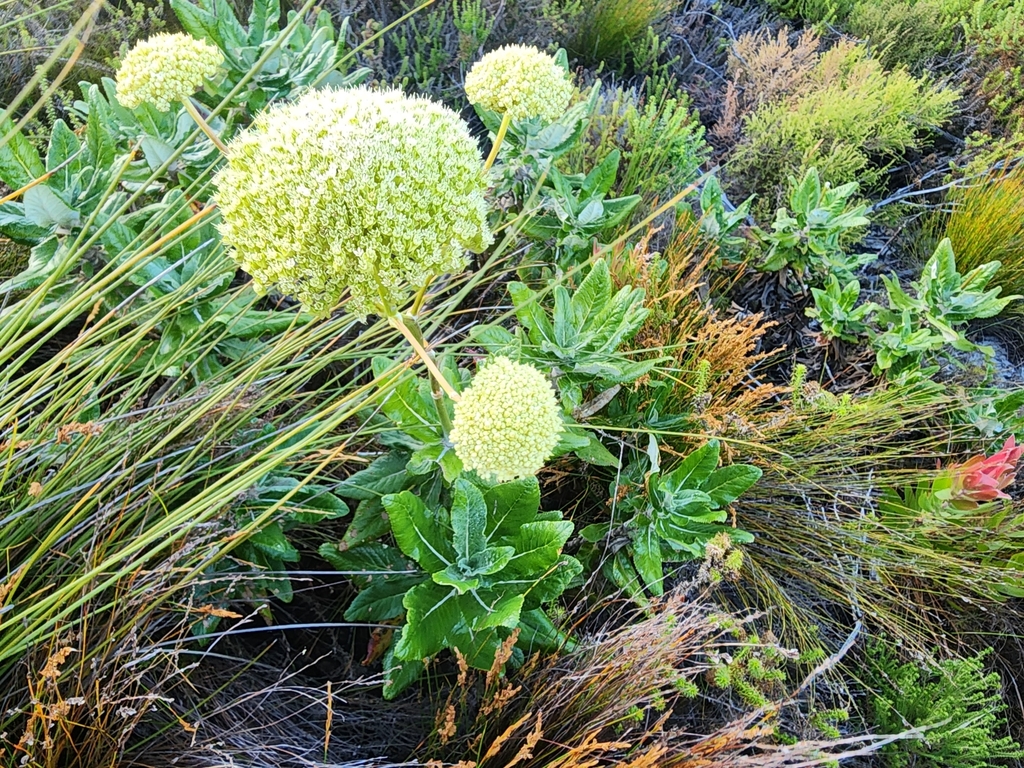
Hermas villosa has creamy green flower and it is
always a pleasure to see the unusual globose flower clusters in the fynbos.
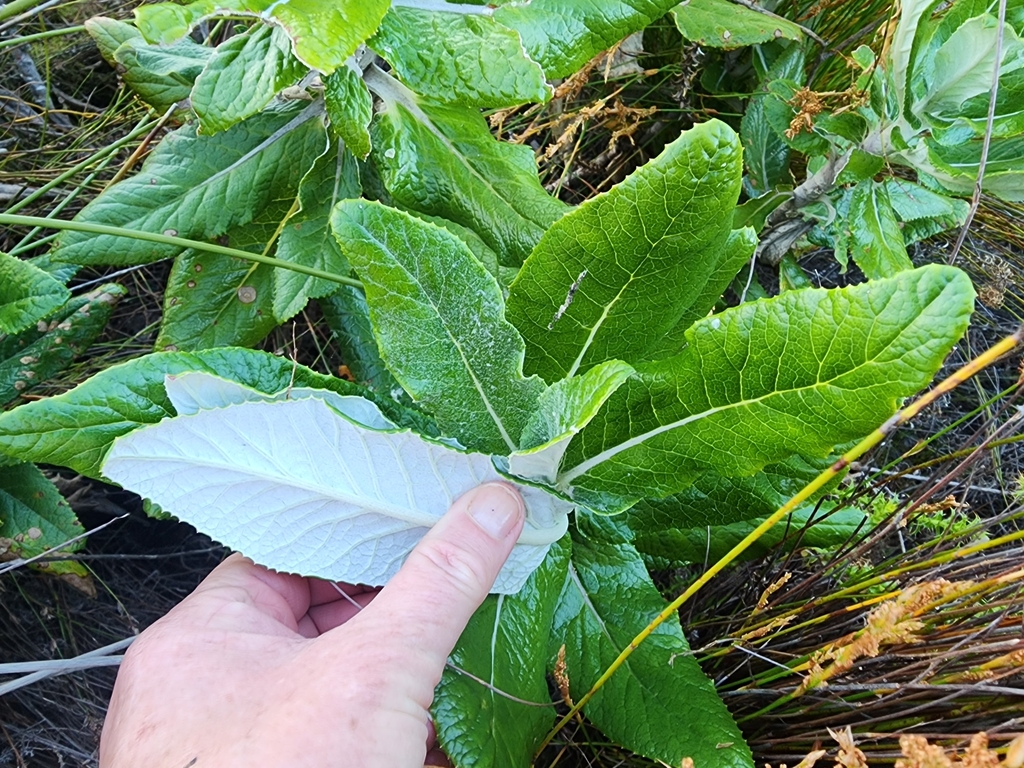
The plant has leathery leaves, shiny and glabrous
(hairless) above. “Villosa” means hairy and in this case refers to the hairy
underside of the leaves.
The leaves can be be up to 15 cm long and 6 cm wide. The margins are toothed.
Conservation Status Least Concern.
Distribution and habitat
Hermas villosa can be found from Cape Point to
Hermanus on the rocky sandstone slopes. In Rooiels they have been observed on the
slopes of the surrounding mountains. There are also some plants growing on
properties on the slopes of Klein-Hangklip.
Ecology
Hermas villosa is a resprouter, meaning it happily
grows again after a veld fire. The flowers are pollinated by insects and seeds
are spread by the wind.
So why is
it called “tinderleaf” or tontelblaar?
The hairs
used to be scraped from the underside of the leaves, dried and then used as
tinder in tinder boxes. That was before the time of matches, lighters and
vapes.
The hairs
were also apparently used to dress wounds.
I have
tried to scrape the hairs from the underside of the leaves, but have not been
successful.
References
Bean, A. & Johns, A. 2005. Stellenbosch to
Hermanus. South African Wild Flower Guide 5. Botanical Society of South Africa,
Cape Town.
Manning, J. 2007. Field guide to fynbos. Struik, Cape Town.
SANBI website