Flora Detail
| Common Name | Carpet Crane's-Bill |
| Family | Geraniaceae |
| Date Observed | 03-10-2022 |
| Category | Shrubs |
|---|---|
| Catalogue No. | 3499RG |
| Flowering Time | Spring |
| Colour | White to Grey |
| Locations Observed | |
| Estuary | |
| Koppie | |
| Nature Reserve | |
| Small Holding | |
| Village | Few,Many |
| Greater Rooiels | |
Geranium incanum - to be confirmed
Information
Carpet Crane's-Bill
Description
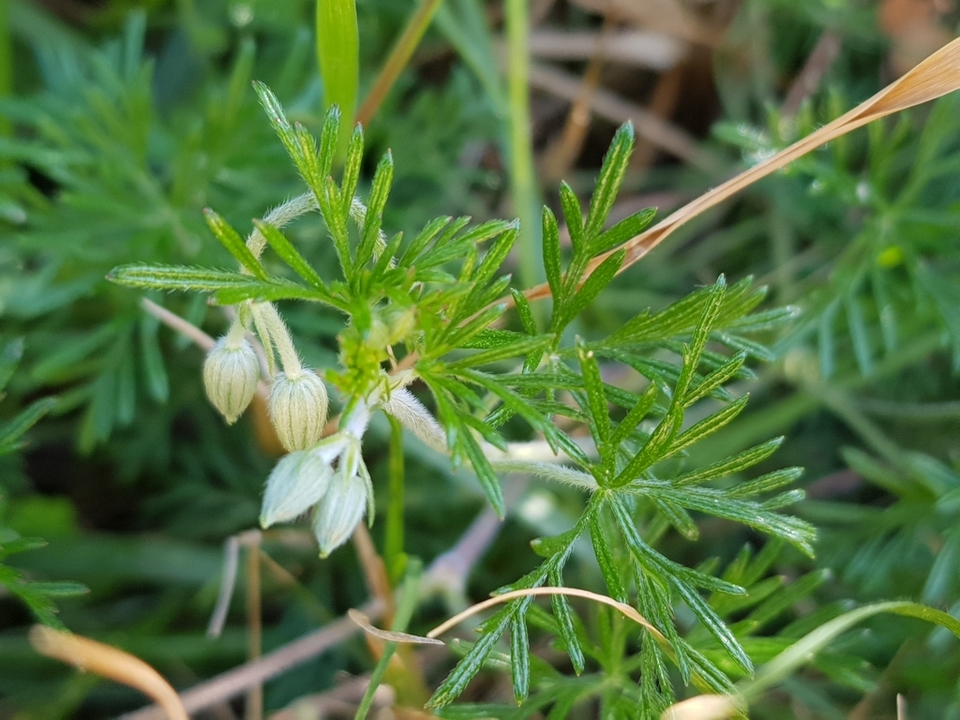
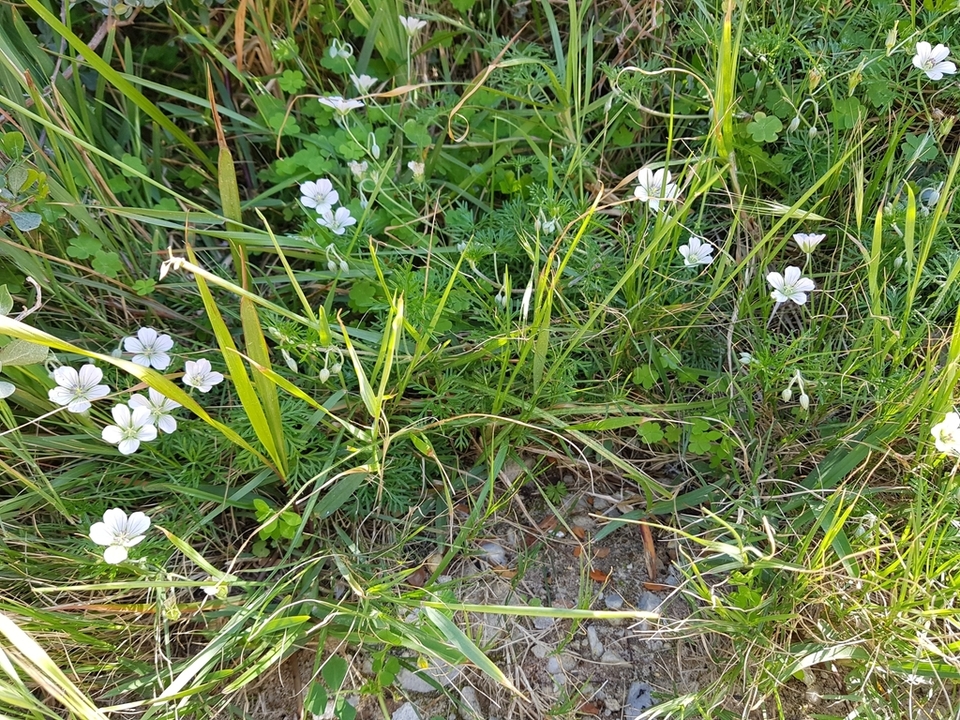
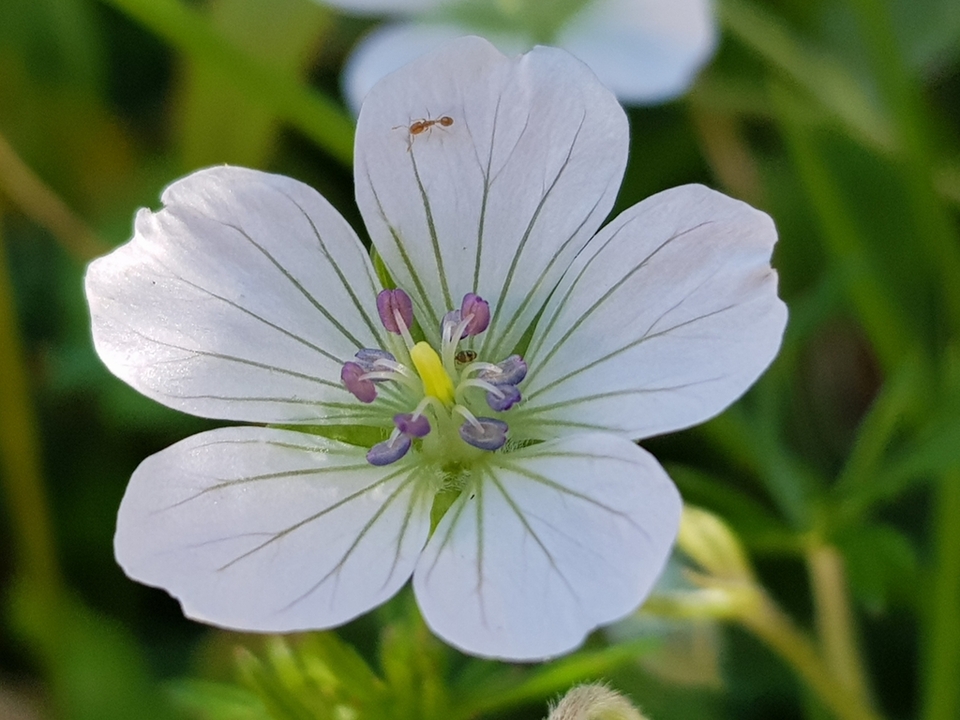
Geranium incanum has finely divided leaves which give it a soft texture in the garden. The mauve flowers have identical petals. It can be grown in full sun or semi-shade, although it does flower better and form a tighter carpet in full sun.
Distribution and habitat
It occurs naturally in the southwestern and eastern parts of the country where it can be found scrambling about through natural vegetation.
Derivation of name and historical aspects
The word Geranium comes from the Greek geranos which refers to a crane as the seed capsule resembles the beak of that bird. The specific name makes reference to a pale greyish-white colour possibly on the underside of the leaves.
The Carpet Geranium belongs to the Geraniaceae, a large family with about 700 species falling into 11 genera which include Geranium, Pelargonium, Monsonia, Sarcocaulon and Erodium. Plants from this family, especially geraniums and pelargoniums, have been hybridized and are widely cultivated the world over for their spectacular displays of flowers and striking colours.
Uses
This plant is used traditionally to make a medicinal tea from the leaves which is used to offer relief from certain complaints such as bladder infections, venereal diseases, and conditions relating to menstruation.
Growing Geranium incanum
The Carpet Geranium can be used very effectively on banks or as a colourful border plant, it is also very attractive when allowed to trail over retaining walls or garden pathways and steps. It is also equally useful in mixed borders, pots or hanging baskets.
Geranium incanum is easily propagated from both seed and cuttings. Selected forms, such as those with darker coloured flowers, are best grown from cuttings. Fresh seed sown in spring or autumn is easily germinated and will produce a variety of darker and paler forms. Seed can be sown directly onto a well prepared seedling medium in trays and lightly covered. Once watering has been commenced the trays should never be allowed to dry out completely. Seedlings can be transplanted into separate containers once they are large enough to handle.