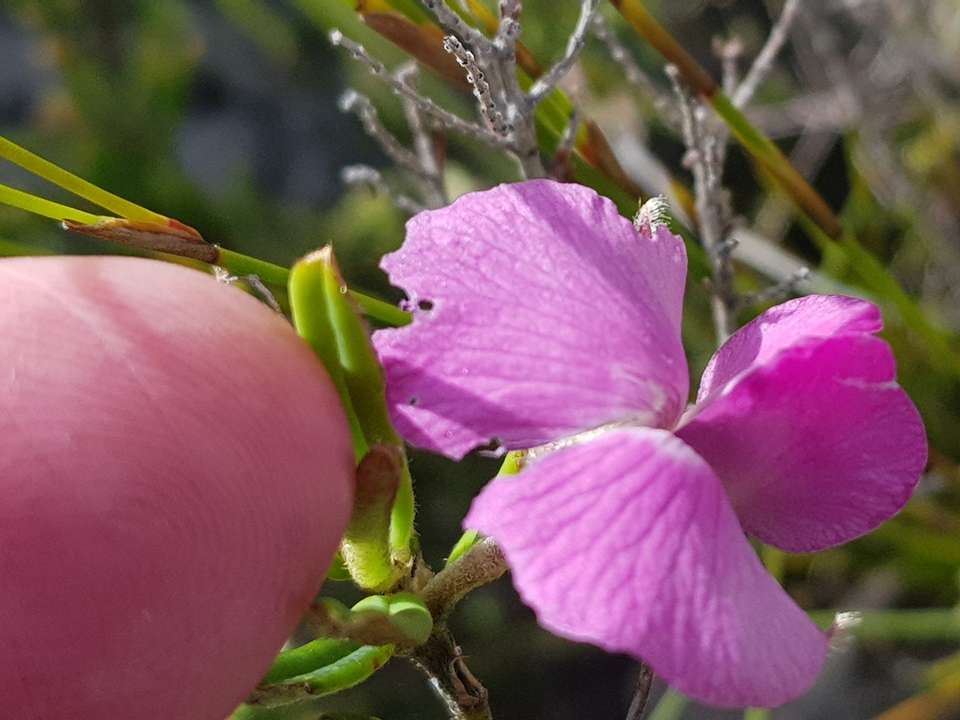
Flora Detail
| Common Name | Willow Cape Sweetpea |
| Family | Fabaceae (Legumes) |
| Date Observed | 13-01-2024 |
| Category | Shrubs |
|---|---|
| Catalogue No. | 3548RG |
| Flowering Time | Summer |
| Colour | Pink to Mauve |
| Locations Observed | |
| Estuary | |
| Koppie | |
| Nature Reserve | |
| Small Holding | |
| Village | |
| Greater Rooiels | Few |
Podalyria oleifolia
Information
Willow Cape Sweetpea
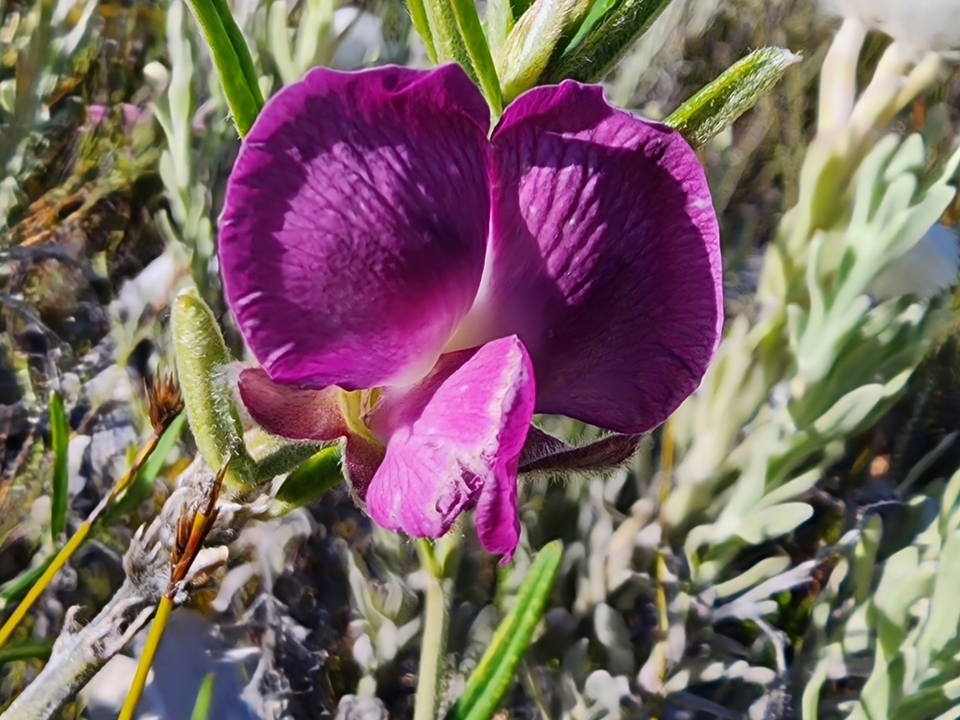
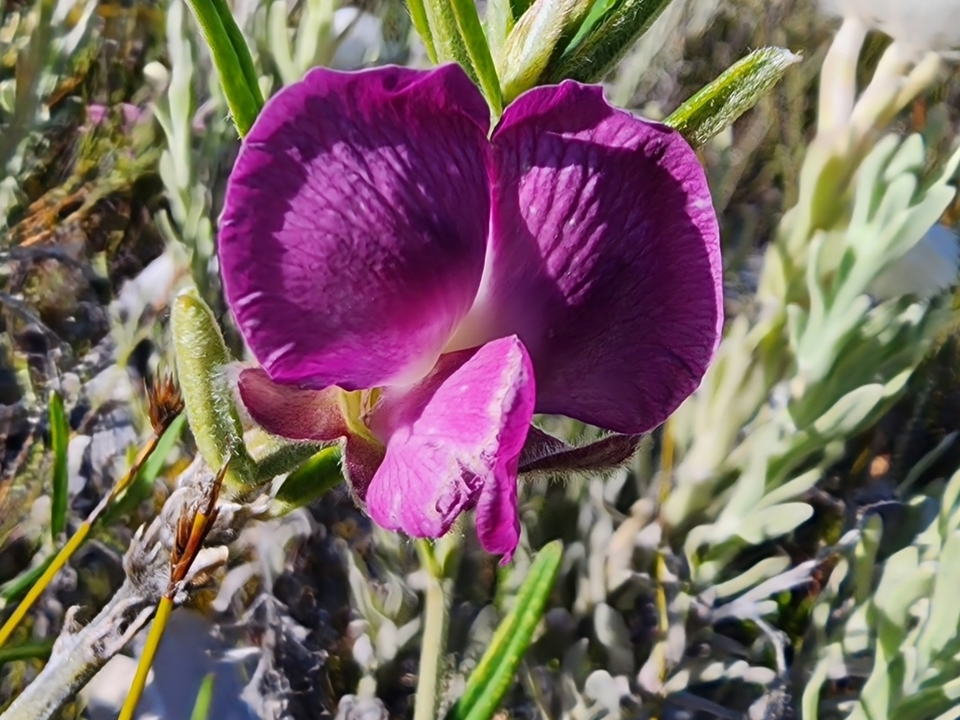
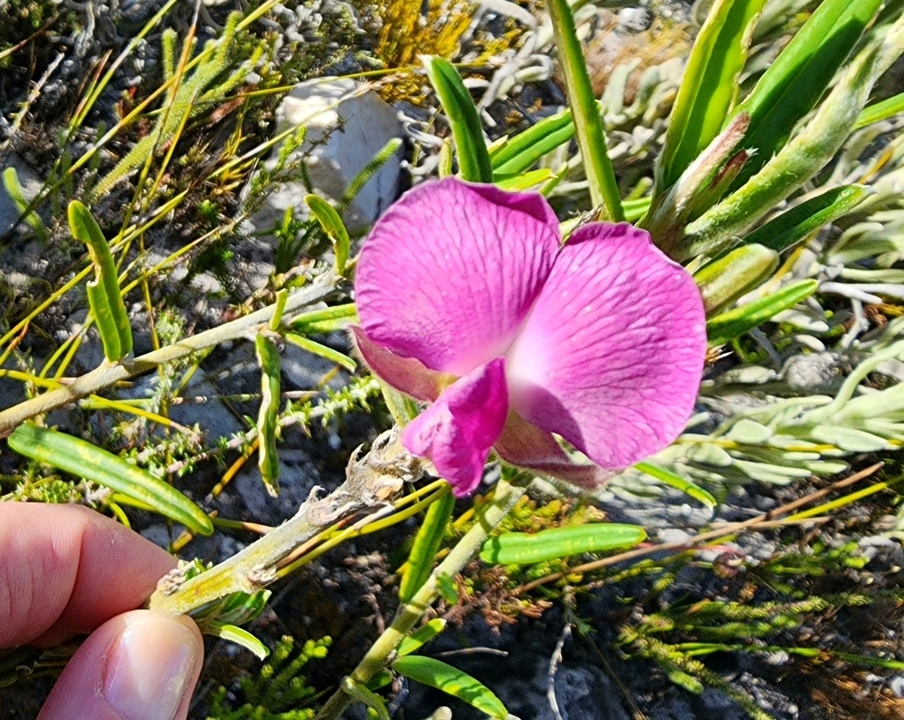
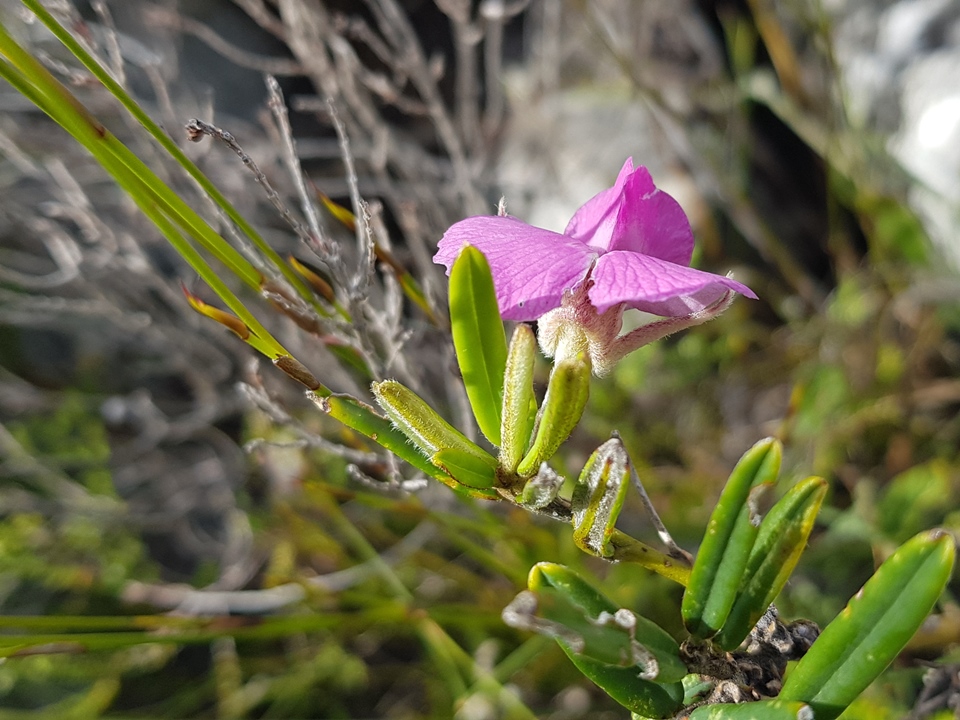
Podalyria oleifolia (Willows-leaved Sweetpea) is a shrub in the Fabaceae family endemic to South Africa, specifically found in the Western and Eastern Cape. Known for its fragrant flowers, it is part of the Fynbos biome. It is characterized by its simple, often silky-hairy, olive-like leaves (oleifolia) and pink to magenta pea-like flowers.
Key Details for Podalyria oleifolia
Family: Fabaceae.
Common Name: Willow-leaved Sweetpea (or Cape Sweetpea variant).
Habitat: Fynbos shrubland in the Western and Eastern Cape, South Africa.
Growth Habit: A shrub or small tree.
Leaves: Often narrow, simple leaves with silky hairs.
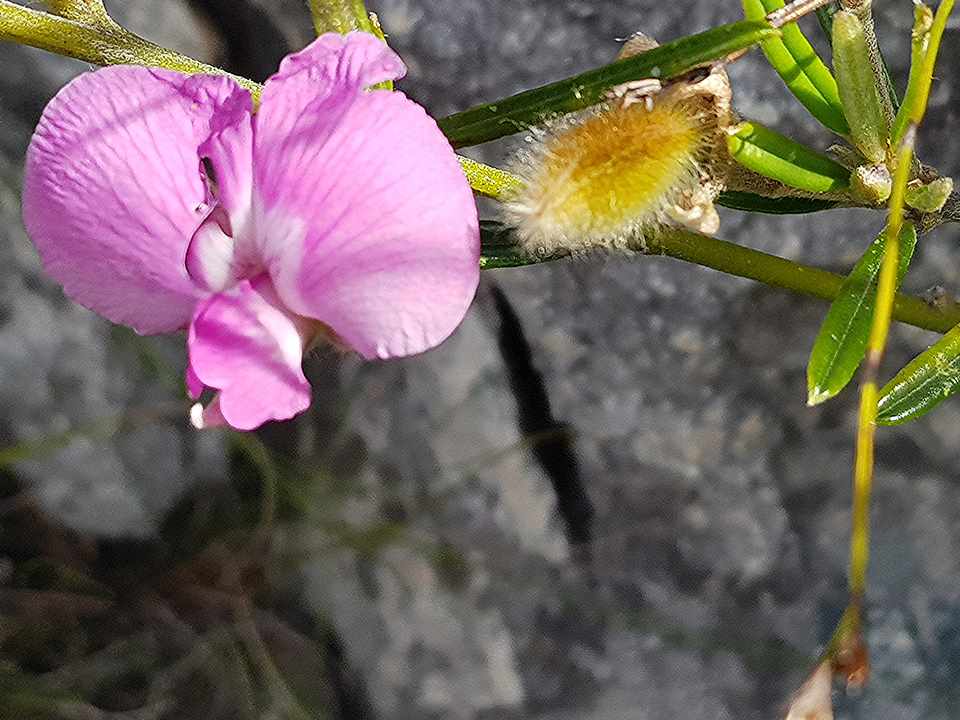
Flowers: Pink, magenta, or violet-pink, pea-like, and highly fragrant, typically blooming in winter to early spring.
Pods: Covered in silky, white or brownish hairs.
Cultivation: Adapted to winter-rainfall, Mediterranean climates. Requires well-drained soil and full sun.
The plant belongs to a genus of around 17 species, often used in garden settings for their attractive scent and early spring color.