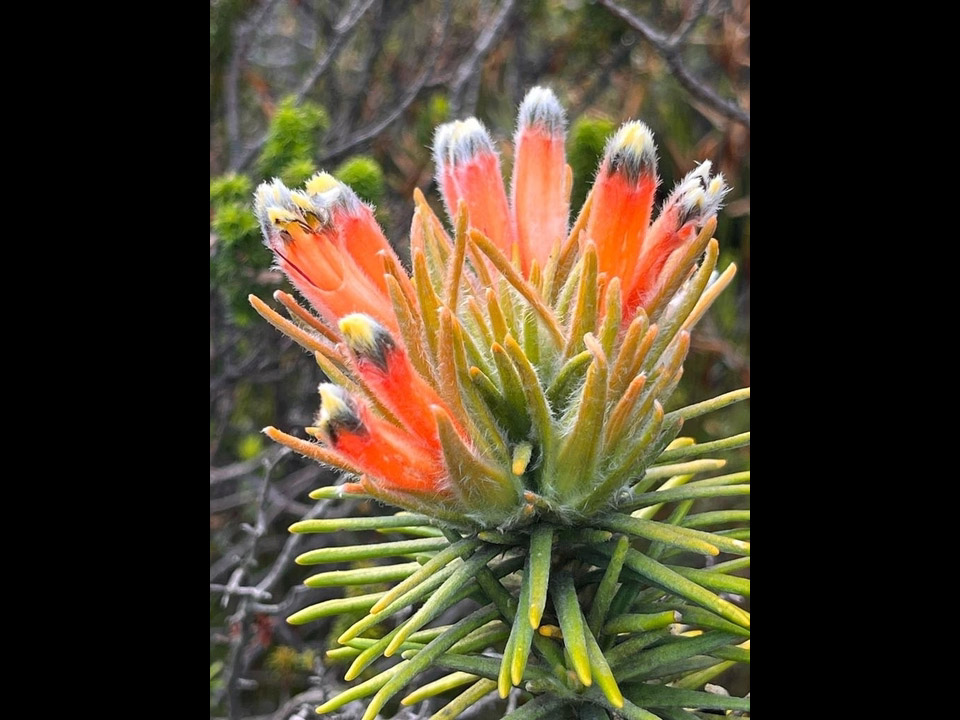
Flora Detail
| Common Name | Heuningblom (Afr.) Buttbush (Eng.) |
| Family | Stilbaceae (Candlestick Family) |
| Date Observed | 13-01-2023 |
| Category | Shrubs |
|---|---|
| Catalogue No. | 3550RGud |
| Flowering Time | Spring,Summer |
| Colour | Orange |
| Locations Observed | |
| Estuary | |
| Koppie | |
| Nature Reserve | |
| Small Holding | |
| Village | |
| Greater Rooiels | Few |
Retzia capensis Buttbush
Information
Heuningblomj (Afr.) Buttbush (Eng.)
RETZIA CAPENSIS
Heuningblom; Sigaretbos (Afr.)
Butt bush; Hedgehogs (Eng.)
Family: Stilbaceae
INTRO
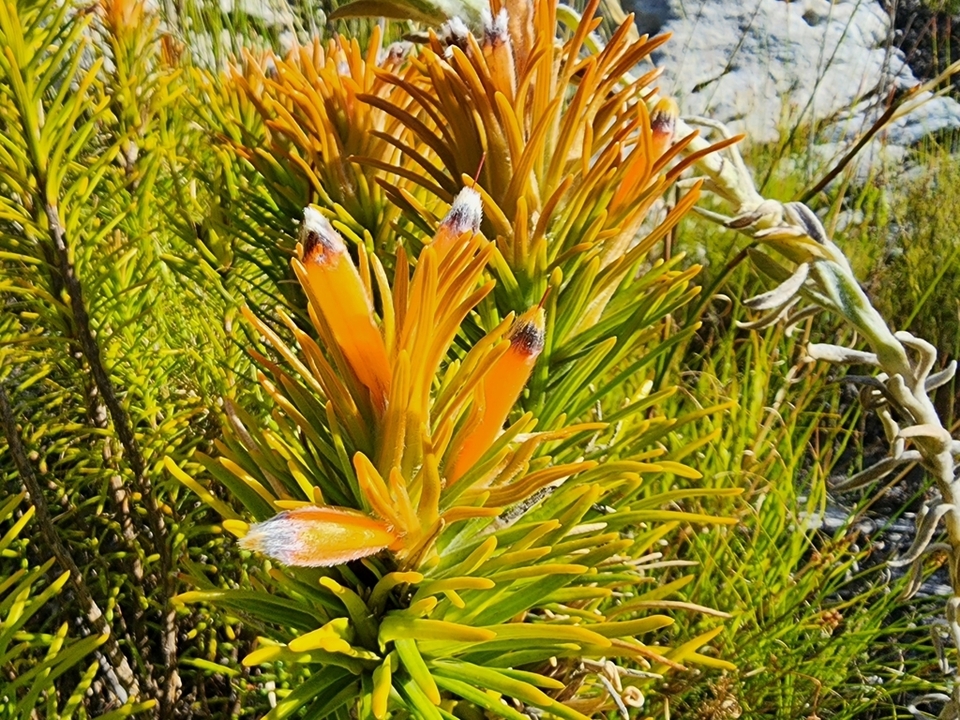
So why would some people call this a “butt bush?" Ha—got you. Not quite what you might think.
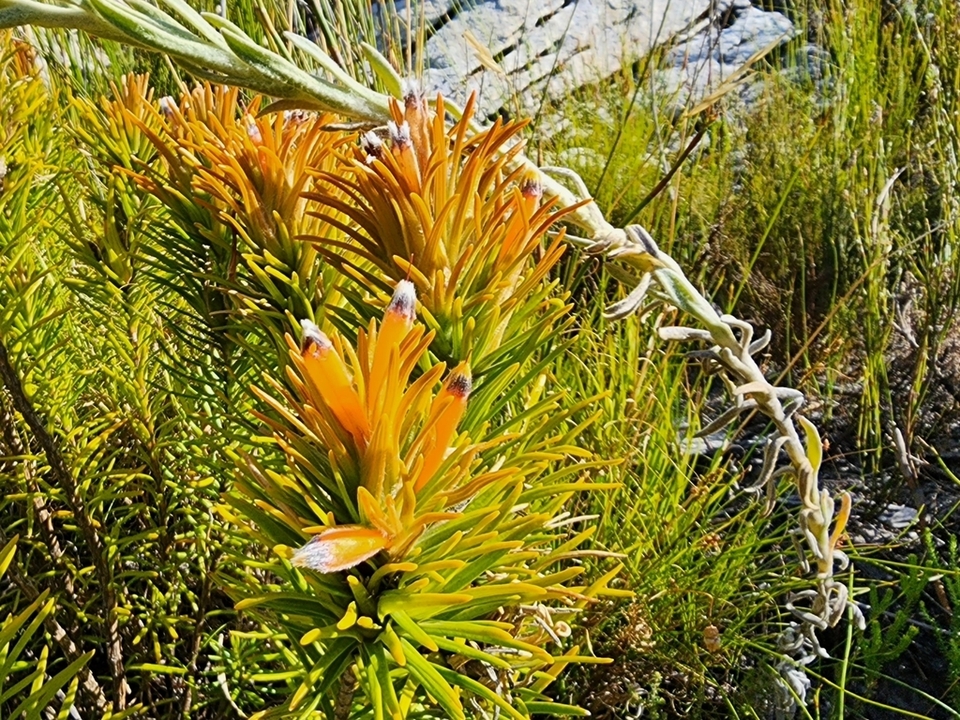
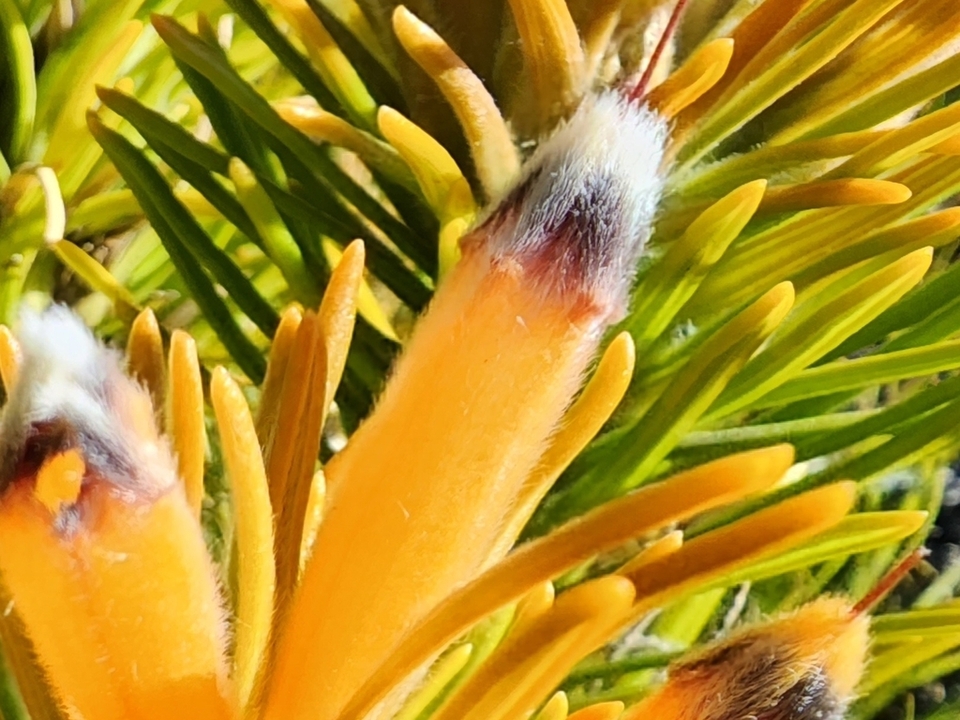
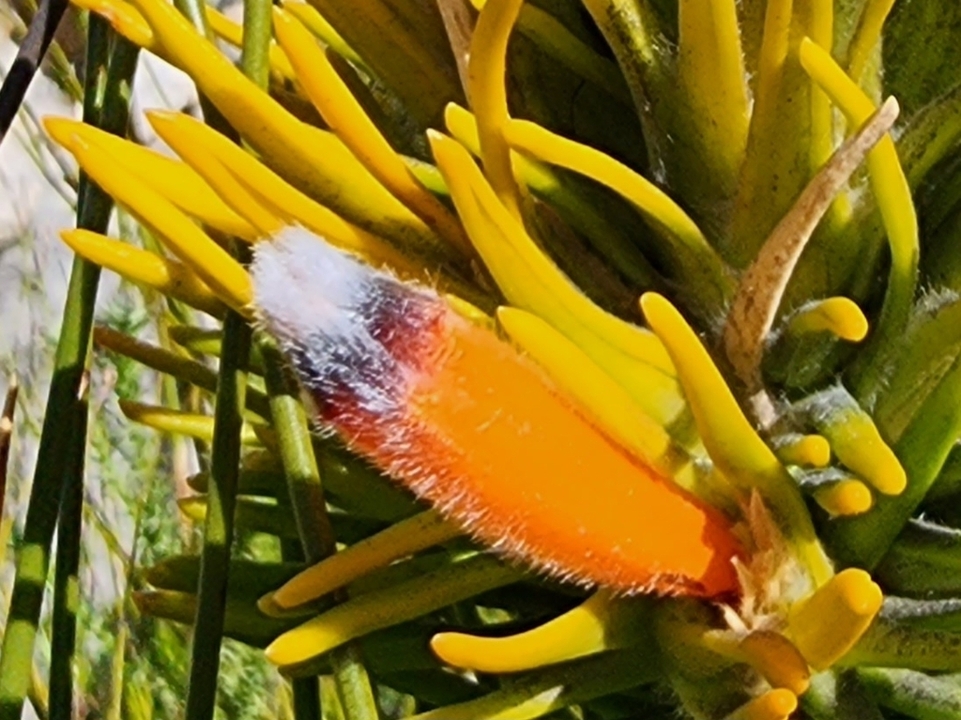
Its flowers resemble cigarette butts, though they carry a surprisingly sweet, honey-like scent.
DESCRIPTION
Retzia capensis is one of the
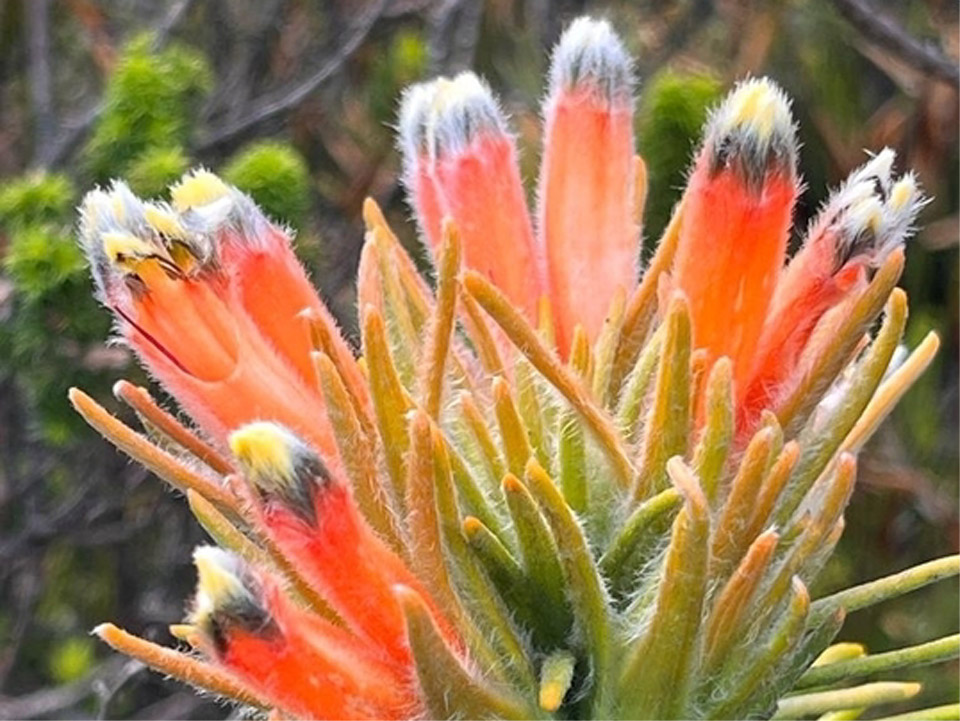
more unusual shrubs of the fynbos. Its tubular flowers feel silky to the
touch—red to orange with black lobes, tipped with delicate tufts of white
hairs, resembling the ash of a cigarette butt.
The plant is densely covered in
fine, needle-like leaves, almost reminiscent of a pine, adding to its rather
eccentric charm.
DISTRIBUTION & HABITAT
In the Rooiels area, it is found
near the Klein Rooiels properties, as well as in the surrounding mountains. It
also occurs more widely in the Hangklip and Kogelberg mountain ranges.
POLLINATION
Retzia capensis produces copious
amounts of honey-scented nectar, attracting sunbirds as its primary
pollinators.
The energetic Orange-breasted
Sunbird, with its vivid orange and red colouring, is often seen moving between
the flowers—an elegant example of the close relationship between plant and
pollinator.
FIRE & REGENERATION
Retzia capensis is a resprouter,
with a fire-resistant rootstock and stem just beneath the soil. Within weeks of
a fire, new growth emerges, often followed by a striking display of flowers in
the first spring.
Seeds, sometimes buried by ants,
germinate after the intense heat of fire, aided by the winter rains.
STATUS
Although Retzia capensis has a relatively restricted distribution, it is locally common and classified as Least Concern.