Flora Detail
| Common Name | Red Reedpipe, Mountain pipes, rooibergpypie, klipuintjie (Afr.) |
| Family | Iridaceae (Irises and Allies) |
| Date Observed | 23-02-2024 |
| Category | Bulbs/Rhizomes |
|---|---|
| Catalogue No. | 7771RGu |
| Flowering Time | Summer |
| Colour | Red |
| Locations Observed | |
| Estuary | |
| Koppie | |
| Nature Reserve | |
| Small Holding | |
| Village | |
| Greater Rooiels | Few |
Tritoniopsis triticea
Information
Red Reedpipe, Mountain pipes, rooibergpypie, klipuintjie (Afr.)

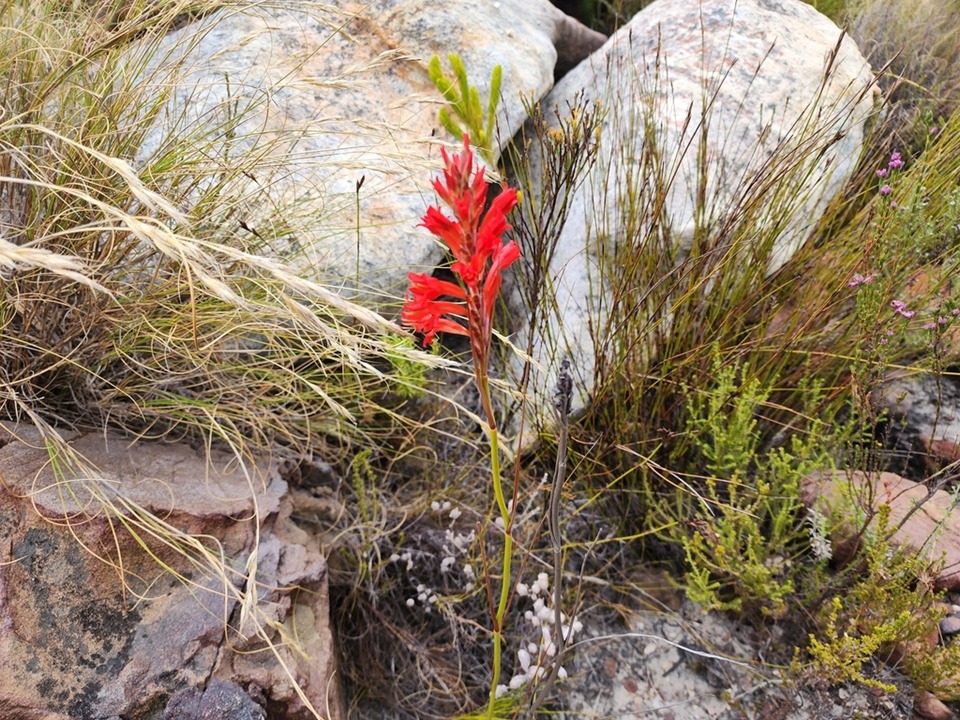
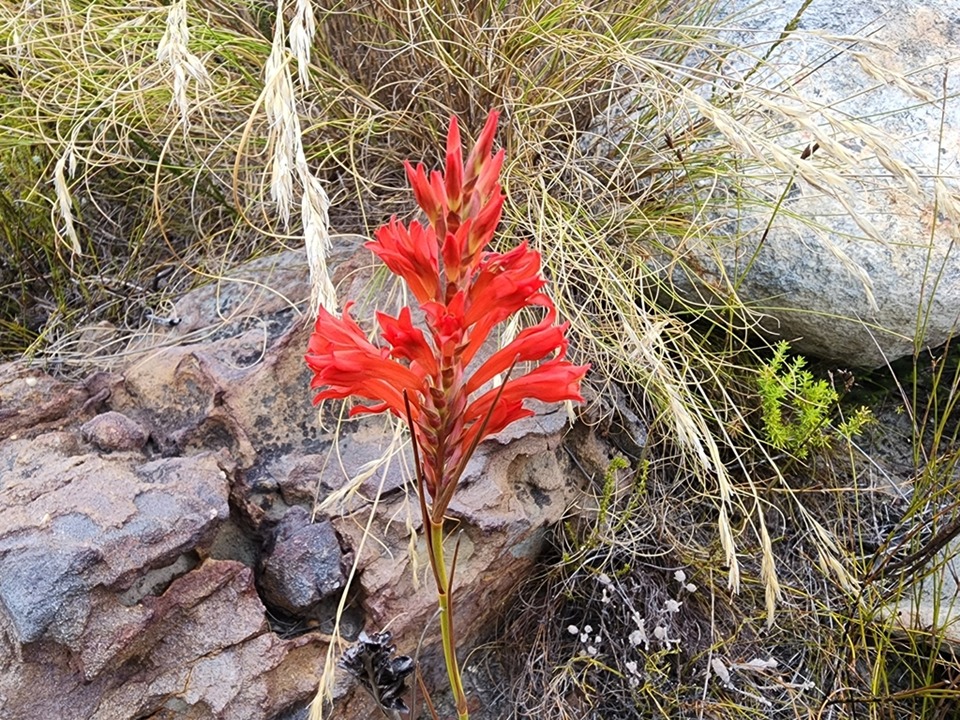
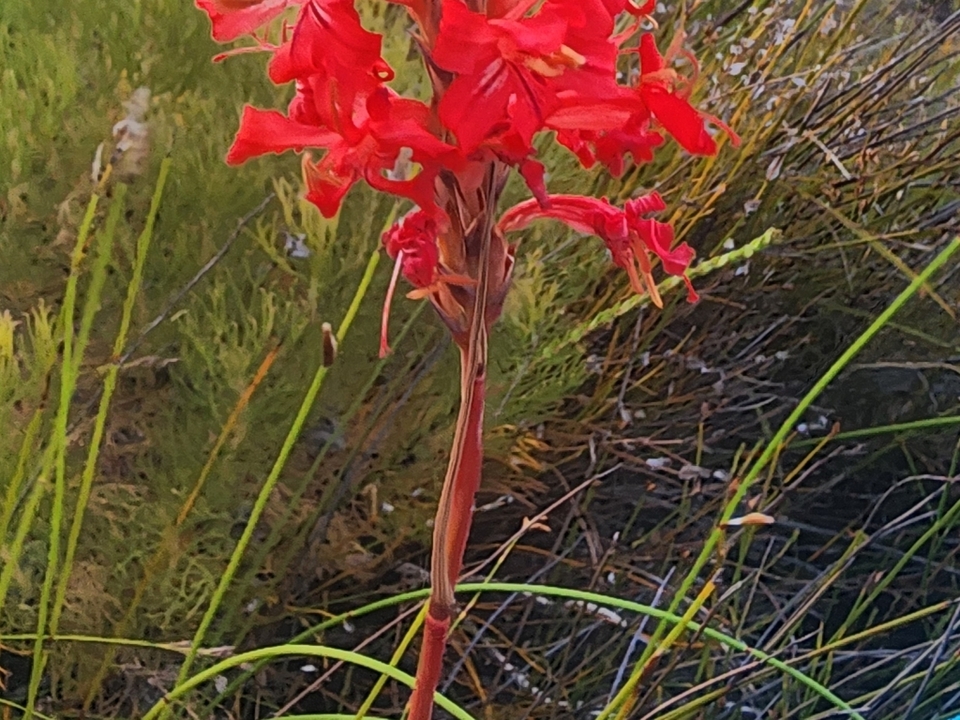
Tritoniopsis triticea is a striking deciduous, cormous geophyte from the Iridaceae family, endemic to the Cape Floral Region in South Africa. Growing up to 500–900 mm high, it produces dense, one-sided spikes of scarlet-red to bright orange, tubular flowers from February to April. It is a key fynbos species found on mountain slopes, often pollinated by the Table Mountain Beauty butterfly.
Botanical Details and Habitat
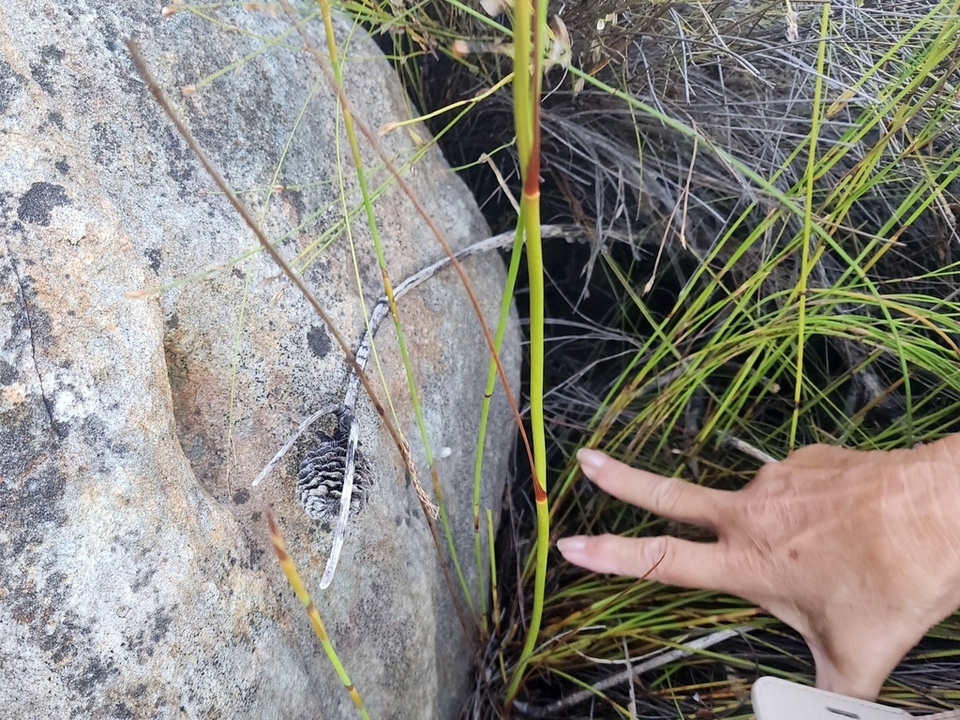
Appearance: A robust, unbranched plant with sturdy stems and linear, three-veined leaves that are often dry at flowering time.
Flowers: Bright red, orange, or sometimes yellow-tinged tubular flowers, with the tube being 2-3 cm long.
Habitat: Primarily rocky sandstone slopes and fynbos, often in areas affected by Table Mountain clouds.
Flowering Time: Late summer to autumn (February–April).
Cultivation and Ecology
Common Names: Mountain pipes, rooibergpypie, klipuintjie, summer snake flower.
Pollination: Heavily dependent on the Table Mountain Beauty butterfly (Aeropetes tulbaghia), which is attracted to its red, tubular flowers.
Cultivation: Requires well-drained, sandy soil, typically a mix of sand and milled bark.
Fire Ecology: Like many fynbos species, Tritoniopsis species, including T. triticea, often flower best after fire.
Species Notes: It is frequently confused with or used for mimicry by Disa ferruginea, which shares the same pollinator.
Tritoniopsis triticea is considered a valuable plant in the Cape flora, noted for its bright color in the, otherwise, often drab late summer fynbos.
AI Overview