Flora Detail
| Common Name | Bulrush, Papkuil |
| Family | Typhaceae (Bulrushes, Cattails, and Allies) |
| Date Observed | 06-04-2021 |
| Category | Grasses |
|---|---|
| Catalogue No. | 2205RGd |
| Flowering Time | Spring,Summer |
| Colour | Brown |
| Locations Observed | |
| Estuary | Many |
| Koppie | Not Observed |
| Nature Reserve | Many |
| Small Holding | Many |
| Village | Few |
| Greater Rooiels | Many |
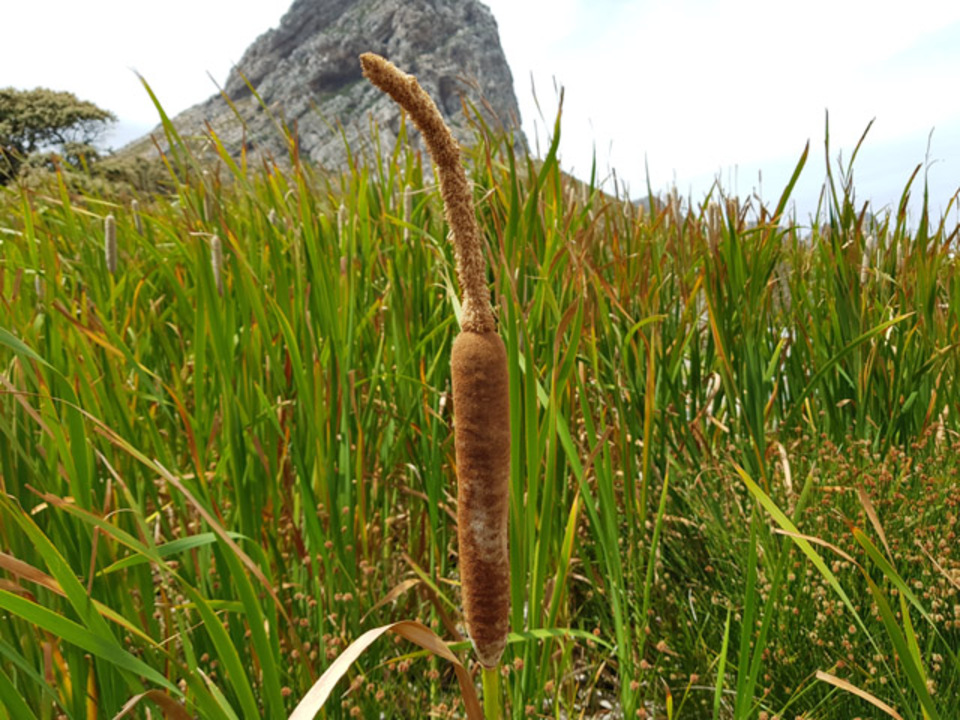
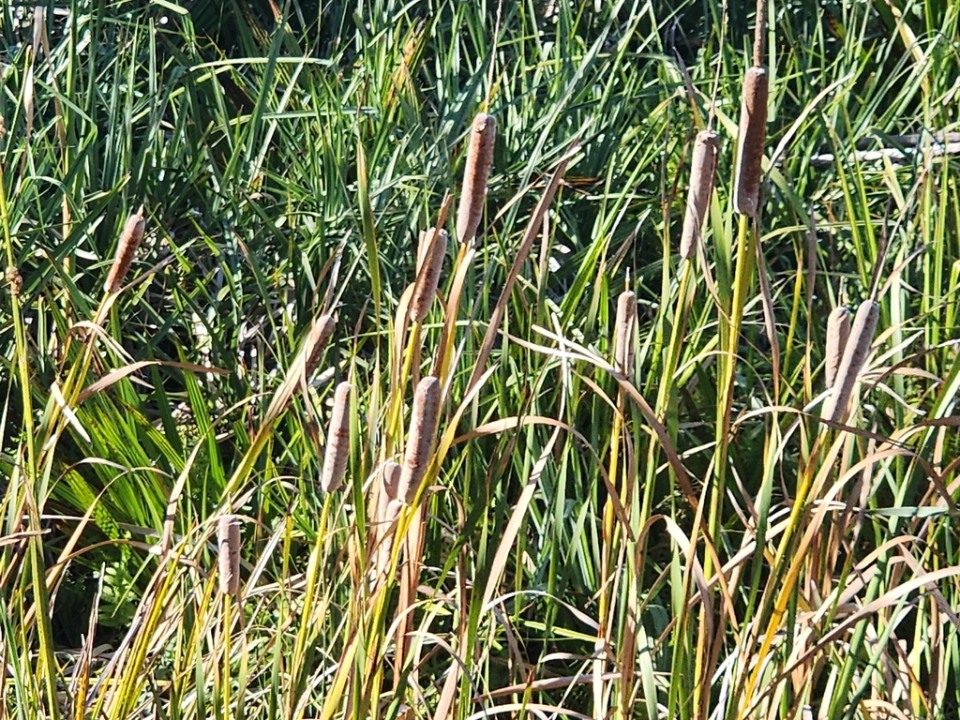
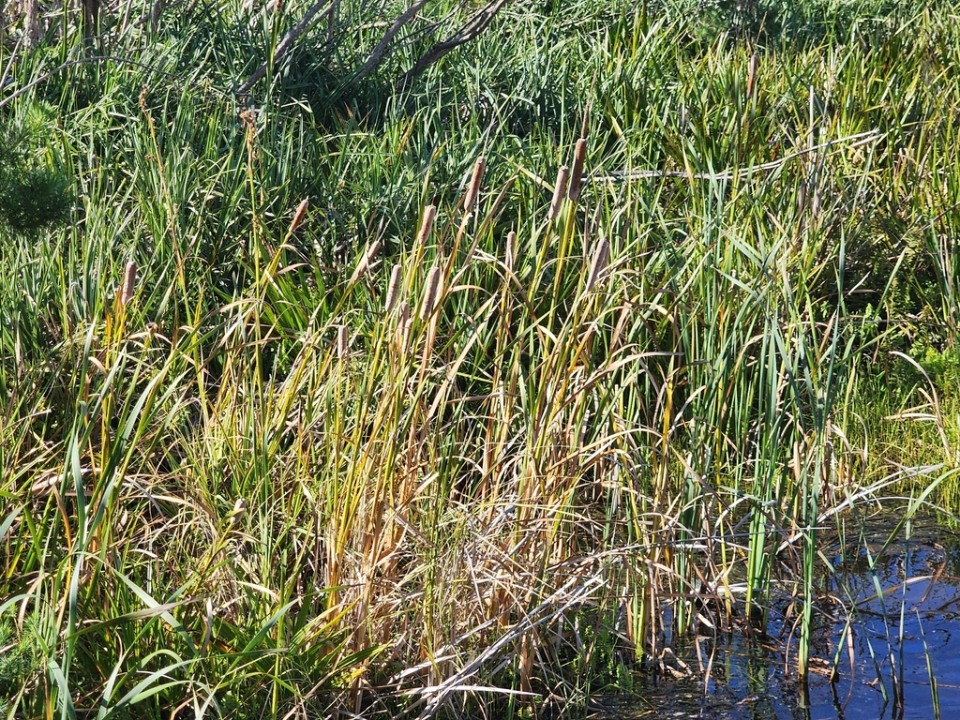
Typha capensis
Information
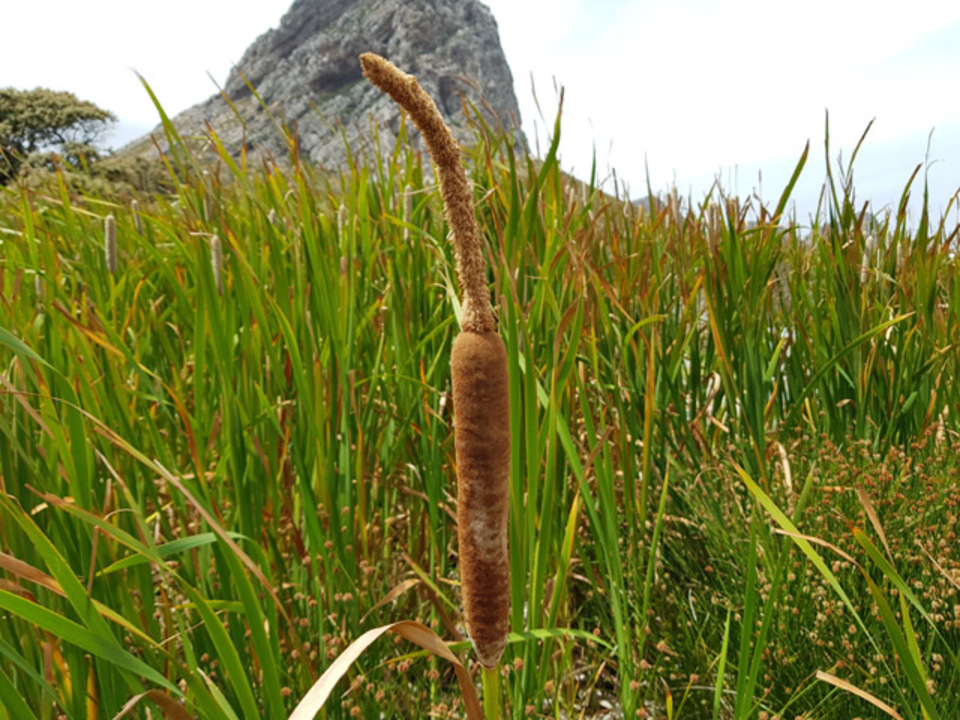
TYPHA CAPENSIS
Family: Typhaceae
Common names: Bulrush (Eng.); Papkuil, Matjiesriet (Afr.)
IS IT A MARSH OR A CAT’S TAIL?
We have all seen bulrushes — or papkuil — growing somewhere in Africa, or probably somewhere else in the world. They love wet places and can often be found growing wild in furrows, streams and around dams, their long leaves and velvety flower spikes making quite a statement.
The name Typha comes from the Greek typhos, meaning marsh, or typhe, meaning cat’s tail — a reference to its distinctive flower spike. Capensis simply refers to the Cape, where we find it in all sorts of wet places.
SEE HOW THEY GROW
Typha capensis is a perennial marsh plant that spreads rapidly by means of underground creeping rhizomes. Its leaves are long, bluish grey to green and strap-shaped, and can be up to 1.5 metres long.
The familiar flower spike starts off yellow and turns brown as it matures. In Rooiels, if you look closely, you will see the tiny flowers from December to January.
The tiny fruits have many fine hairs which help carry the seeds away on the wind.
AN UNOFFICIAL WATER-DETECTING DEVICE
Bulrushes are never far from water. Look for them in the Rooiels Nature Reserve, near the sea where there is seepage, and along the Rooiels River — you can see plenty from the bridge.
Even high up in the mountains, they appear beside the streams.
We have also found them along the Buffels River near Pringle Bay, around the lakes in Betty’s Bay, beside the Palmiet River and even growing along the sidewalks in Kleinmond.
If you are looking at buying a plot, bulrushes might give away whether it is boggy.
A NATURAL NURSERY
Bulrushes are much more than pretty wetland plants. Their dense stems provide shelter and nesting places for birds such as Moorhens, African Black Ducks, Red Bishops, Yellowrumped Widows and Common Waxbills, all found around the Rooiels estuary.
And below the water, the story continues. The pristine Rooiels estuary is a nursery for freshwater and marine fish, frogs, toads and countless aquatic creatures. The bulrushes provide valuable cover for these youngsters while they grow.
FROM PAP TO PADDING
Bulrush has been useful to people for centuries. Its fleshy, spongy rhizomes can be pounded into a meal for making pap, while the pollen is rich in protein.
The long leaves are used throughout Africa for weaving mats and baskets, thatching and making brooms. The fluffy material from the flower spikes can be used for stuffing and padding.
And in Angola, we witnessed an ingenious use: the female flower spikes were dipped in kerosene and used as torches during a night march.
AND THEN THERE ARE THE OLD REMEDIES…
Papkuil has a long history of traditional medicinal use, including remedies for a variety of ailments and uses associated with fertility and childbirth.
But perhaps this is one area where modern medicine and the local clinic would come in handy.
ENTHUSIASM TO CONTAIN
Typha capensis spreads very quickly, and because of this it is regarded by some as a pest, particularly where it takes over waterways or dams. If planted in a garden, it might be a good idea to contain the plant in a pot in the garden pond.
Its conservation status is Least Concern.
Click to find out more on iNaturalist