Flora Detail
| Common Name | Dune Taaibos or Dune Currant Rhus |
| Family | Anacardiaceae (Mango Family) |
| Date Observed | 27-04-2025 |
| Category | Bushes |
|---|---|
| Catalogue No. | 4450RG |
| Flowering Time | Spring,Summer |
| Colour | Yellow |
| Locations Observed | |
| Estuary | |
| Koppie | |
| Nature Reserve | Few |
| Small Holding | |
| Village | |
| Greater Rooiels | |
Searsia laevigata
Information
Dune Taaibos or Dune Currant Rhus

Searsia laevigata (Dune Taaibos or Dune Currant Rhus) is a hardy, evergreen, or sometimes deciduous, South African shrub or small tree, reaching 2–4 meters in height. It is a coastal species endemic to the Cape region, characterized by dense, spreading branches, glossy trifoliate leaves, and small, round, russet-red fruits.
Key Characteristics
Appearance: Dense shrub with smooth, grey-brown bark; branches are frequently infested with small, pea-sized galls.
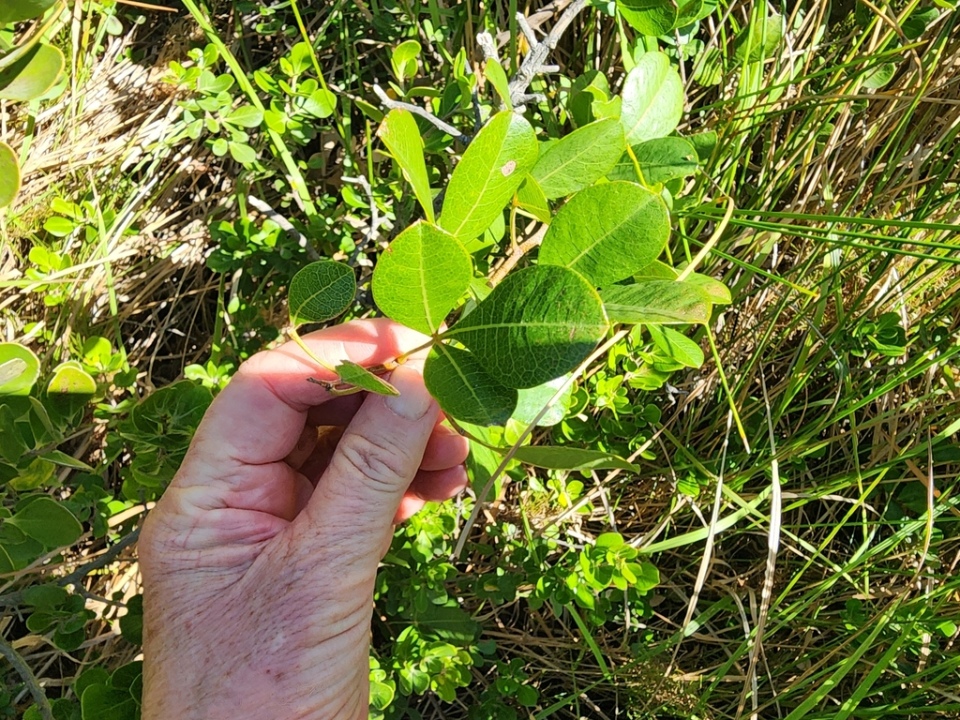
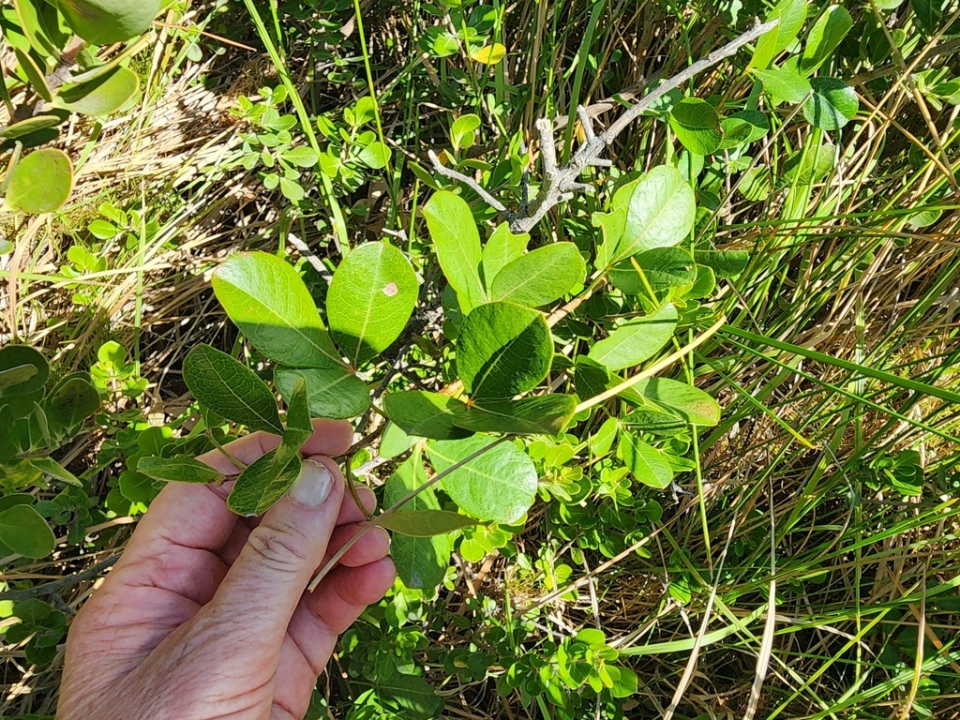
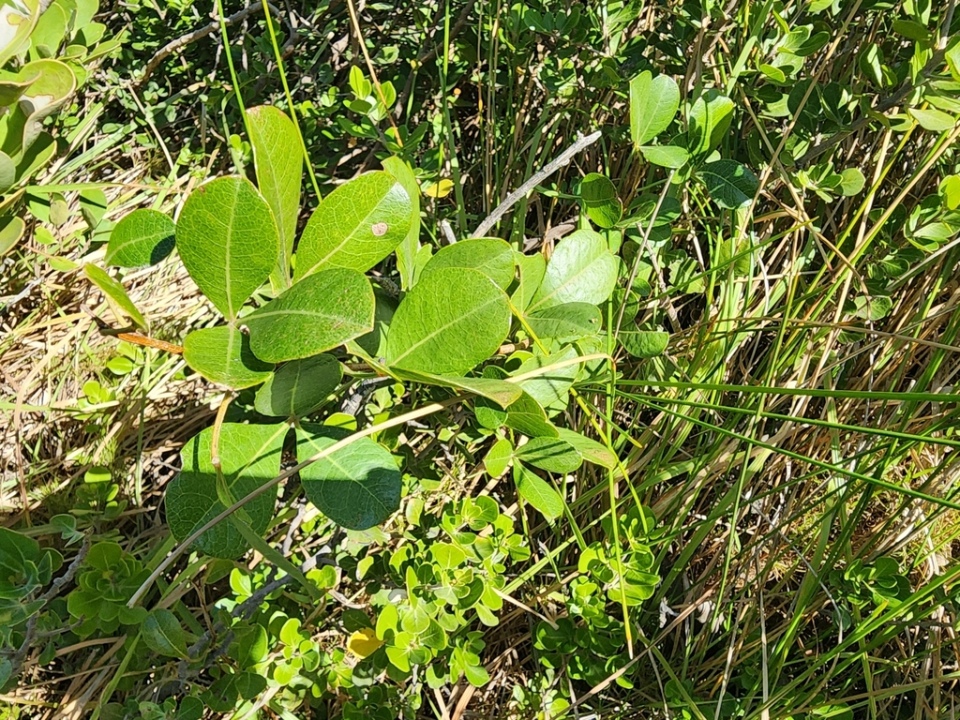
Leaves: Divided into three leaflets, which are glossy and sometimes have edges rolled under.
Flowers: Small, inconspicuous, greenish-yellow flowers appear from October to December, often appearing in spring.
Fruit: Produces small, round, shiny fruit that turns russet red.
Habitat & Ecology: Found primarily in coastal dunes, flats, and lower slopes in the Western, Northern, and Eastern Cape provinces. It is highly tolerant of salt spray and strong coastal winds.
Uses: Due to its robust nature, it is used for dune stabilization, as a screen or hedging plant, and as an ornamental in water-wise, coastal gardens. The fruits attract birds, and historically, the plant has been used for medicinal purposes.
Status: Listed as Least Concern, with a stable population.
AI Overview
Click to find out more on Inaturalist