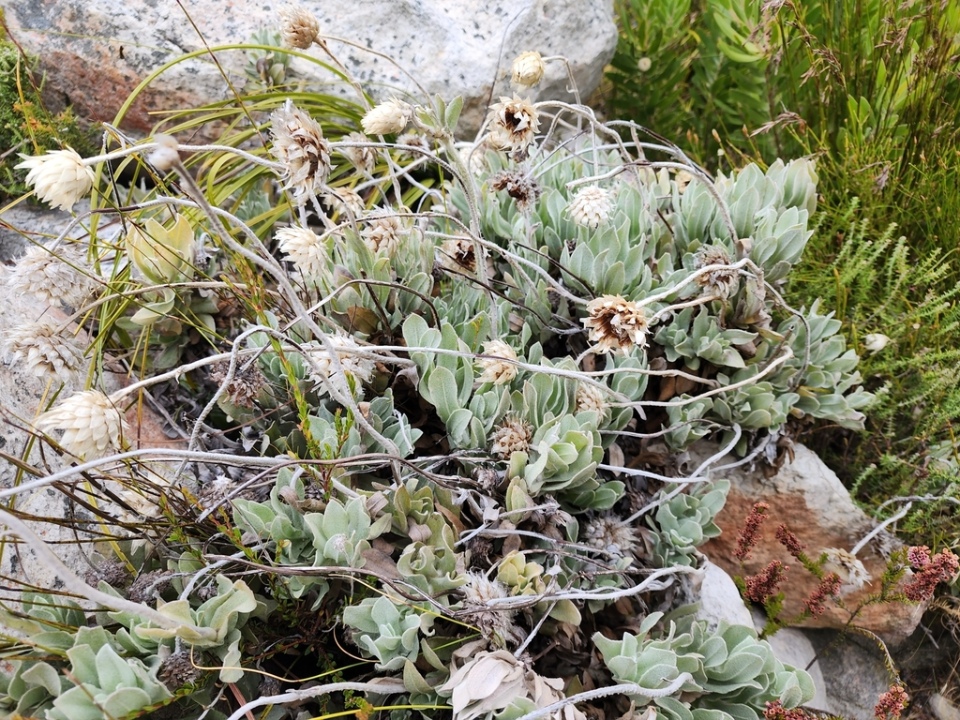
Flora Detail
| Common Name | Cape Sewejaartjie |
| Family | Asteraceae (Daisy Family) |
| Date Observed | 21-02-2025 |
| Category | Shrubs |
|---|---|
| Catalogue No. | 3585RGu |
| Flowering Time | Summer,Autumn,Winter |
| Colour | White to Grey |
| Locations Observed | |
| Estuary | |
| Koppie | |
| Nature Reserve | |
| Small Holding | |
| Village | |
| Greater Rooiels | Few |
Syncarpha speciosissima
Information
Cape Sewejaartjie
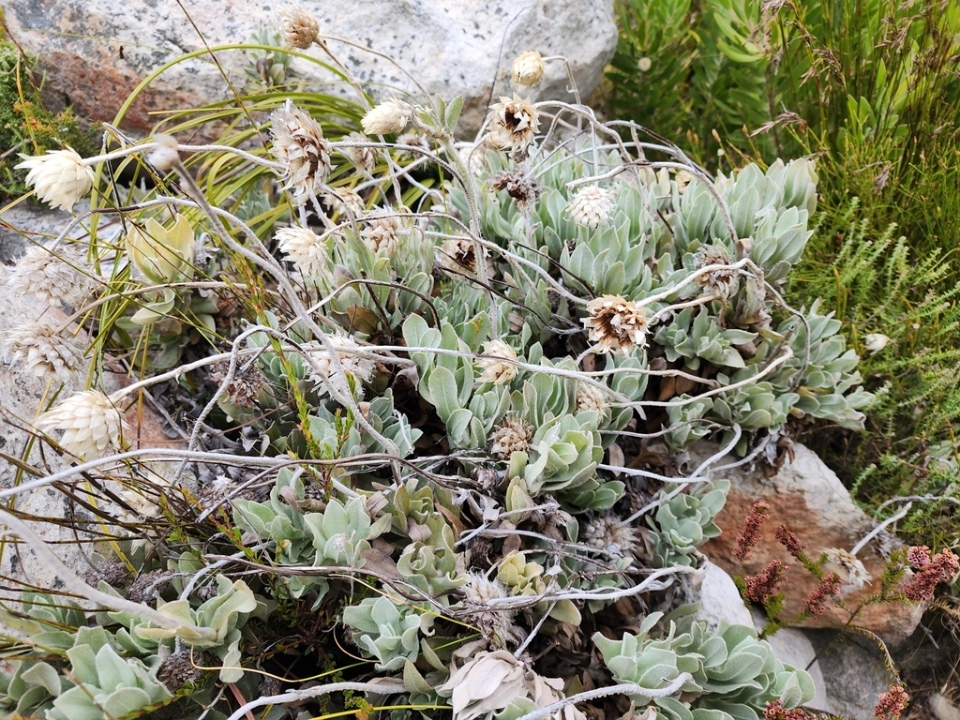
🌱 Syncarpha speciosissima
Common names: Cape Everlasting, Pink Everlasting
Afrikaans: Pienksewejaartjie
🌍 In Rooiels
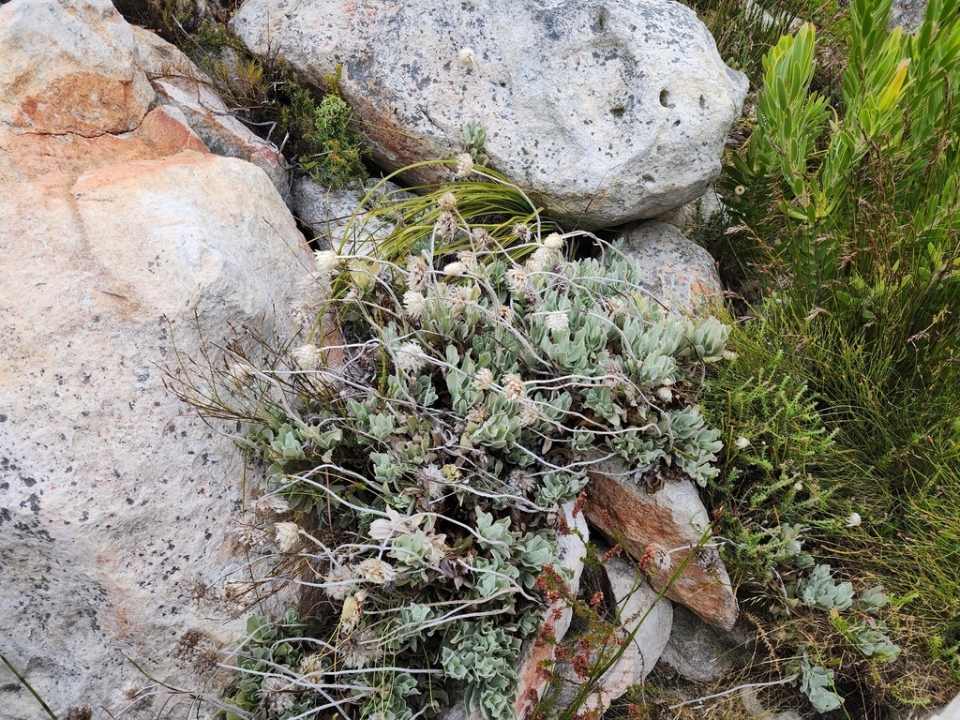
This lovely everlasting brightens open, sunny patches around Rooiels, especially on rocky slopes with sandy soil. Its vivid pink bracts stand out beautifully against the muted fynbos colours, making it easy to spot even from a distance.
🌿 Appearance
A soft, silvery shrublet with slender stems and narrow, velvety leaves. It usually grows to about half a metre tall and has a neat, upright shape.
🌸 Flowers
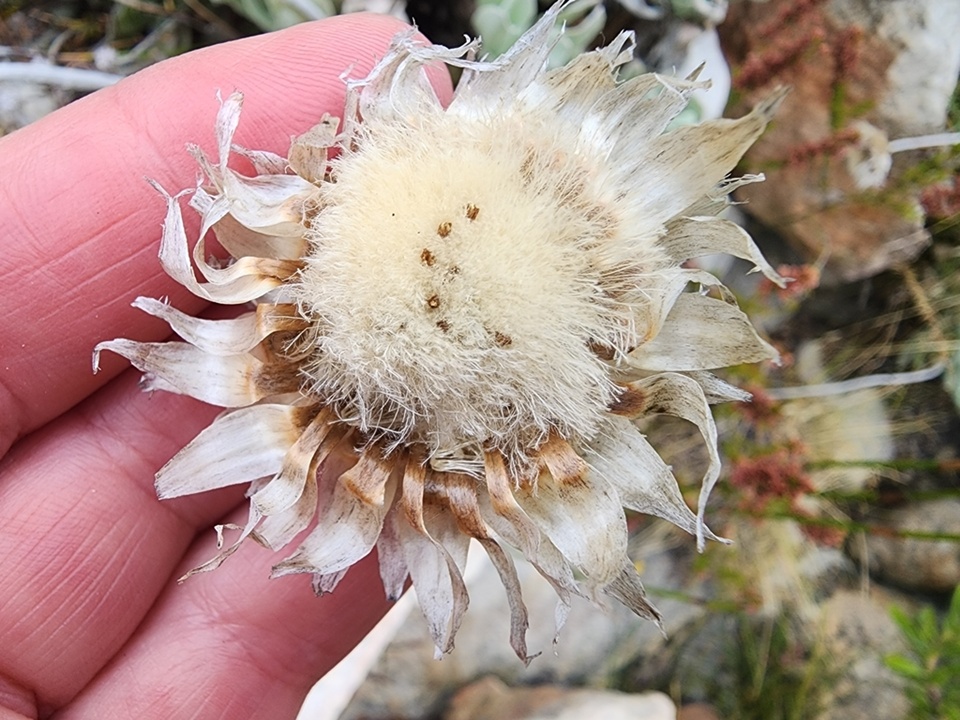
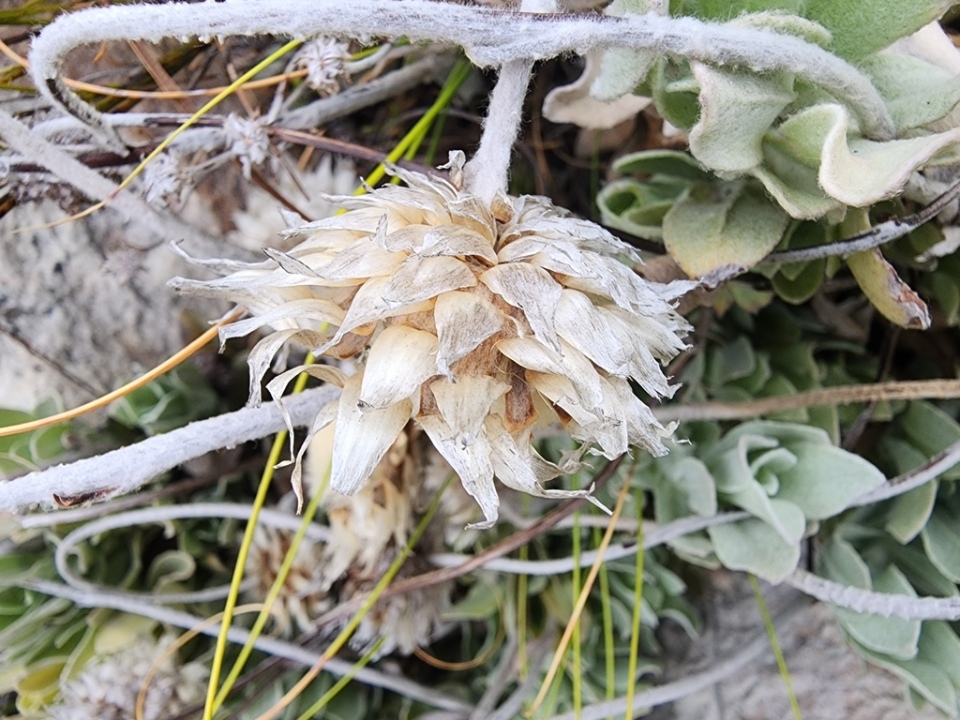
The papery pink bracts are the highlight, each surrounding a small yellow centre. They sit proudly at the tips of the stems and hold their colour for a long time, even after drying.
🍃 Leaves
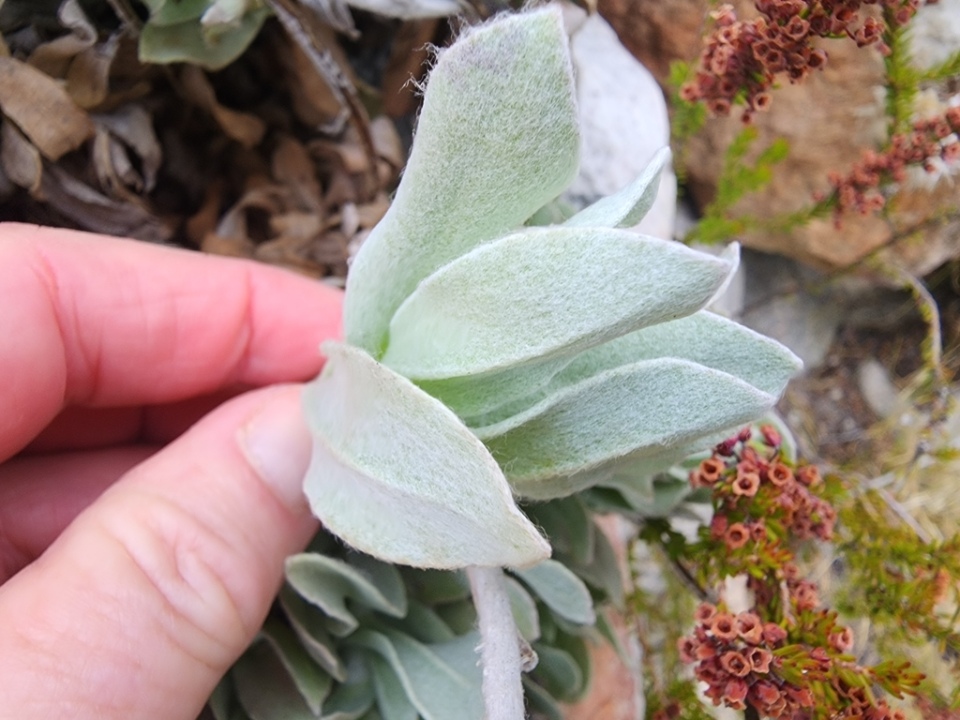
Narrow, softly textured leaves covered in fine white hairs that give the plant its silvery shimmer.
🌾 Stems / Growth Habit
Slender, upright stems rise from the base, each ending in a single showy flower head. The stems are also softly hairy, adding to the plant’s pale, frosted look.
🏞️ Habitat & Ecology
Found in sandy, nutrient‑poor soils of the Cape mountains and coastal slopes. It thrives in full sun and open spaces between larger shrubs, fitting naturally into the Rooiels landscape.
🌼 Flowering Season
Flowers mainly in spring and early summer.
🔥 Recovery After Fire
This species usually regenerates from seed after fire, with young plants appearing in the seasons that follow.
🐝 Ecological Role
The bright flowers attract small insects, including bees and beetles, and add cheerful colour to open fynbos areas.
🌱 Cultivation Notes
Best in full sun with sandy, well‑drained soil. It dislikes heavy or waterlogged conditions but thrives in rockeries or natural fynbos gardens.