Flora Detail
| Common Name | Euryops |
| Family | Asteraceae (Daisy Family) |
| Date Observed | 25-07-2026 |
| Category | Shrubs |
|---|---|
| Catalogue No. | 3587u |
| Flowering Time | Spring,Winter |
| Colour | Yellow |
| Locations Observed | |
| Estuary | |
| Koppie | |
| Nature Reserve | |
| Small Holding | Few,Rare |
| Village | |
| Greater Rooiels | |
Euryops indecorus
Information
Euryops (Critically rare)
EURYOPS INDECORUS
INTRODUCTION
Euryops indecorus is a critically rare species listed on SANBI's
National Sensitive Species list. According to the listing, the species is known
from only one site (Raimondo, 2007).
Over the past 20 years, three sightings have been
recorded in the Rooiels area. Euryops indecorus is extremely localised,
and there are very few plants.
A NON-SCIENTIFIC DESCRIPTION
Hardly anything has been written about this plant,
probably because it is so rare. So, from personal observation, I can offer a
non-scientific description.
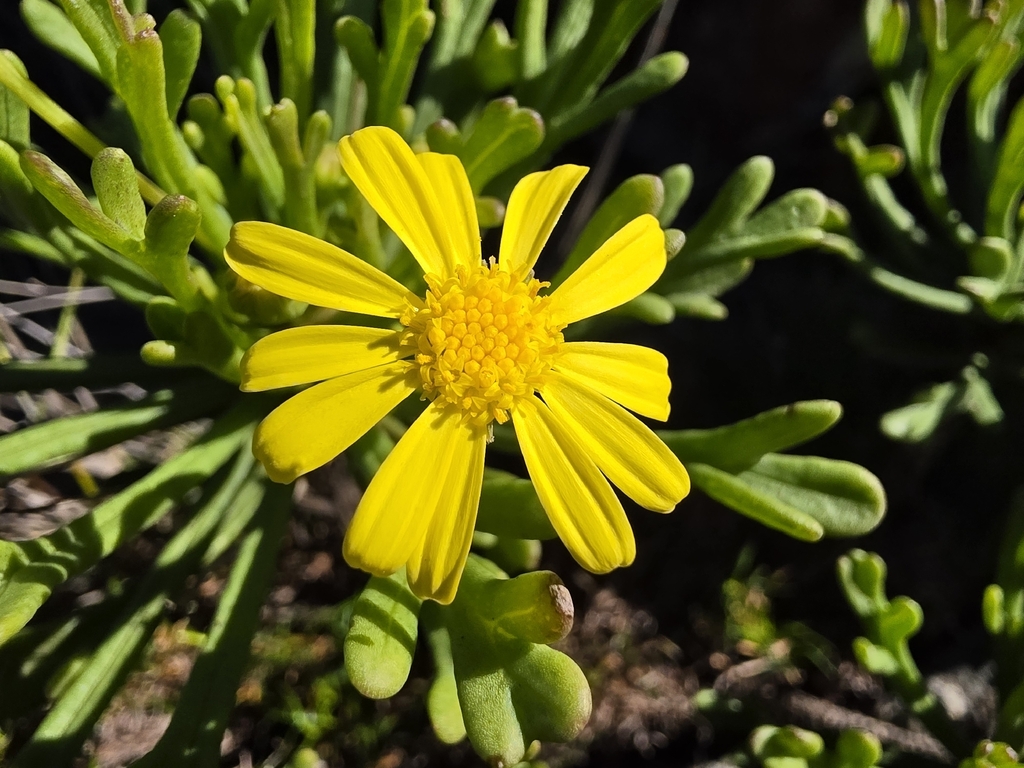
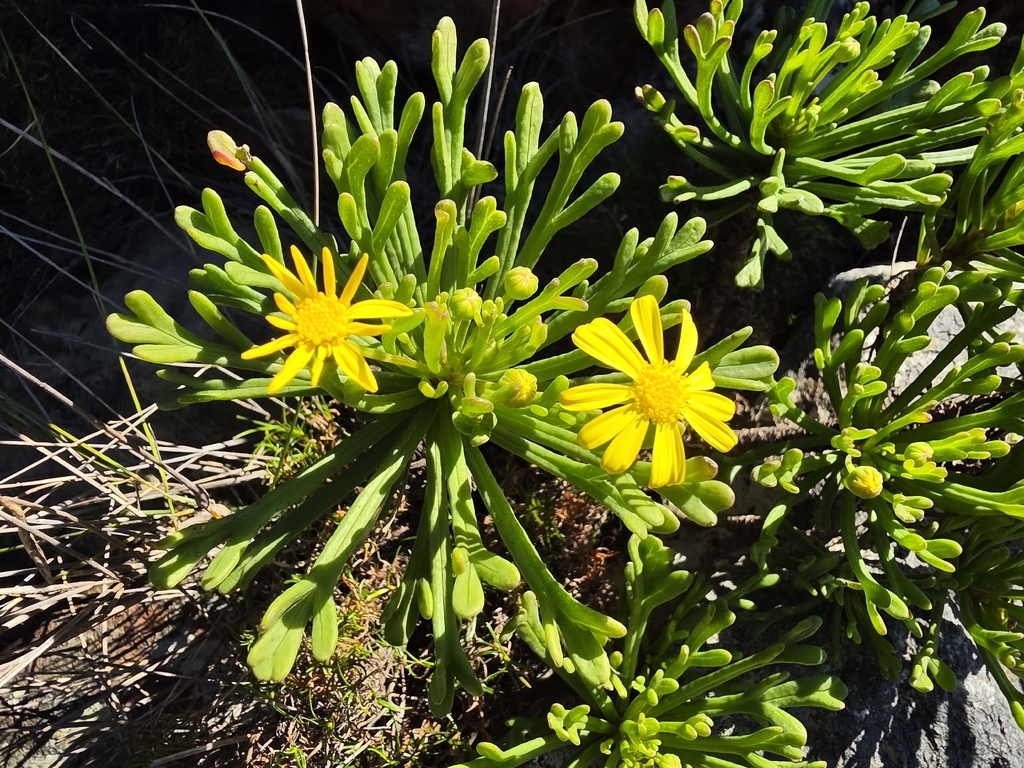
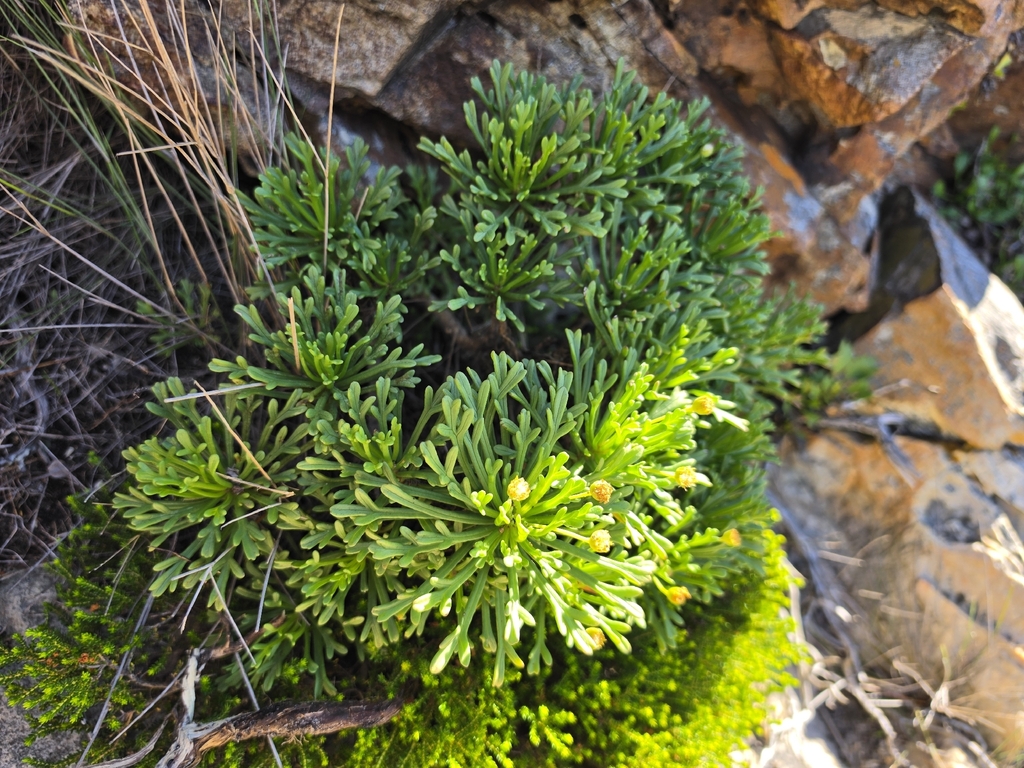
Euryops indecorus is a small, rounded shrub that hugs the cliff
face. Its bright green leaves point upwards like little green hands reaching
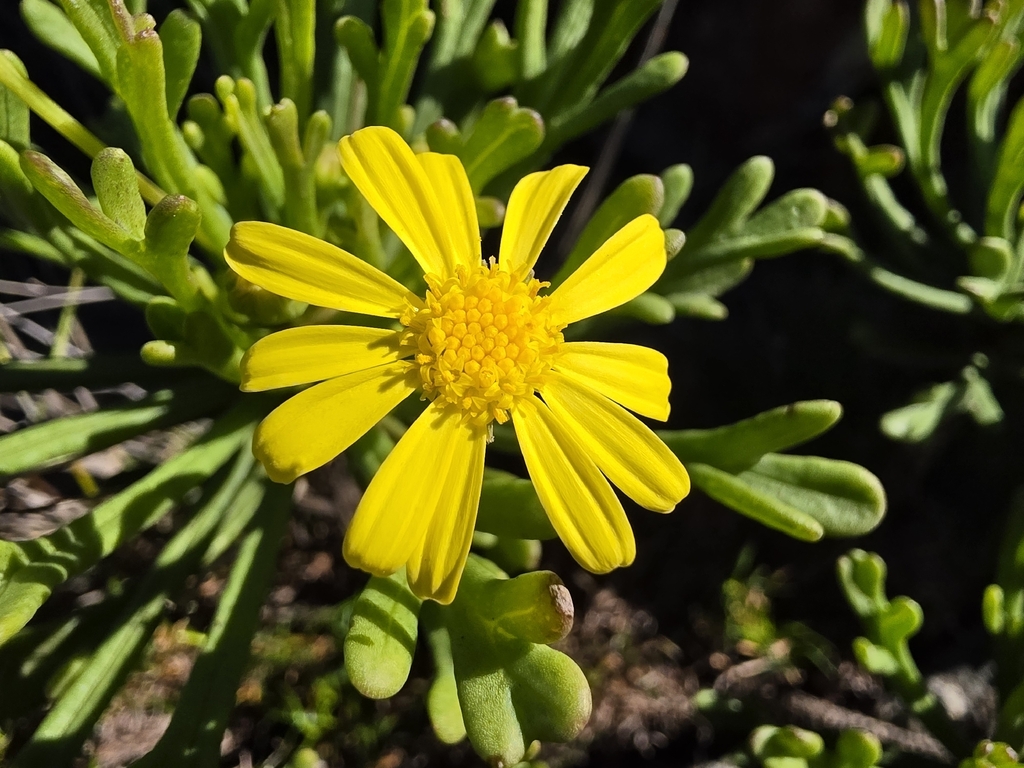
towards the sky. The flowers are bright yellow daisies.
HABITAT
It grows in Kogelberg Sandstone Fynbos in steep,
rocky places, sometimes tucked into crevices in cliffs.
POLLINATION
Who pollinates this rare little plant?
Butterflies? Bees? Do Red-winged Starlings and
baboons eat the flowers? Do they help spread the seeds?
There are so many unanswered questions.
WHAT MAKES THIS OBSERVATION SPECIAL?
Perhaps it is the fact that, despite many fynbos
fires and its extremely localised distribution, Euryops indecorus has
somehow continued to survive and reproduce since it was first discovered in
1936.
There are still only a few plants, and they remain
very localised. But they are there.
And after nearly a century, that feels rather
remarkable.