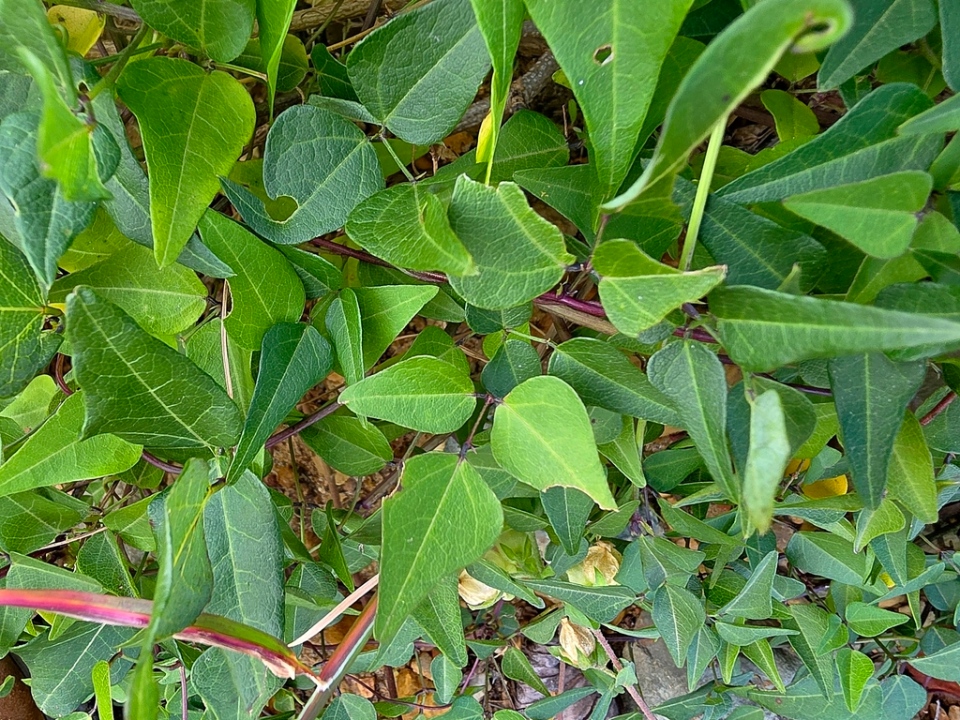
Flora Detail
| Common Name | Okie Bean, Afr. bosklimop, wilde-ertjie |
| Family | Fabaceae (Legumes) |
| Date Observed | 05-08-2026 |
| Category | Ground cover |
|---|---|
| Catalogue No. | 1115RGd |
| Flowering Time | Spring,Summer |
| Colour | Pink to Mauve |
| Locations Observed | |
| Estuary | |
| Koppie | |
| Nature Reserve | |
| Small Holding | |
| Village | |
| Greater Rooiels | Few |
Dipogon lignosus
Information
Cape sweet pea (Eng.), bosklimop, rankertjie, wilde-ertjie (Afr.)

DIPOGON LIGNOSUS
Okie bean
Common
names: Cape sweet
pea (Eng.), bosklimop, rankertjie, wilde-ertjie (Afr.)
Dipogon lignosus, or Okie bean, is an enthusiastic
twiner. Maybe a bit too enthusiastic, because it can become invasive in your
garden if you don’t keep an eye on it.
Interestingly, wherever we saw it in the veld, it knew its
place amongst all the other plants and was not invasive.
DESCRIPTION
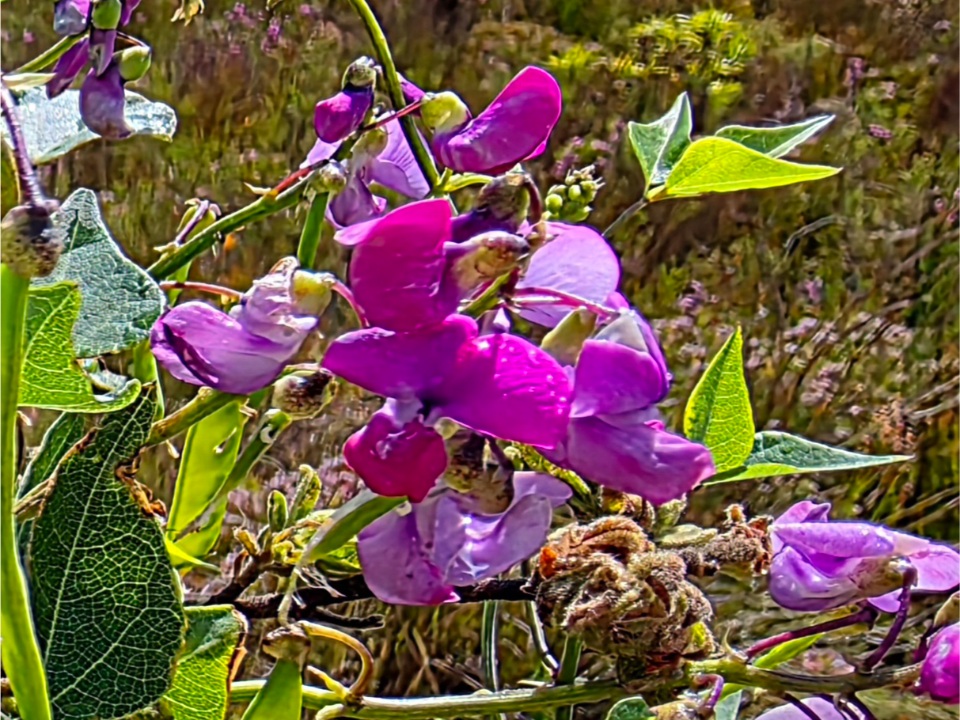
Okie bean has fragrant pink, mauve, magenta and purple pea
flowers and produces sickle-shaped pods containing four to six seeds.
It is waterwise and very hardy.
HABITAT & DISTRIBUTION
We have found this semi-evergreen climber on the eastern
side of Klein-Hangklip and all along the coast to Kleinmond, where we also saw
it in the Kogelberg Nature Reserve.
Okie bean occurs from the Western to the Eastern Cape,
usually near forests and streams.
ECOLOGY
Dipogon lignosus is a valuable plant in the veld.
Being a legume, it naturally enriches the soil through nitrogen-fixing bacteria
living in its root nodules.
STATUS
Status: Least Concern
In Australia and New Zealand, however, Okie bean is
considered invasive.