Flora Detail
| Common Name | Bristly Pineapple reed |
| Family | Restionaceae (Capereeds) |
| Date Observed | 25-08-2026 |
| Category | Grasses |
|---|---|
| Catalogue No. | 2228RG |
| Flowering Time | Spring |
| Colour | Brown |
| Locations Observed | |
| Estuary | |
| Koppie | |
| Nature Reserve | |
| Small Holding | Many |
| Village | |
| Greater Rooiels | |
Hypodiscus aristatus
Information
Bristly Pineapple reed
HYPODISCUS ARISTATUS
Family: Restionaceae
Common names: Bristly Pineapple Reed, Hedgehogs, Needle Reed (Eng.); Naaldriet (Afr.)
LITTLE PINEAPPLES IN THE FYNBOS
We find these lovely tuft-forming restios on our mountain slopes. And what a joy if you have some growing naturally in your garden!
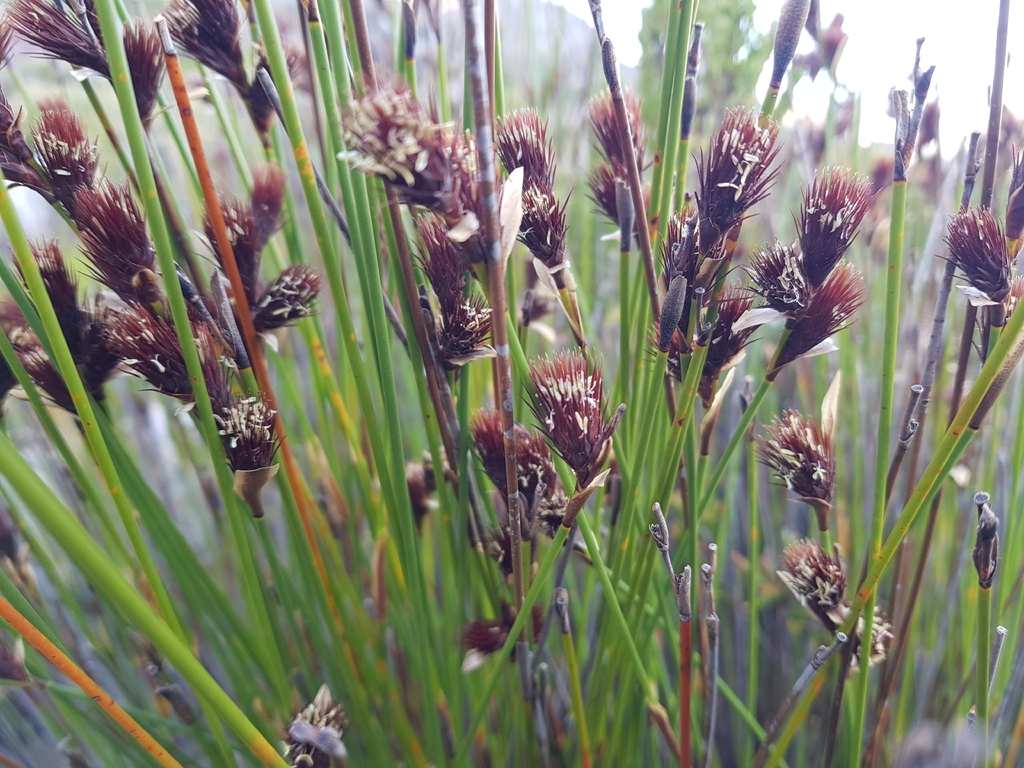
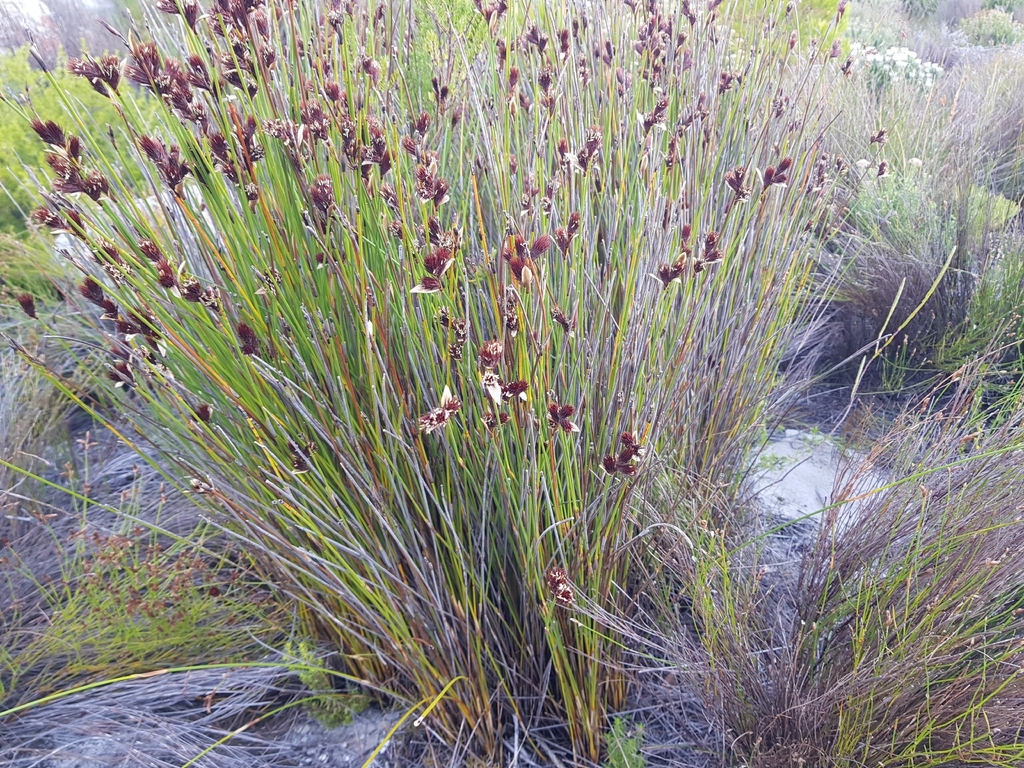
Hypodiscus aristatus forms neat tufts with a narrow base. The slender culms grow from an underground rhizome and can reach about one metre tall. Brownish sheaths are wrapped around the culms.
THE FLOWERS — IF YOU CAN SEE THEM
The plants begin flowering in autumn, from around May.
Male and female flowers are carried on separate plants. The male spikelets contain many tiny flowers, while each female spikelet bears a single flower. The female spikelets enlarge as the fruit develops and ripens.
But you would be forgiven for hardly noticing the flowers themselves.
AND THE PINEAPPLES IN THE NAME?
This is where Hypodiscus aristatus becomes rather charming.
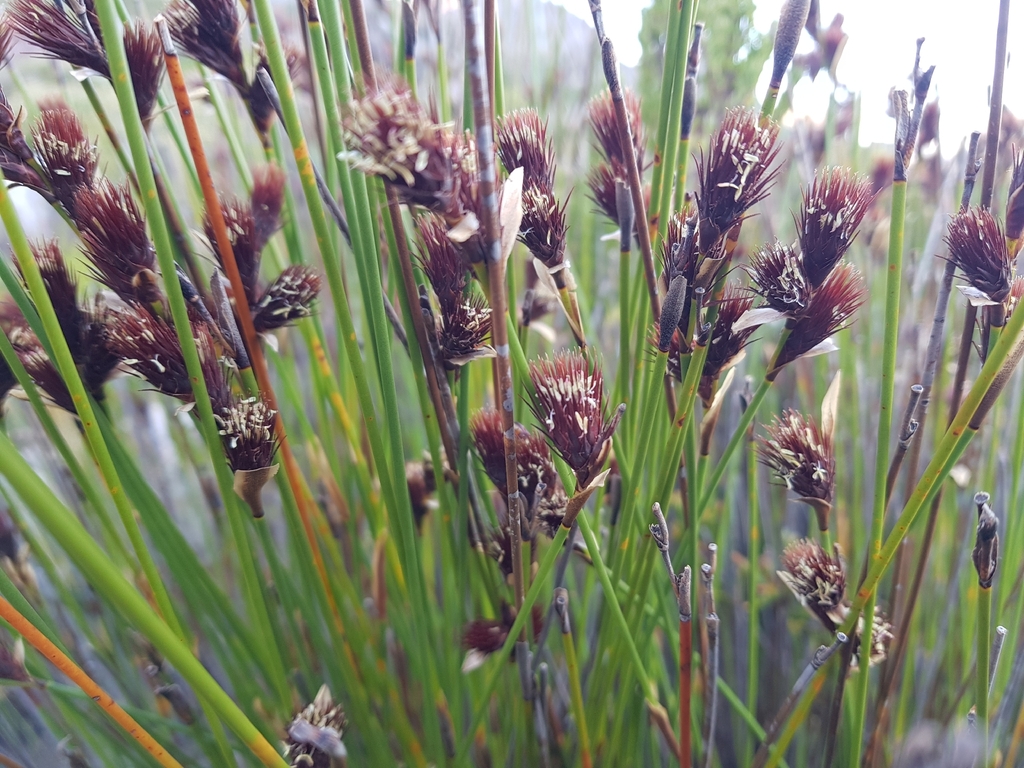
The spikelets of both male and female plants are surrounded by stiff, pointed bracts that extend beyond the tiny flowers. The result looks remarkably like a collection of miniature, rather prickly pineapples.
Suddenly the common names Bristly Pineapple Reed, Hedgehogs and Naaldriet make perfect sense.
A NUT FOR THE ANTS
The female flower produces a single smooth, shiny nutlet, about 8 mm long, with a fleshy attachment called an elaiosome.
And this is where the ants come in. Attracted by the elaiosome, they carry the nutlet underground, eat the fleshy part and leave the hard-shelled seed safely buried. There it is protected from the heat of a fynbos fire.
The plant has another fire-survival trick — established plants can also resprout after fire.
Conservation status: Least Concern.