Flora Detail
| Common Name | White Candlestick |
| Family | Stilbaceae Candlestick Family |
| Date Observed | 25-04-2026 |
| Category | Shrubs |
|---|---|
| Catalogue No. | 3313RGd |
| Flowering Time | Summer,Autumn |
| Colour | White to Grey |
| Locations Observed | |
| Estuary | Not Observed |
| Koppie | Not Observed |
| Nature Reserve | Not Observed |
| Small Holding | Few |
| Village | Not Observed |
| Greater Rooiels | Few |
Stilbe albiflora
Information
White Candlestick
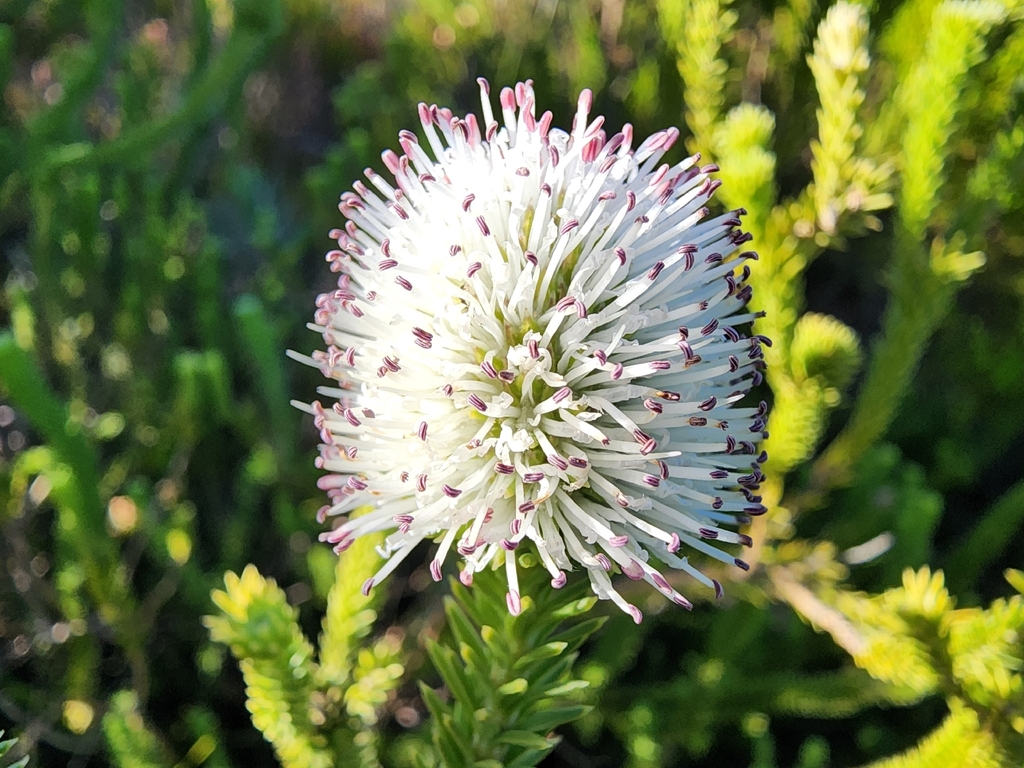
STILBE ALBIFLORA
Common name: White Candlestick
ONCE YOU SEE THEM…
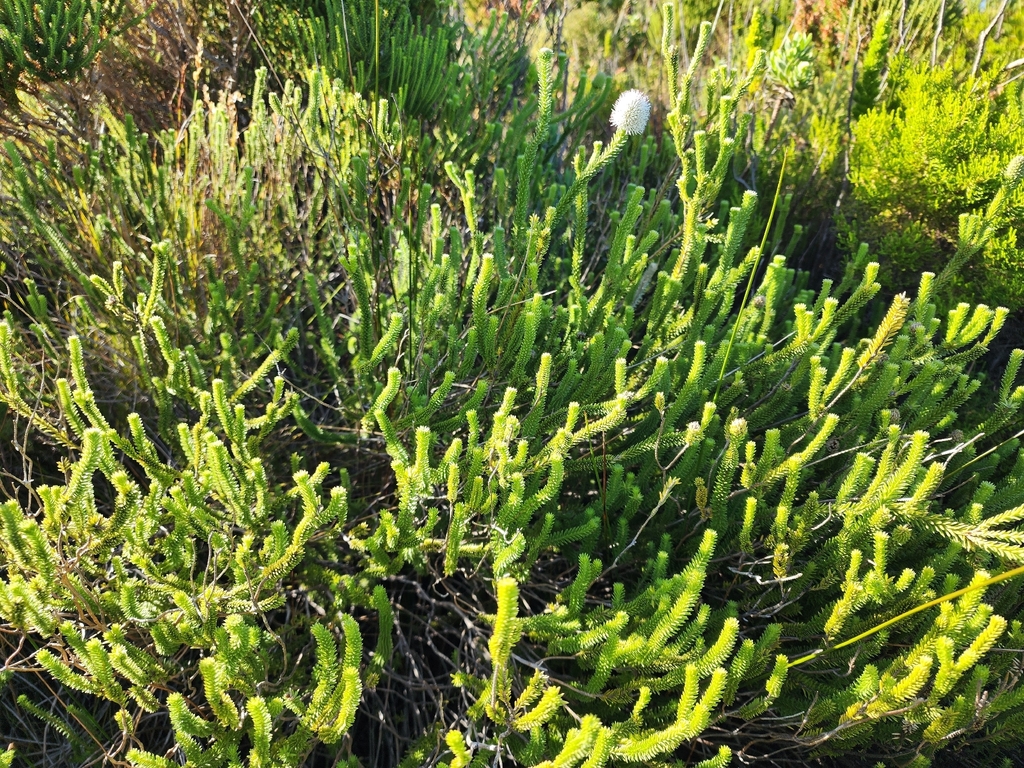
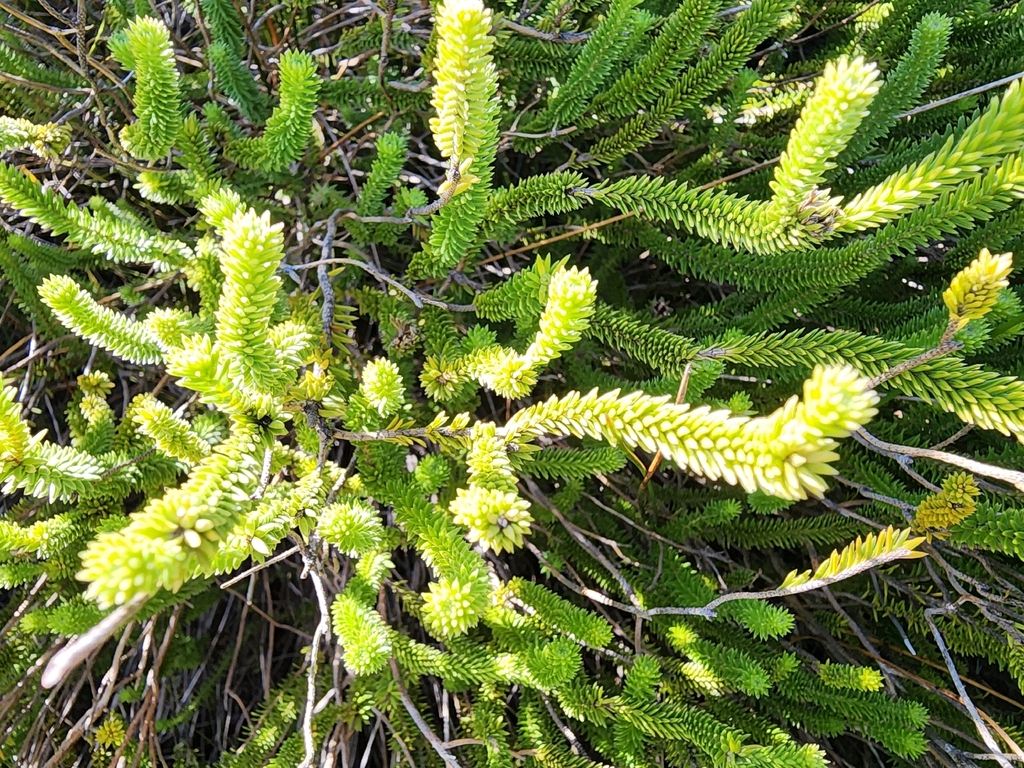
At first glance, Stilbe albiflora is easy to
overlook, its slender flower spikes blending into the surrounding fynbos.
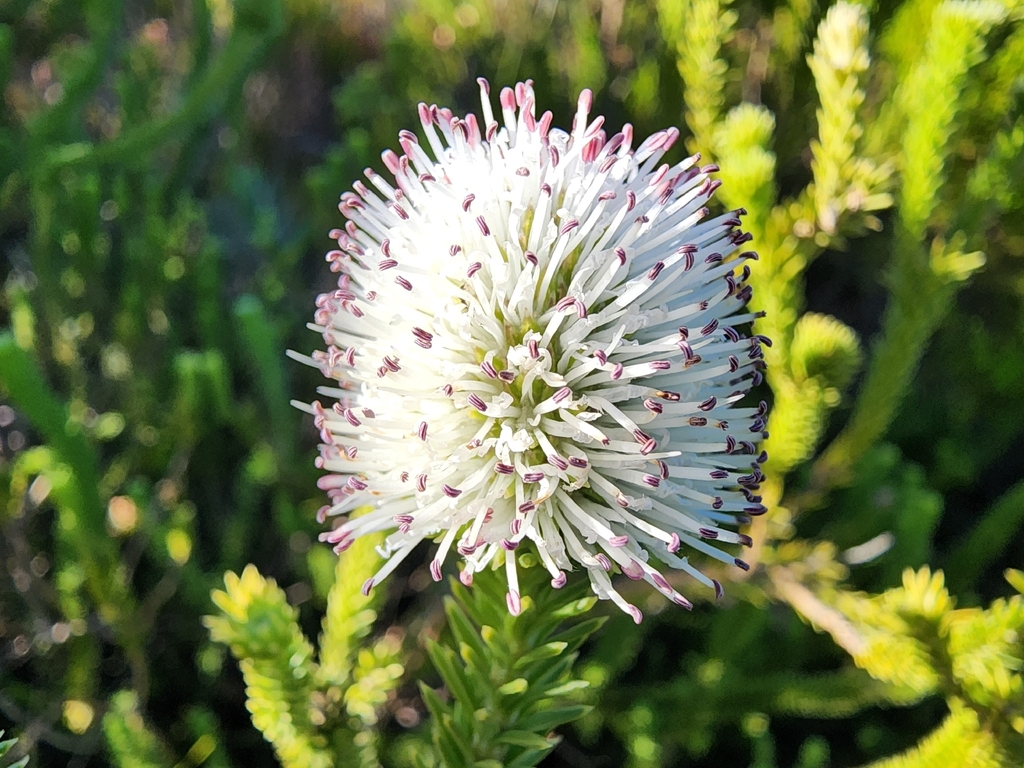
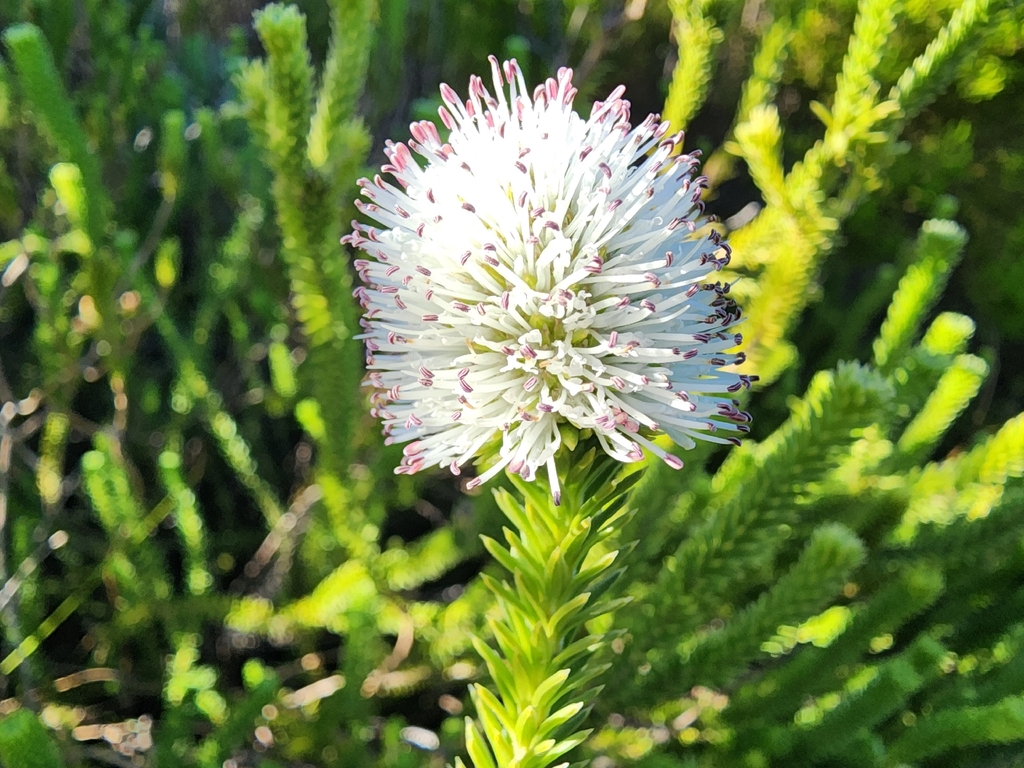
But once your eyes have tuned in to those cute, round white
pom-poms, you will never miss them again.
The tiny white flowers are crowded together in dense spikes,
creating the distinctive little white flowerheads that catch your eye amongst
the surrounding vegetation.
DISTRIBUTION & HABITAT
Stilbe albiflora is endemic to the Cape Floristic
Region. It grows on sandy flats and limestone hills in coastal areas from
Hopefield to De Hoop.
In Rooiels, we have found it on the lower mountain slopes
and amongst the fynbos on the WWF property.
It flowers mainly from autumn into early spring.
WHAT'S IN A NAME?
The name Stilbe comes from the Greek stilbo,
meaning to shine or glisten.
And when those little white flowerheads catch the sunlight,
the name seems particularly appropriate.
BUILT FOR FIRE
Stilbe albiflora is a resprouter. Although fire may
destroy the growth above ground, the plant is able to survive and grow again.
CONSERVATION STATUS
Stilbe albiflora is classified as Least Concern