Flora Detail
| Common Name | Hairy-tube heath; groenheide (Afr.) |
| Family | Ericaceae (Heath Family) |
| Date Observed | 10-06-2021 |
| Category | Shrubs |
|---|---|
| Catalogue No. | 3310RGu |
| Flowering Time | Spring,Summer |
| Colour | Green |
| Locations Observed | |
| Estuary | |
| Koppie | Few |
| Nature Reserve | Many |
| Small Holding | |
| Village | Few |
| Greater Rooiels | Few |
Erica brachialis
Information
Hairy-tube heath; groenheide (Afr.) Vulnerable
Occurs in only six small subpopulations: fewer than 1200 wild individuals; wild population is decreasing. Flowers mid to late summer into autumn.
Has the ability to resprout, not from an underground rootstock, but from the trunk or a stem. It enables a plant to survive damage such as being broken or knocked over.
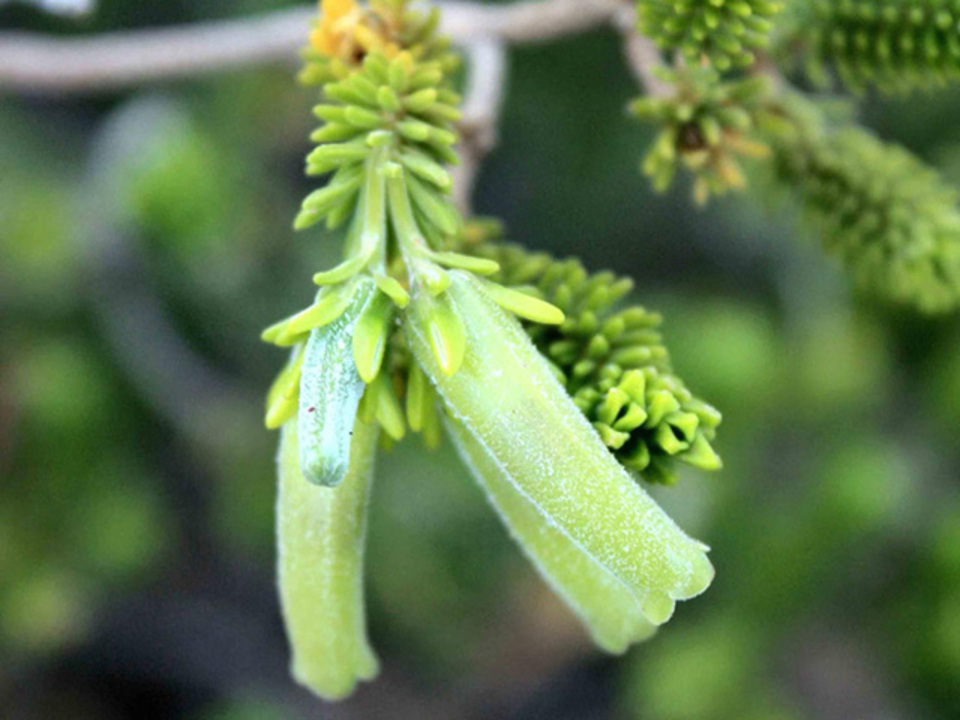
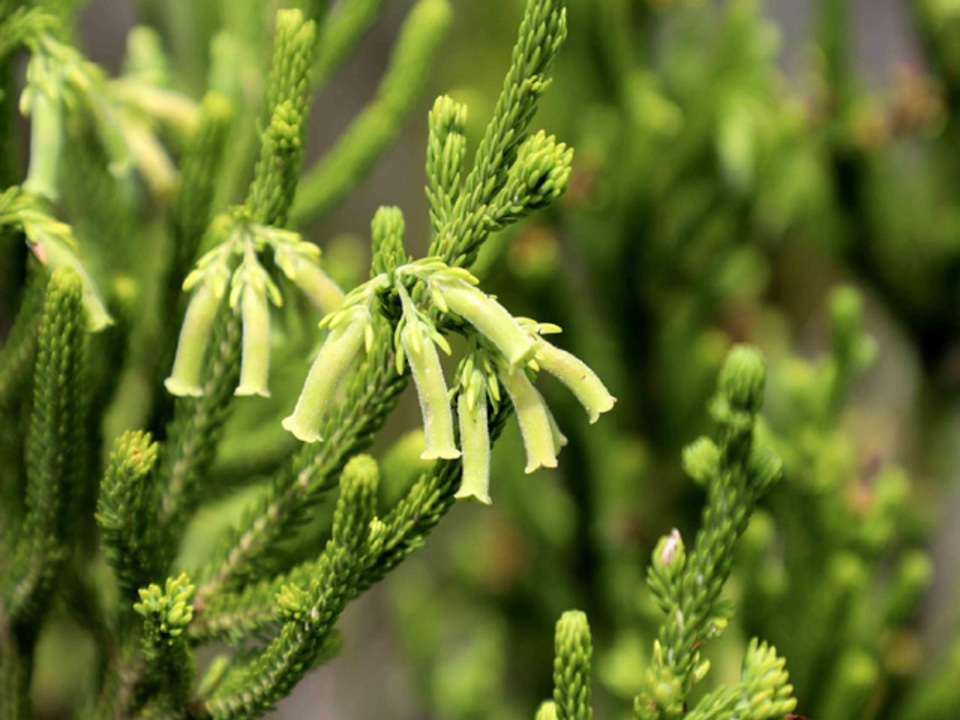
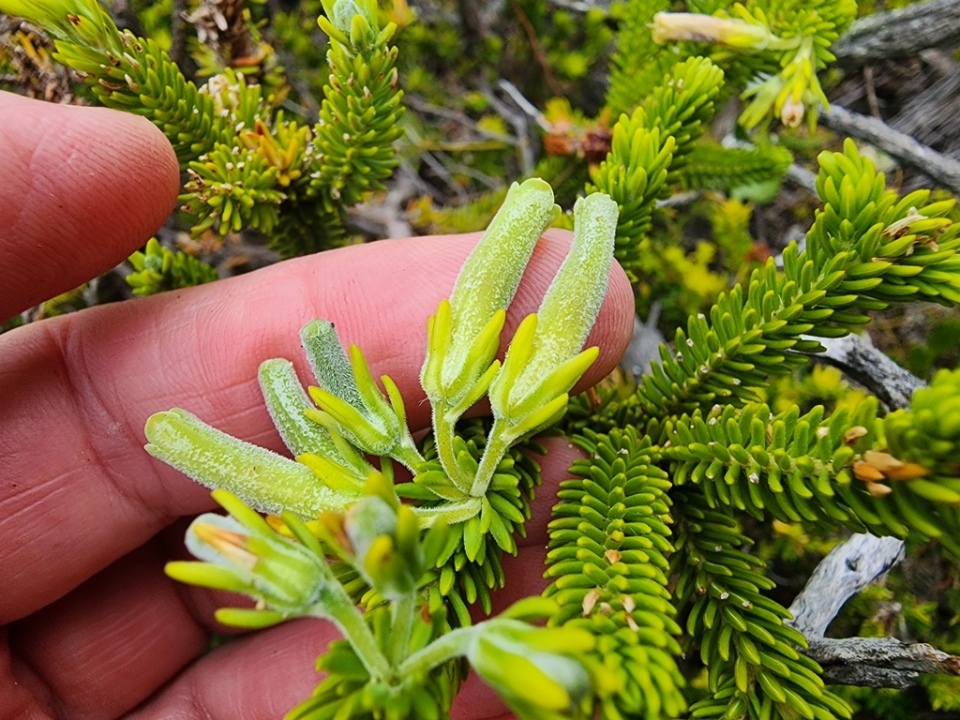
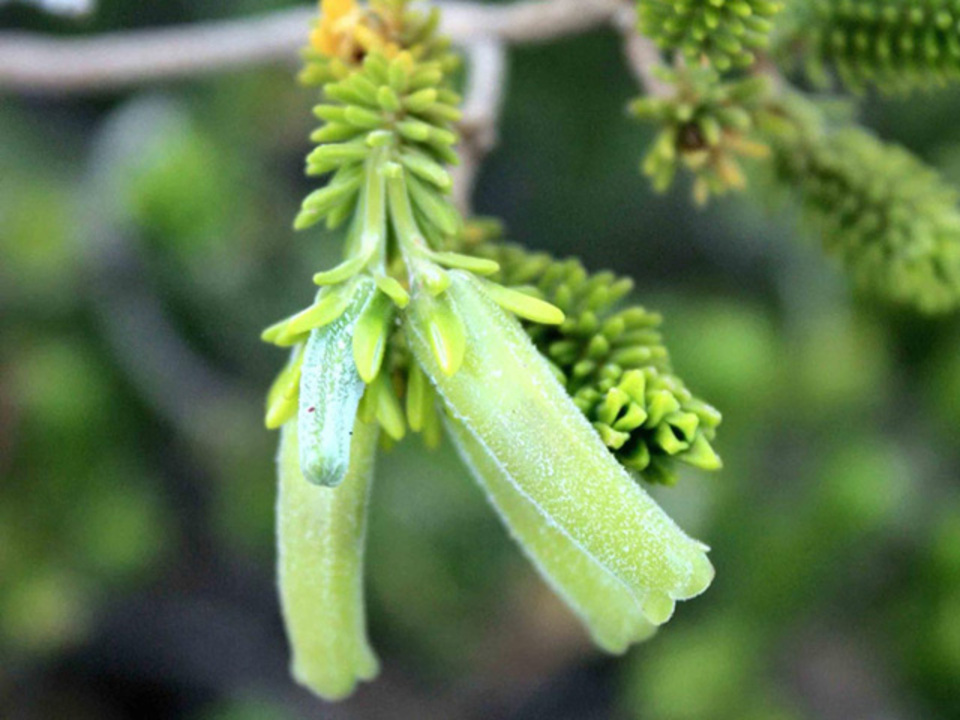
Erica brachialis, or hairy-tube heath, is a rare, vulnerable, woody shrub (up to 2m) endemic to the Western Cape, South Africa. It features sticky, bright green to pale yellow tubular flowers, blooming from January to March. Found in coastal fynbos and rocky outcrops, it is threatened by frequent fires and development.
Key Details
Appearance: A rigid, erect, densely leafy shrub. It can develop a thick trunk (up to 30 mm diameter) and is often found on rocky, windy coastal slopes.
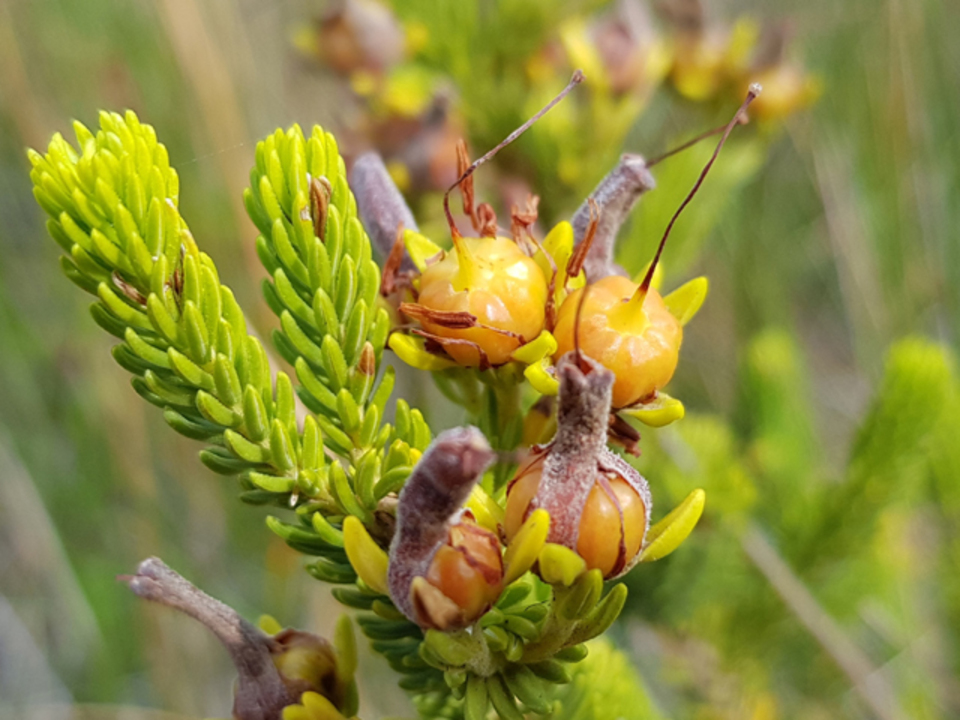
Flowers: Large, tubular long, appearing in umbels of 3–4 (sometimes 1–6). They start bright green and fade to pale yellow, remaining on the plant for months while developing an urn shape.
Habitat: Specifically found in Cape Flats Dune Strandveld, Peninsula Sandstone Fynbos, and Kogelberg Sandstone Fynbos.
Conservation Status: Listed as Vulnerable (SANBI Red List) with less than 1,200 mature individuals remaining in only six sub-populations.
Threats: Habitat loss due to coastal development, too-frequent veld fires, and competition from alien invasive plants.
Pollination: The flowers are designed to attract sunbirds.
(AI Overview)