Flora Detail
| Common Name | Brown Sage |
| Family | Lamiaceae |
| Date Observed | 18-08-2021 |
| Category | Bushes |
|---|---|
| Catalogue No. | 4407RG |
| Flowering Time | Spring |
| Colour | Orange |
| Locations Observed | |
| Estuary | |
| Koppie | |
| Nature Reserve | Few |
| Small Holding | |
| Village | |
| Greater Rooiels | |
Salvia aurea
Information
Brown Sage
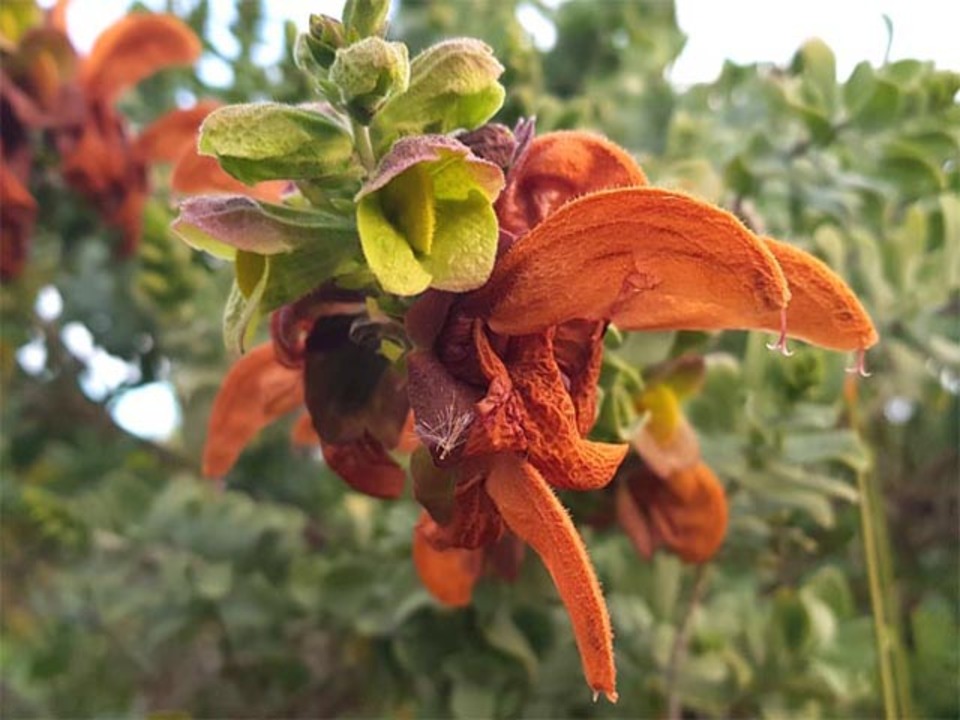
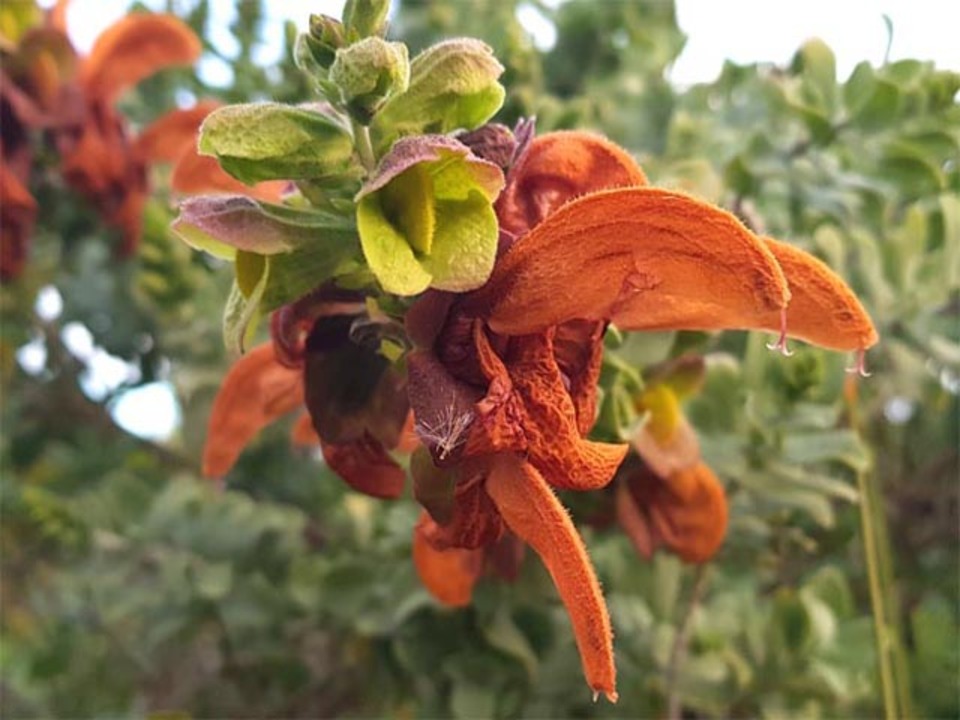
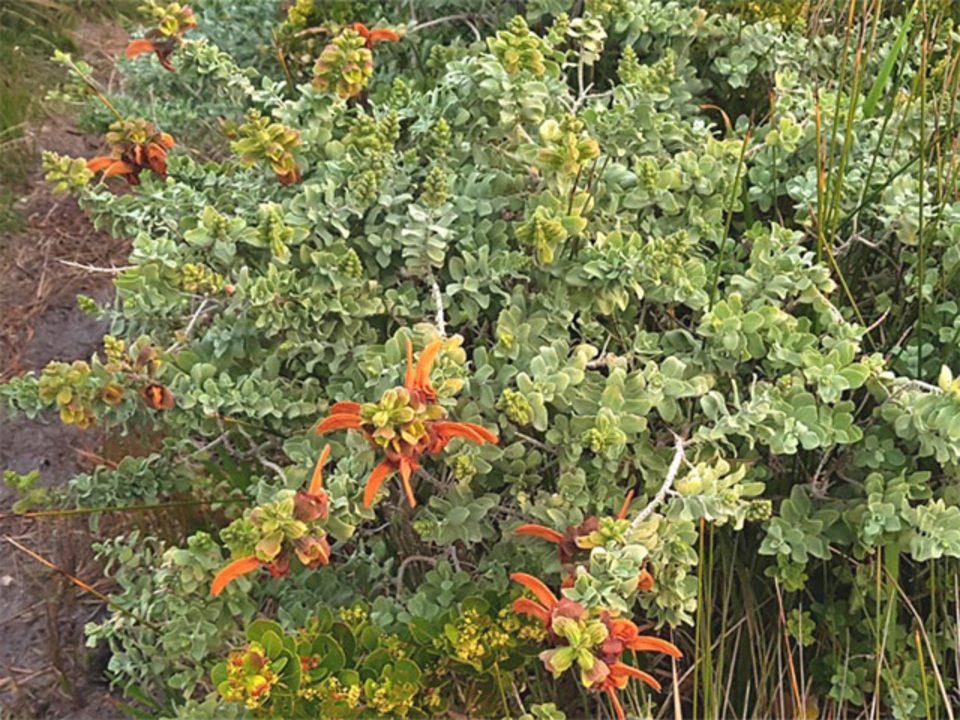
Salvia africana-lutea (beach salvia, dune salvia, golden salvia, bruin- of sandsalie, geelblomsalie) is a shrubby evergreen perennial native to coastal sand dunes and hills on the coast of the Western Cape, Eastern Cape and Northern Cape in South Africa. It has numerous woody stems growing to more than 1 m in height and width, with sparse grey-green leaves. The flowers start out as a bright yellow, turning into a rusty color, with the dark rusty-colored calyx persisting long after fruiting begins.
The nectar acts as an essential food supply for sunbirds, particularly when proteas are not flowering. Sage has shifted its pollinator from bees to nectar-feeding birds, and these flowers are now designed to not touch the bee on its back, but to touch the visiting bird on its head. S. africana-lutea was used by early European settlers to treat colds, tuberculosis, and chronic bronchitis. Traditional indigenous healers use it for respiratory ailments, influenza, gynaecological complaints, fever, headaches and digestive disorders.