Flora Detail
| Common Name | Healthbush, Agt-dae-geneesbossie (Afr.) |
| Family | oraginaceae (Borage Family) |
| Date Observed | 17-08-2021 |
| Category | Shrubs |
|---|---|
| Catalogue No. | 3320RGu |
| Flowering Time | Spring |
| Colour | Blue to Purple |
| Locations Observed | |
| Estuary | |
| Koppie | |
| Nature Reserve | Few |
| Small Holding | |
| Village | Few |
| Greater Rooiels | Few,Many |
Lobostemon montanus
Information
Healthbush, Agt-dae-geneesbossie (Afr.)
LOBOSTEMON MONTANUS
Family: Boraginaceae
Agt-dae-geneesbossie (Afr.); Eight-days-to-heal bush (Eng.)
INTRODUCTION
The remarkable Agt-dae-geneesbossie ("eight-days-to-heal bush") has long been used in traditional healing practices, with the belief that it could heal a wound within eight days.
DESCRIPTION
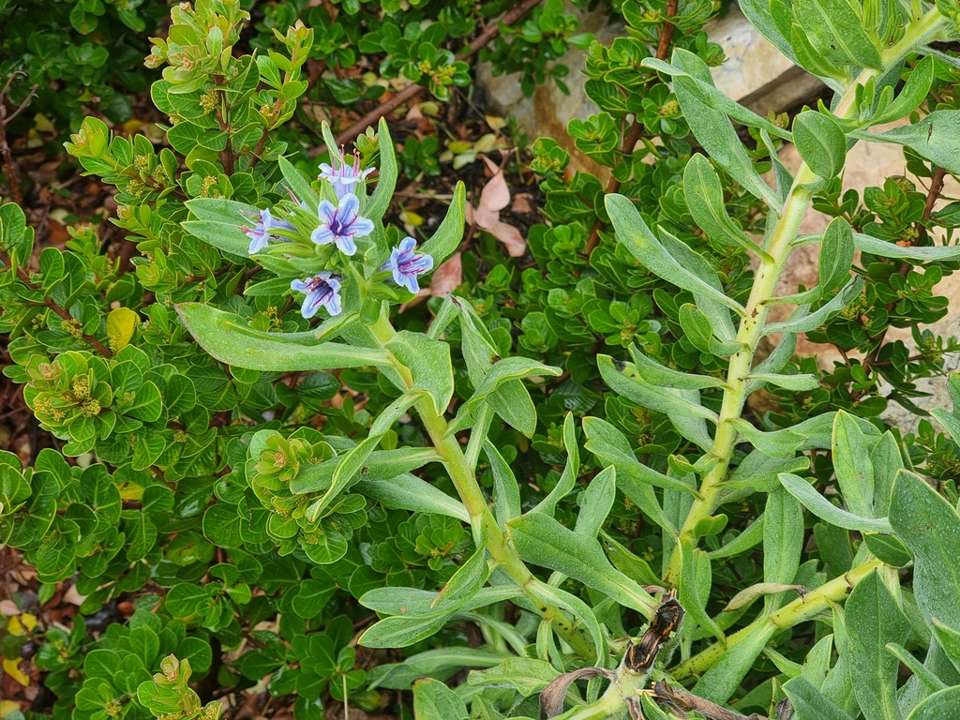
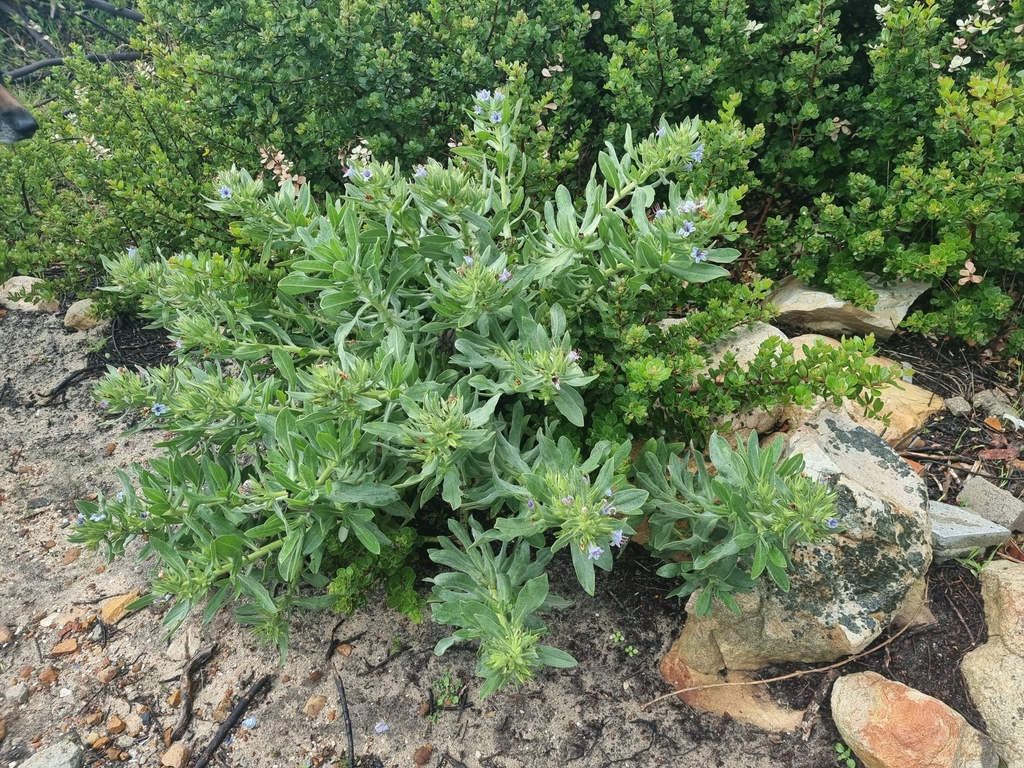
For most of the year, one hardly notices the agt-dae-geneesbossie. Then, from July to September, it suddenly bursts into flower, displaying delicate blue blooms among clusters of silvery grey-green leaves.
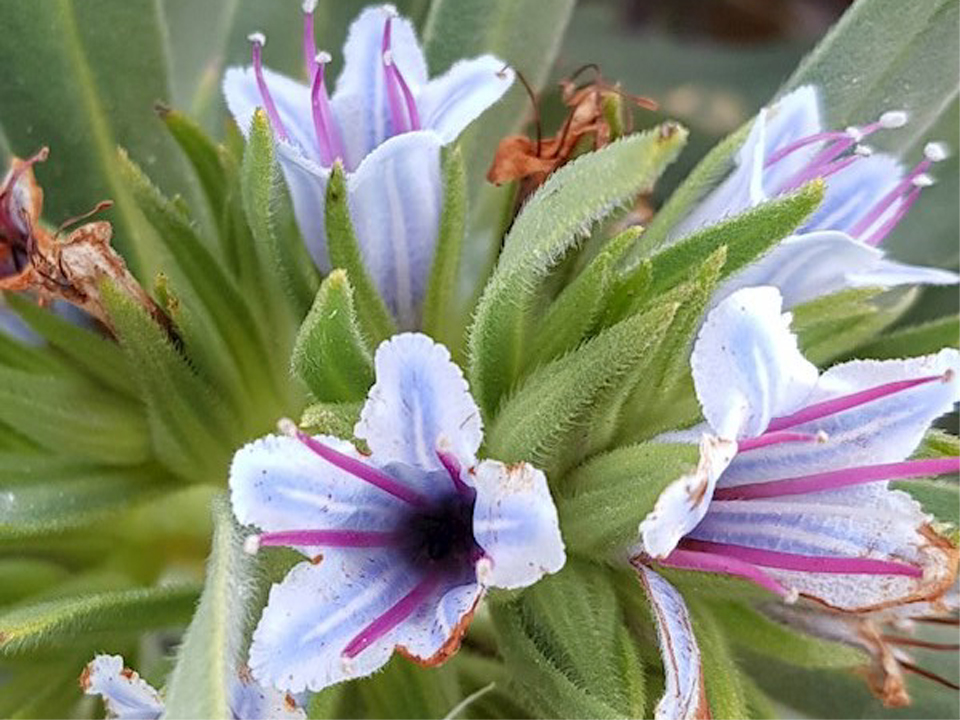
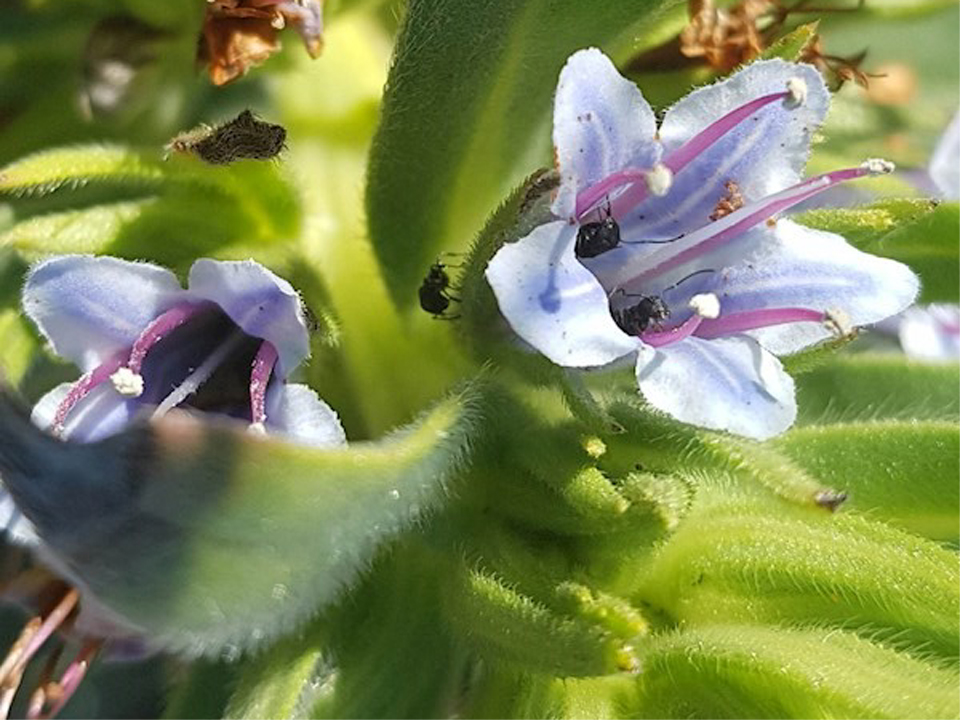
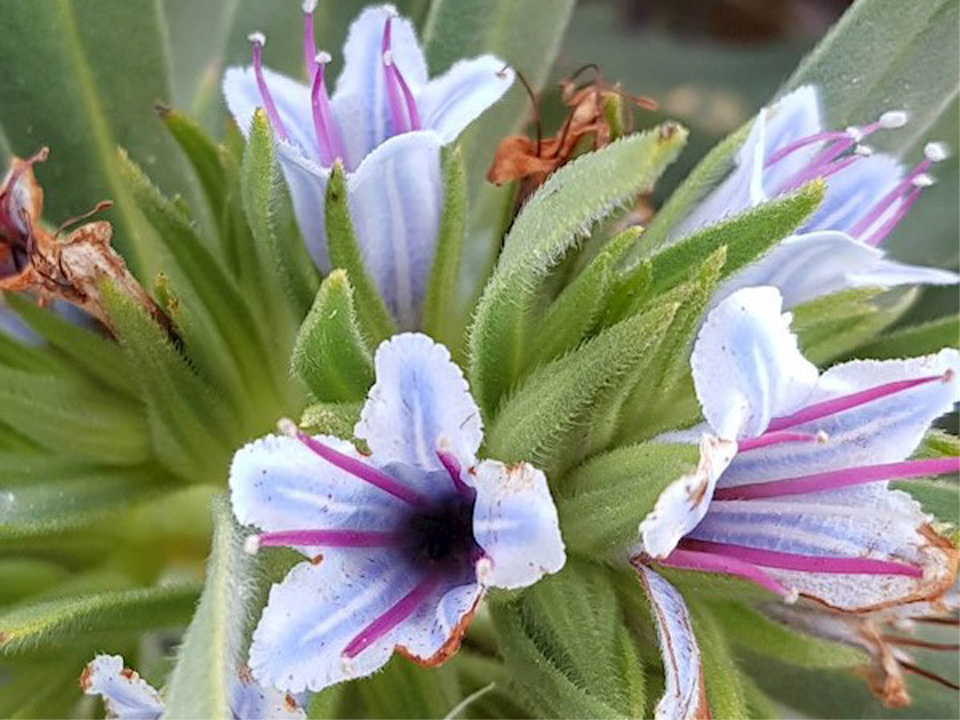
The flowers are short, tubular, bell- to funnel-shaped, and range from pale sky blue to turquoise. They face upwards and are sometimes marked with darker blue stripes—rather like your oupa's pyjamas. Occasionally they are almost white. The protruding purple stamens provide a striking contrast.
DISTRIBUTION & HABITAT
There are 28 species of Lobostemon, all endemic to the Western Cape. Lobostemon montanus occurs only along the coast from the Cape Peninsula to Onrus, where it favours mountainous coastal habitats.
In spring, its blue flowers brighten Clarence Drive, creating nature's own flower arrangement against the pink pelargoniums.
For hikers, there is always a thrill in discovering it on the mountains or among the dense coastal scrub stretching down to the sea. Its leathery, hairy leaves help protect the plant from the salt-laden winds blowing in from False Bay.
We have recorded Lobostemon montanus on the Rooiels mountains, near the Distillery on the Smallholdings Road, along Rod's Trail, beside the Palmiet River, and on Jean's Hill in Kleinmond, where it flourishes among Protea compacta—a truly beautiful sight.
TRADITIONAL USES
Have you got aches and pains, minor burns, or ringworm? According to tradition, the agt-dae-geneesbossie would sort you out in eight days.
Fresh leaves were crushed and fried in sheep fat to make ointments for wounds, sores, burns, and ringworm.
Author and journalist Willem Steenkamp related an experience from the Northern Cape: if somebody had a sore, the patient would chew the leaves into a slimy paste. While the juice was swallowed, the remaining paste was applied directly to the wound. As it dried, it formed a natural plaster, which was removed after eight days—by which time the wound was believed to have healed.
Should you prefer to take a Disprin, you can still enjoy the beautiful flowers.
POLLINATION
Pollination is carried out by both birds and insects. The blue flowers attract many bees. In the Rooiels Nature Reserve, we have also observed Orange-breasted Sunbirds, Southern Double-collared Sunbirds, and Cape Sugarbirds feeding on the nectar, while baboons happily eat the flowers.
FIRE & SURVIVAL
Lobostemon montanus regenerates readily after fire, producing abundant seedlings following a veld fire. Plants that are not too severely burnt may also resprout.
CONSERVATION STATUS
Status: Least Concern.
Lobostemon montanus is fairly common on mountains, rocky outcrops, and along the coast, and is therefore not considered threatened.
GROWING LOBOSTEMON MONTANUS
Lobostemon montanus is relatively easy to grow from fresh seed collected when the old flower heads turn brownish-grey. For the best results, sow the seeds in late summer or spring.